Follow Us on Google


From Uchenna Inya, Abakaliki
Alex Ekwueme Federal University, Ndufu-Alike (AE-FUNAI), Ebonyi State, has launched a 12-month European Union-backed agricultural sustainability project.
The initiative is aimed at equipping farmers, processors and other food value chain actors with digital tools to measure carbon emissions, reduce production costs and improve access to premium export markets.
The project, titled Enhancing Food Value Chain Sustainability through Digital Life Cycle Assessment Training (Digital LCA), is implemented under the STREAMING initiative funded by the European Union through the Horizon Europe programme, with emphasis on strengthening sustainable trade between Europe and Africa through innovation and technology.
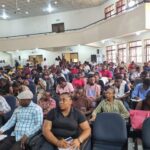
Speaking at the inception workshop, the Vice-Chancellor of AE-FUNAI, Prof. Daniel Nwachukwu, represented by Prof. Robert Onyeneke, said Nigeria’s agricultural sector, despite employing millions and contributing significantly to food security, remained underperforming in export markets because of evolving sustainability requirements.
Nwachukwu said international buyers and regulators, particularly in Europe, increasingly demanded evidence of the environmental impact of food production, including carbon emissions, water and land use, post-harvest losses and product traceability, stressing the need for Nigerian producers to adapt to the changing requirements.
He said the project would develop Nigeria-adapted digital learning materials and Life Cycle Assessment (LCA) calculators to enable farmers and food processors to measure the environmental impact of their activities, improve production efficiency and meet international market standards.
According to him, the initiative would test the digital tools through two pilot groups, including participants operating in areas with limited internet connectivity, before training at least 100 learners, with women accounting for a minimum of 40 per cent.
The Vice-Chancellor said the workshop was designed not merely to introduce the project but also to listen to stakeholders, identify challenges across agricultural value chains and jointly determine commodities requiring priority attention, while ensuring that participants’ data were protected during baseline assessments.
The Project Coordinator, Prof. Robert Onyeneke, said Nigeria needed to move beyond producing food primarily for domestic consumption to developing the capacity to generate sufficient surplus for international markets, noting that agricultural exports remained relatively low despite the sector’s importance to employment and livelihoods.
Onyeneke explained that LCA would enable farmers and processors to assess environmental impacts from production through processing, transportation and consumption, helping them to identify inefficient practices, reduce emissions, minimise waste and improve competitiveness.
He said the project would develop simplified digital calculators through which farmers could input information such as cultivated land area, harvest volumes, fertiliser usage and energy consumption to estimate their environmental footprints and improve business decisions.
The project coordinator added that the initiative would also help farmers to understand the actual costs of production, including labour, land preparation, inputs and transportation, to enable them to determine profitability, optimise production and avoid selling produce without accurately knowing their costs.
The Dean of the Faculty of Agriculture, Prof. Jane Munonye, described the initiative as a significant research opportunity, noting that its European Union backing would strengthen international collaboration, improve research capacity and open opportunities for publications in reputable scientific journals.
Munonye, who commended Onyeneke and his team for attracting research grants and partnerships, urged stakeholders to take advantage of the project to improve agricultural production, processing and market access, while promoting innovation and commercialisation.
The Deputy Director of Livestock in the Ministry of Agriculture, Mrs Chidinma Obi Okoye, also pledged the ministry’s technical support, emphasising the importance of value addition, standardisation, modern processing equipment and solar-powered drying technology to improve produce quality, reduce losses and create sustainable markets for farmers.