Follow Us on Google
Minister of Solid Minerals Development Dr Dele Alake has urged African countries to view development challenges as opportunities for innovation, problem-solving and economic transformation rather than obstacles to progress.
Speaking at the closing ceremony of the 5th African Natural Resources and Energy Investment Summit (AFNIS 2026) in Abuja, Alake said the continent possesses the human and natural resources needed to overcome its development constraints and achieve shared prosperity.
He noted that while there may be differing views on how best to achieve Africa’s development objectives, there is a broad consensus on the need to end the cycle of exporting wealth from the continent while poverty remains at home.
According to the minister, discussions throughout the summit centred on advancing the solid minerals sector through efficient exploration, responsible extraction and effective utilisation of mineral resources for the benefit of African citizens.
Alake stressed that Africa must move away from outdated models of resource exploitation and embrace policies that promote value addition, industrialisation and sustainable development.
He said challenges confronting African countries should serve as motivation to develop practical solutions capable of accelerating economic growth and improving living standards.
The minister maintained that meaningful progress can only be achieved through a combination of visionary thinking and decisive action, urging leaders and stakeholders to translate ideas into measurable outcomes.
Alake commended participants, investors and development partners for contributing to productive discussions and partnerships, expressing confidence that commitments made during AFNIS 2026 would translate into increased investments, industrial growth and sustainable prosperity across the continent.
Earlier, the Vice President and Chief Economist of the African Development Bank (AfDB), Prof Kevin Urama, called for a major shift in Africa’s resource development strategy, emphasising the need to process and add value to minerals within the continent.
Presenting Africa’s Economic Outlook, Urama argued that many infrastructure corridors across Africa still serve the extraction of raw materials rather than supporting industrialisation and regional value chains.
He advocated investment in integrated resource corridors linking mines, farms, industries and markets, saying such infrastructure would boost productivity and strengthen intra-African trade.
The AfDB chief economist also highlighted Africa’s vast energy potential, noting that the continent holds about 60 per cent of global solar resources as well as significant hydro, oil and gas reserves capable of powering industrial growth.
Urama urged African governments to replace traditional mining concession agreements with mineral development agreements that require investors to process minerals locally before export.
According to him, local beneficiation of critical minerals would create jobs, encourage technology transfer, reduce carbon emissions and position Africa as a global manufacturing hub.
He also called for stronger local content policies, improved natural resource governance and greater investment in geospatial mapping and natural capital accounting to ensure sustainable management of Africa’s resource wealth.
Urama further stressed the need for policy certainty, regional cooperation and domestic resource mobilisation, arguing that Africa possesses the financial and natural resources required to drive its own development agenda.
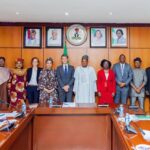
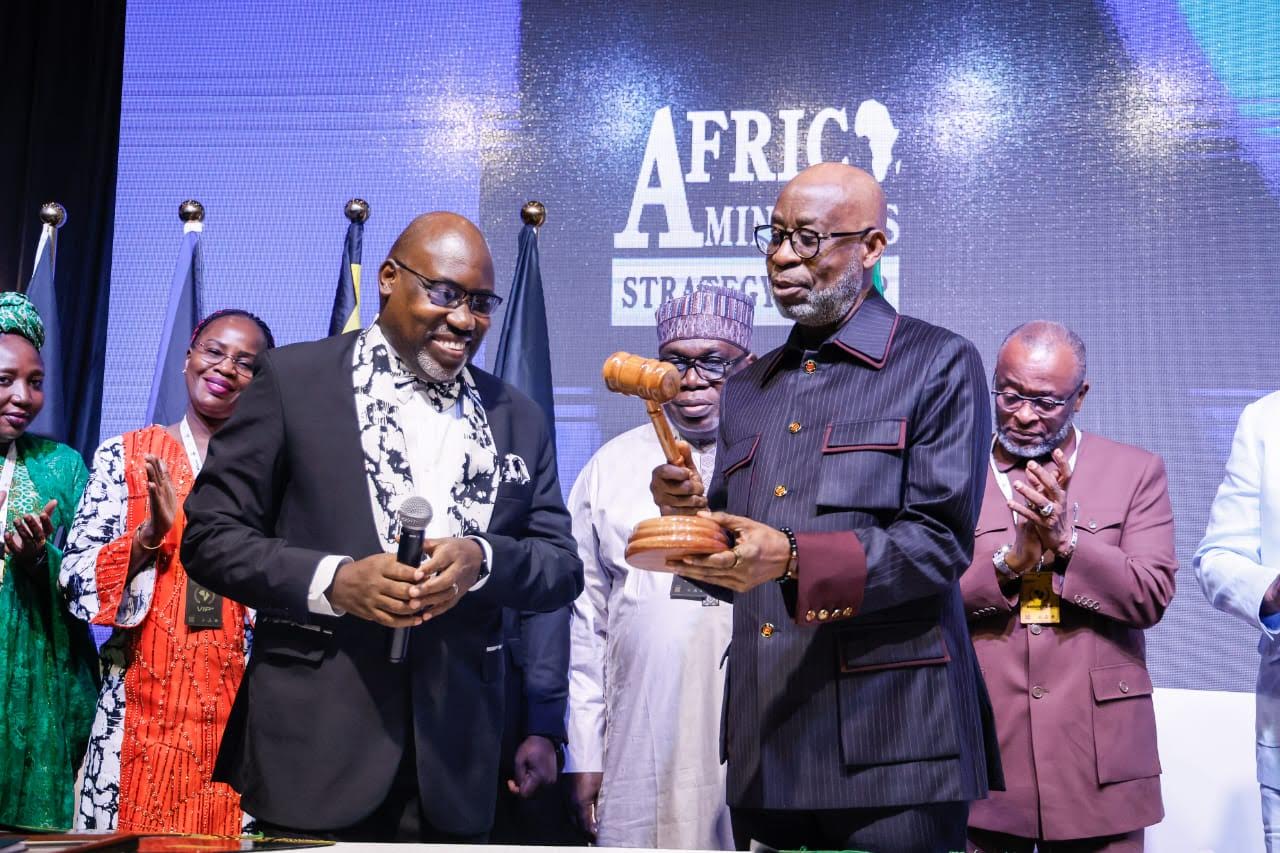
A highlight of the closing ceremony was the presentation of the ceremonial gavel to the Minister of Solid Minerals Development, Dr Dele Alake, following his appointment as Chairman of the African Mineral Strategy Group.
The honour reflects the confidence of African mining stakeholders in his leadership and commitment to promoting value addition, responsible mining and greater benefits from the continent’s mineral resources.
The presentation also symbolised a shared commitment to advancing Africa’s mining sector for economic growth and development.