Follow Us on Google
From Juliana Taiwo-Obalonye, Abuja
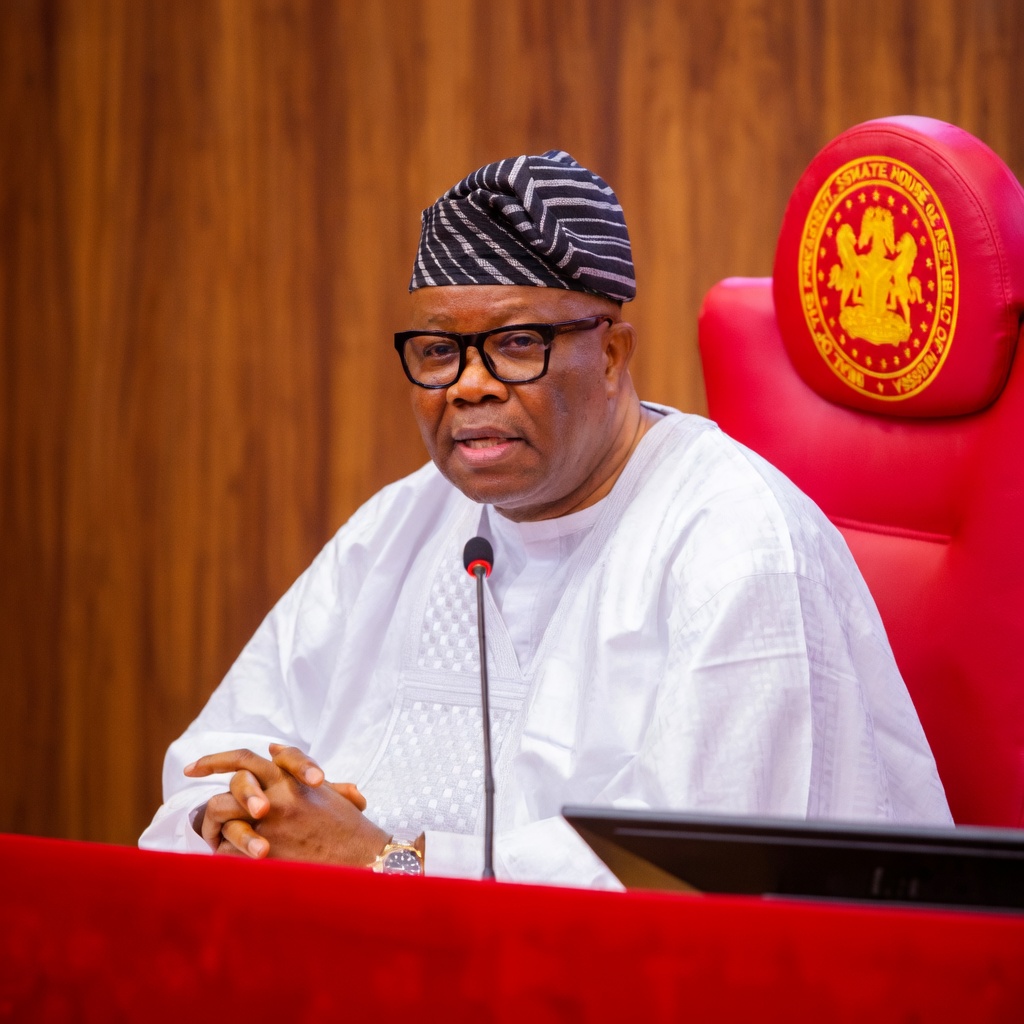
Senate President Godswill Akpabio on Tuesday attributed Nigeria’s current wave of insecurity to political actors aiming to distract President Bola Tinubu’s administration ahead of elections, predicting a sharp decline in attacks after polling.
Speaking at the commissioning of the Nigeria Revenue Service (NRS) headquarters in Abuja, Akpabio said the violence was a calculated “gang-up” tied to electoral rivalries, not genuine threats.
“We are seeing incidents today. It’s even increasing because an election is coming. As soon as the election is over, watch out. In the first two weeks, you will not hear a single bomb blast. Because people are so stringent and distracted. They don’t know what else to do,” Akpabio said.
He contrasted Nigeria’s stability under Tinubu with chaos elsewhere, noting rapid project commissioning instead of bombings.
“Mr President, there are countries where you have presidents for only two years. And all you hear is bomb blasts everywhere. And the presidents are only two years old in office. In your own case, in less than two, three years, all we get is the commissioning of projects and projects and projects,” he stated.
Akpabio dismissed foreign embassy concerns as unrelated to elections, emphasising enduring national progress such as the NRS building.
“It’s not because the election is coming. The election will come and go. And God will protect you. God will protect Nigeria. Nigeria will outlive this election. Look at what they are doing now. Is this going to be taken away? It’s going to remain here. For the benefit of future generations of Nigeria,” he added.
The Senate President also addressed controversies surrounding the Independent National Electoral Commission (INEC) Chairman, Prof. Joash Amupitan, describing calls for his resignation over a vague “victory is sure” tweet as politically motivated.
“They brought out the tweet. Where they said the Chairman of INEC said victory is sure. But he didn’t say victory is sure for the APC. He did not say victory is sure for the PDP. He just said, victory is sure… And the man said it is not his tweet; it’s been manipulated. Nobody wants to get. But for me, even if he said victory is sure, it means someone must win the election. He was not the Chairman of INEC when the tweet was made; he was just a lecturer. Anybody can support anyone he wishes to,” Akpabio said.
He argued that the timing of the tweet—one month to the primaries—revealed ulterior motives amid the administration’s gains.
“Why are they now going into something so insignificant? Very close to primaries. One month to primaries. It’s because they realise that somebody will go and get up to 6 million votes in an election through a political party, and yet abandon that political party and abandon the 6 million votes. And start shopping for a new political party where he will have to go and start building up.”
Akpabio stressed impartiality in office.
“But when you are in the seat, you have to think of the entire country. I want to just let you know that it is not only in the area of revenue that we are doing well.”
He highlighted Tinubu’s expanding political influence, from 18 to nearly 32 state governments under APC control, as evidence of public support despite criticisms.
“He came in with us at 18 governors; today, he has almost 32 governments under his rule. So, where do you belong? How do you do an election when you don’t have the structure?”
Akpabio also cited electoral success in the Federal Capital Territory (FCT), crediting rural development efforts.
“Nobody is attacking that. No single administration in Nigeria since 1999 that occupied Aso Rock had won an election in the FCT area councils… This time around, we did the election in the FCT.”
He portrayed the insecurity narrative as a distraction from reforms such as fuel subsidy removal, which he said had ended long queues despite global oil disruptions.
“Nigeria today. Even with the closure of the Hormuz Strait… we have not had 2, 3, 4, 5 kilometres of fuel line… These are reforms that are working.”
Akpabio concluded by affirming national resilience amid political tensions, urging a focus on governance over transient controversies.