Follow Us on Google
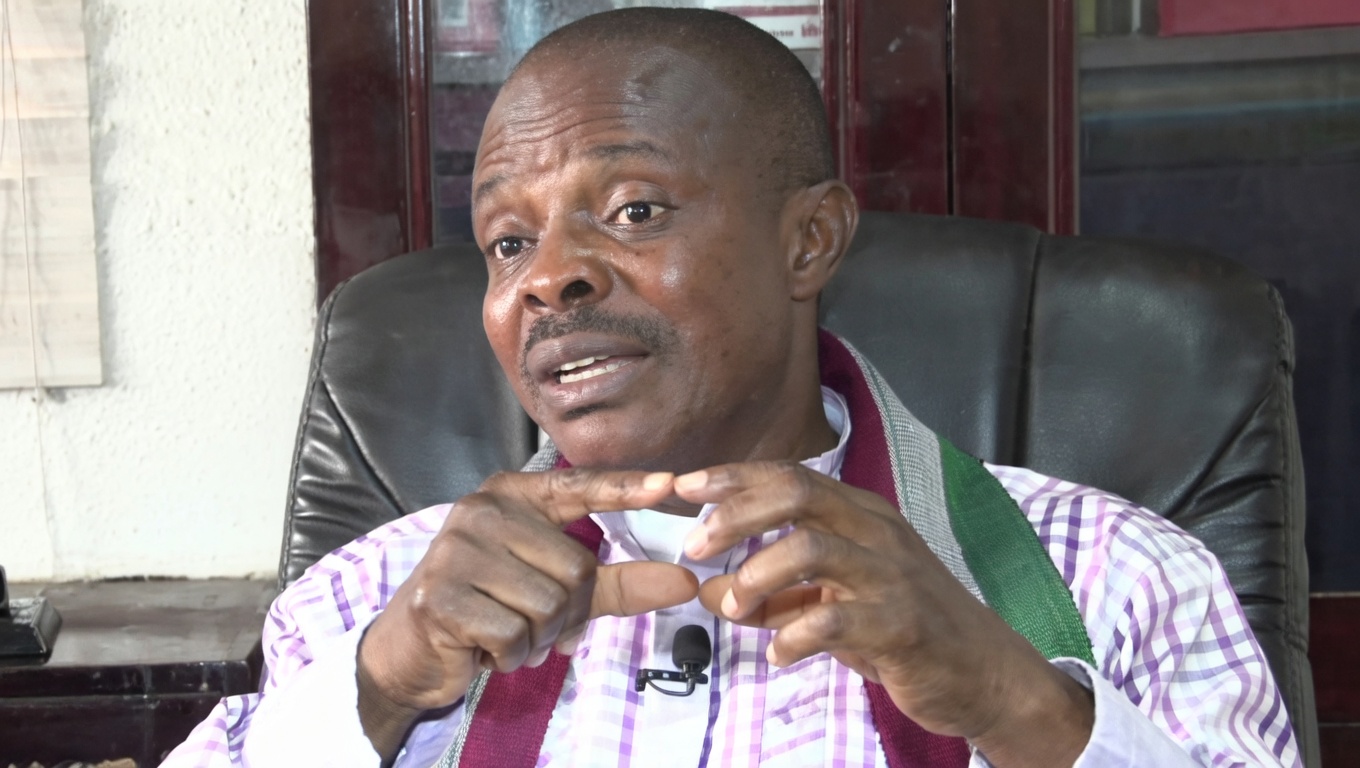
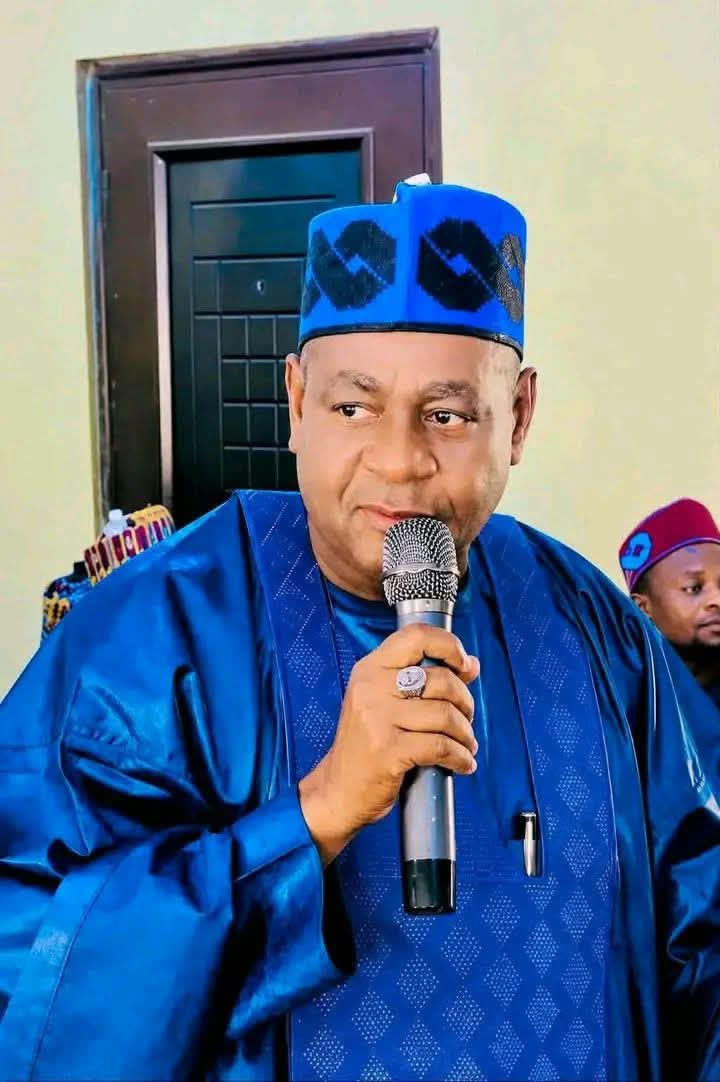
Joe Ajaero, President of the Nigeria Labour Congress (NLC), has said the economic ideas of the Social Democratic Party’s (SDP) presidential candidate, Prince Adewole Adebayo, merit serious public attention ahead of the 2027 presidential election.
Speaking during an interview at the weekend, Ajaero placed Adebayo in a distinctly different economic category from the three leading political figures, former Vice-President Atiku Abubakar, Peter Obi and President Bola Tinubu, whom he identified as proponents of a broadly similar market-oriented approach.
Asked about Atiku’s economic position, the NLC president surprisingly shifted attention to the policy ideas of Adebayo and the Accord Party presidential candidate, Dr Gbenga Olawepo-Hashim.
“I have looked at Gbenga Hashim’s position and I think he’s an expert to an extent. I also looked at Adebayo. I may listen to them,” he said.
The significance of the statement lies not only in the fact that Ajaero named Adebayo, but in the context in which he did so.
While describing Atiku, Obi and Tinubu as sharing what he regarded as essentially similar economic thinking, he said: “Obi, Atiku and Tinubu, all have the same position and they have shown that they are market people from far right.”
He, however, suggested that Adebayo and Hashim represented a different strand of economic thinking, describing their positions as containing “new ideas worthy of engagement.”
For Adebayo, whose 2027 campaign has increasingly positioned him as an alternative to Nigeria’s established political order, the comments provide an important endorsement of the argument at the heart of his presidential campaign, which is that Nigeria requires a fundamental rethink of the economic assumptions that have shaped governance over the years.
Adebayo, a lawyer, businessman, farmer and philanthropist, has consistently presented his political programmes around the philosophy of social democracy, productive enterprise and a stronger role for the government to expand opportunities for ordinary Nigerians.
Other News
Rather than treating the market as an end in itself, his approach places emphasis on using the government’s policy to expand production, create jobs, strengthen public services and reduce the cost of living.
That position has also featured prominently in his criticism of Nigeria’s handling of fuel pricing, electricity, education, healthcare and unemployment.
His recently published policy blueprint, ‘Farewell to Poverty and Insecurity: Governance & Accelerated Development — Blueprint of a New Nigeria, 2027-2031,’ proposed a system of measurable government delivery, with presidential performance monitoring, baseline assessments, quarterly milestones and corrective mechanisms designed to make the government’s programmes more accountable and results-driven.
Adebayo has also argued for an economy capable of producing at scale rather than one that depends excessively on imports and foreign exchange.
On energy, his position has been particularly forceful. He has argued that Nigeria cannot sustainably develop while its citizens and businesses continue to contend with high energy costs, inadequate electricity and an economy heavily exposed to imported fuel and foreign exchange pressures.
His proposed solution centres on dramatically expanding domestic energy production, refining capacity and electricity generation while reducing the cost of energy to households and businesses.
Adebayo’s emergence has, therefore, increasingly been framed by his supporters as a contest between an established political establishment and a candidate promising a fundamentally different approach to governance.
Unlike the three politicians grouped together by Ajaero, Adebayo has never served as president, vice-president, governor or minister. His campaign has sought to turn that absence of conventional political office into an argument for a “clean slate,” a candidate who, he says, is not burdened by the record of previous administrations.
His supporters argue that this distinction is becoming increasingly important as voters approach the 2027 election amid concerns over inflation, unemployment, insecurity, energy costs and declining purchasing power.