Follow Us on Google
By Chinyere Anyanwu
Artificial intelligence will create new opportunities and improve productivity rather than eliminate jobs, experts have told civil servants in Lagos State urging them to embrace the technology and acquire the skills needed to remain relevant in a changing workplace.
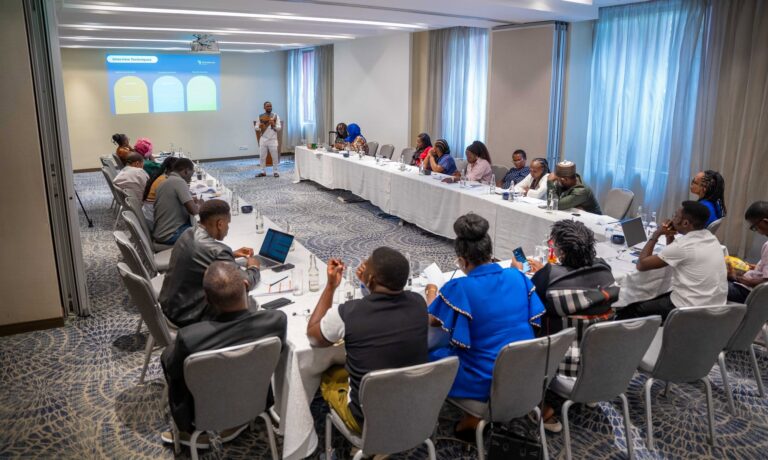
The experts spoke during a two-day executive leadership training on artificial intelligence, governance and economic transformation organised for selected Lagos State civil servants by the state Ministry of Establishments and Training, in partnership with J. Soji-George Consulting Nigeria Limited and the University of Kigali, Rwanda.
The programme, themed “Executive Leadership Masterclass in AI, Governance and Economic Transformation (AI-GET),” held in Lagos on October 7 and 8, 2026.
Professor Victor Odumuyiwa, Professor of Artificial Intelligence and Natural Language Processing at the University of Lagos, said workers who understood how to deploy AI tools effectively would be better positioned to improve their performance and adapt to changing workplace demands.
He argued that the growing adoption of AI should encourage workers to acquire new skills rather than respond with fear of losing their jobs.
According to him, the ability to use AI tools is becoming increasingly important, particularly as organisations seek faster and more efficient ways of carrying out routine assignments.
“Government is going in the right direction by taking its workforce towards being AI-ready in this current dispensation,” Odumuyiwa said.
He stressed that public institutions also needed to understand the technology to develop appropriate regulations and ensure its effective use.
“How do you regulate a technology you don’t know anything about? And how do you also optimise your productivity in this generation when you don’t know how to use the tools that are changing the way we do things?” he asked.
Odumuyiwa said the technology could help civil servants automate repetitive tasks, reduce the time spent on routine assignments and improve their overall output.
He added that such improvements would enable government workers to handle more responsibilities and respond to official demands more efficiently.
Also speaking, Dr. Luqman Afolabi, Dean of the School of Economics, Finance and Accounting at the University of Kigali, Rwanda, urged workers to recognise AI as an increasingly important part of modern professional life.
“AI has come to stay. We have to accept that AI is part of us now. We cannot do without AI,” Afolabi said.
He explained that the training introduced participants to practical applications of AI, including conversational chatbots and tools such as Gemini, which could assist with research, information processing and routine professional assignments.
Afolabi said the responsible use of the technology could help public institutions save time, reduce costs and improve efficiency.
He added that AI had the potential to support economic transformation by improving the way individuals and organisations perform their duties.
Meanwhile, Professor Ogechi Adeola, Deputy Vice-Chancellor, Research, Innovation and Enterprise, University of Kigali, said the collaboration provided an opportunity to expand knowledge of AI and its practical applications within Lagos State’s public service.
Adeola explained that the programme focused on implementing AI solutions, accelerating economic growth and helping government officials use technology to achieve institutional goals.
She said the partnership would contribute to knowledge-sharing and promote the application of emerging technologies in governance and public administration.
The Chief Executive Officer and Senior Partner of J. Soji-George Consulting Nigeria Limited, Professor Olusoji George, said the success of the programme would depend on participants’ ability to apply what they had learnt in their respective ministries and share the knowledge with other workers.
He disclosed that the organisers had introduced a 90-day challenge to measure the impact of the training on participants’ productivity.
“We will do follow-up. We are giving them a 90-day challenge, so that after the 90 days, we will come back to their ministries and see what has been their productivity,” George said.
He noted that many of the participants were assistant directors who were expected to transfer the knowledge acquired during the programme to colleagues in their departments.
According to him, the organisers would assess how effectively the participants had disseminated the training and integrated AI into their official responsibilities.
George maintained that extending the knowledge beyond the initial participants would be essential to achieving tangible results across the state public service.
The training reflects growing efforts to prepare public institutions for the implications of AI on governance, workforce development and economic productivity.
For Lagos State, the challenge now is to translate the knowledge acquired by the trained civil servants into measurable improvements in service delivery, while ensuring that AI is used responsibly and complements human judgment rather than replacing essential professional oversight.