Follow Us on Google
By Merit Ibe
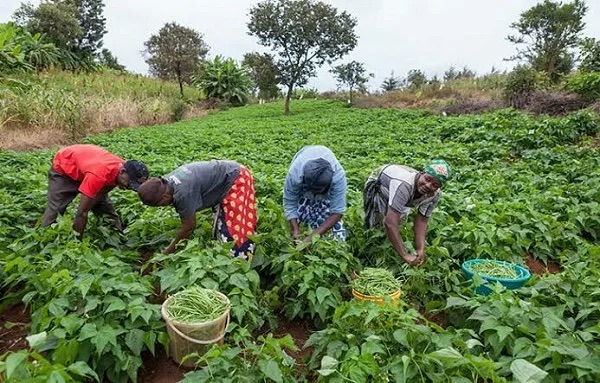
An entrepreneur and Chief Executive Officer of Rimax Group of Companies, Livinus Okwara, has asserted that massive development of the agricultural sector by the government will be a solution to the economic downturn as oil prices continue to drop. Okwara believes that with the right investments and strategic focus, agriculture can once again become the mainstay of Nigeria’s economy, much like it was in the 1960s and early 1970s.
Okwara called on the government to tackle insecurity in the agrarian belts and invest in mechanized farming. “We can feed the nation and still export to improve our forex stance,” he said. He advised that the government should focus on utilizing the country’s forests, especially the Sambisa Forest, and increase production through mechanization.
The businessman expressed displeasure that after declaring a state of emergency on the agricultural sector, there has been little improvement. He urged the agriculture minister to take more decisive action, emphasizing the need to revive Nigeria’s agriculture sector as a paramount goal. “A strong agricultural sector is the cornerstone of food security. By revitalizing agriculture, Nigeria can reduce its reliance on food imports, ensure a stable supply of essential goods, and safeguard against global food price volatility.”
Okwara highlighted that agriculture and its value chain create wealth, employment, and food security while reducing poverty. He criticized the high dependence on imported consumables, particularly food items, which he believes is detrimental to the economy. “The nation has enough human and natural resources to feed itself, export to other countries, and earn foreign exchange. Excessive importation has caused a big disaster in which Nigeria has found itself. We import almost everything, which is bad for our economy.”
He stressed the importance of the government concentrating on the food belts of the nation and fighting terrorism to a standstill. “Investment in agriculture will increase the nation’s foreign exchange earnings. Reviving the economy means reviving farming to bring down food inflation. We need to begin to manufacture our goods, grow our food, and export.”
Okwara emphasized the need to cultivate the arable land in the North and other parts of the country. “We are blessed with enough land and resources. Every day we must produce; no land should lie fallow. We need to produce in large quantities and also preserve the products. In England, they store foods for up to 10 years before consumption. Nigeria needs to get machines and facilities for food production and preservation.”
Nigeria, endowed with fertile lands and a rich agricultural heritage, has the potential to become an agricultural powerhouse on the African continent.
However, the nation’s agriculture sector has faced numerous challenges, from neglect and underinvestment to outdated practices and inadequate infrastructure. It’s high time to reinvigorate this crucial sector, as doing so not only promises food security but also paves the way for economic prosperity.
Okwara’s vision for the agricultural sector includes; mechanised farming, boosting security of farmers and agricultural workers by tackling insecurity and terrorism in agrarian regions; infrastructure development to address issues of bad roads, storage facilities, and irrigation systems to support agricultural activities; research and development; promoting agricultural research to develop high-yield crop varieties and sustainable farming practices; preservation to mitigate post-harvest losses; market access and government support.
Okwara insists that by implementing these strategies, Nigeria can transform its agricultural sector, ensuring food security, creating jobs, and driving economic growth.