Follow Us on Google
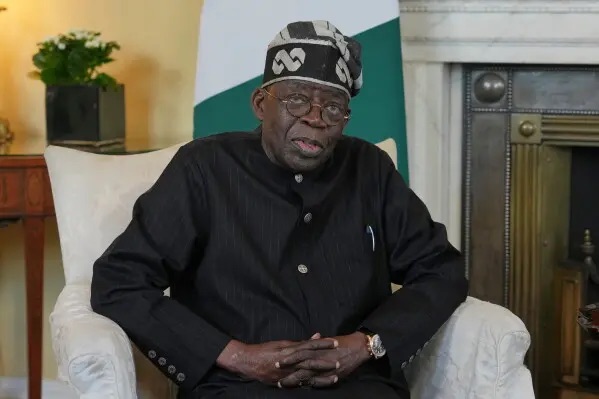
President Bola Tinubu, his Kenyan counterpart, William Ruto, and the United Nations’ Secretary-General, António Guterres, have called for a fundamental restructuring of the United Nations Security Council (UNSC). They made the call at the General Debate of the 81st Session of the United Nations General Assembly (UNGA) in New York.
Tinubu specifically called for a radical reorganisation of the UN, insisting that reforms must start with reconstituting the UNSC to grant Africa permanent seats, warning that Africa can no longer afford to fill the Council’s agenda from the margins.
The President demanded at least two permanent seats for the Continent—including full rights, responsibilities, and veto power—along with a total of five non-permanent seats. “The reform of this institution must begin with the reconstitution of the Security Council, for the world of 2026 cannot remain captive to the distribution of power in 1945. Africa cannot continue to fill the Council’s agenda while remaining absent from its permanent membership”, he said.
Kenyan President Ruto made a similar call, stressing that Africa’s continued exclusion from permanent representation, despite accounting for more than a quarter of the assembly’s membership, does not make for a fair and equitable system. Guterres, the UN Scribe, also noted that Africa’s absence from the UNSC permanent membership is unjust and indefensible. He stated: “We must reform the Council so that it reflects today’s world with the legitimacy and effectiveness that today’s challenges demand.”
The observations by Tinubu, Ruto and Guterres are in order. The UNSC currently consists of 15 members: five permanent members – Russia, China, the United States, the United Kingdom, and France – and 10 non-permanent members elected by the General Assembly for two-year terms. The five permanent members each hold veto power over substantive resolutions, granting any one of them powers to block adoption of a draft resolution regardless of the level of support among other members. Africa is represented on non-permanent basis.
Other News
The arrangement is not reflective of the regional blocs in the UN. Africa has 54 member states, more than a quarter of the UN General Assembly but no permanent voice in the Security Council, the body entrusted with the primary responsibility of international peace and security. This makes it difficult for Africa to have a voice in the decisions of the Council. The demand for the reform of the UN is not new. The African Union (AU) has for years pushed for reform of the Security Council, lamenting the under-representation of the continent in the body whose decisions have significant implications for global peace and security, including conflicts in Africa. The AU has thus demanded at least two permanent seats on the Council, with full privileges including veto power if the veto is retained, as well as five non-permanent seats.
Nigeria has been in the forefront of the agitation, citing fair and equitable representation in the Council as well as consideration of the principles, objectives, and ideals of the UN Charter for a fairer world based on universalism, equity and regional balance within the United Nations system. Nigeria deserves a seat in the UNSC, given its human and material contributions to the UN especially in its participation in peace keeping and enforcement operations, ensuring stability in the West African sub-region, the African continent and by extension and the world. The country equally has the critical mass of population, the economy, the geography, the military strength and other indices that accord prestige to nations in international relations. Being a leading voice in Africa, it is only fair that Nigeria is given a permanent seat in the Council to represent the views of the continent.
However, while the call for the inclusion of the continent in the UNSC is right and timely, Africa should put its house in order, to convince other members of the UN that it deserves seats in the UNSC. Africa should earn the membership of the Council by addressing insecurity, corruption, poverty, unemployment among its youths, opacity in its electoral system, poor human rights records, rule of law and good governance. So far, the continent’s leadership has not provided templates for good governance and development. Africa is still littered with rulers who have overstayed their prescribed term limits and have altered the constitutions of their countries to remain in power. Sit-tight culture among some of the leaders on the continent should be discouraged. Let the leaders be sincere and practise what they preach. They should institute true democracy in their domains as basis for making demands for fair representation in the UNSC.
With a population of 1,591,996,619 based on the latest United Nations estimates, Africa accounts for roughly 19.09 per cent of the total world population. The continent is rich in human and material resources but remains poor or dependent on other continents. This is a sad commentary and a challenge the leaders of the continent must address while asking for permanent seats at the United Nations Security Council.