Follow Us on Google
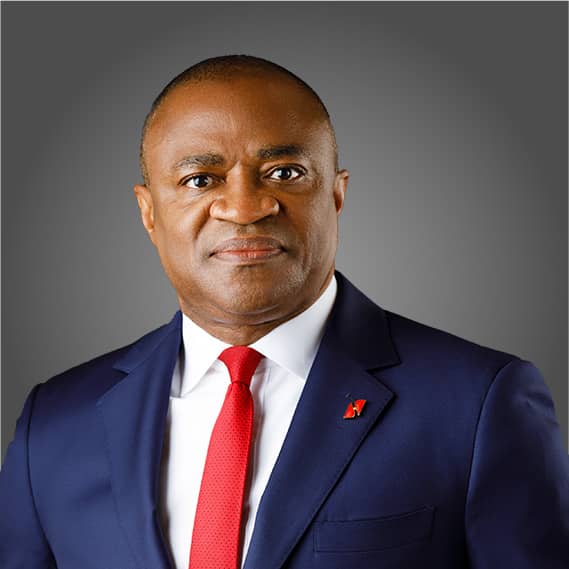
From Uche Usim, Washington DC
The Group Managing Director, United Bank for Africa (UBA), Oliver Alawuba, has said that Africa possesses over $4 trillion in domestic capital, which is sufficient to power its economic ambitions if effectively mobilised, channelled into productive sectors and supported by sound policies and strong financial institutions.
He said the fund presents a unique opportunity for the continent to drive sustainable growth from within, rather than salivating over foreign loans and other unreliable handouts.
In an exclusive interview with Daily Sun on the sidelines of the recently-concluded 2025 Annual Meetings of the IMF-World Bank Group in Washington DC, Alawuba said that UBA designed a White Paper to capture human and material resources available in Africa that can be hurriedly harnessed to spur growth on the continent.
He explained that the White paper, titled “Unlocking Africa’s Capital for Sustainable Growth,” provides a key framework for self-driven economic transformation by focusing on intrinsic strengths rather than external reliance.
“The gains articulated in this document move beyond mere financial metrics to address structural, philosophical and technological imperatives for sustainable African development”, he told Daily Sun.
He speaks more about the document in the interview below.
GMD, please recap exactly what the significance of this White paper is
Today, UBA is launching a white paper that fundamentally reframes the conversation around Africa’s future. Its core significance lies in challenging a persistent myth: that Africa lacks the capital for its own development. With this document, UBA is stating that the continent is not capital-poor; in fact, we have an estimated US$4 trillion in domestic capital. The central problem is that this capital is not effectively aligned with the continent’s development needs. This white paper serves as a call to action for governments, business leaders, and economic stakeholders across the continent to convene and determine how we can strategically mobilize this vast resource. We have the capital, the mineral resources, and the human capacity. The critical issue, and the focus of this paper, is how to successfully connect all these elements.
So, what will you now do to ensure this seeps into the right places?
The solution begins with changing the conversation and driving policy reform. As you saw today, we have gathered ministers and central bank governors because their roles are crucial. We need to see regulatory and fiscal policy changes, greater collaboration between financial institutions, and a continued breaking down of trade and investment barriers across borders. The point is that once we begin as Africans to talk together and talk to each other, then we will be able to resolve these issues.
For instance, we highlight two major opportunities: over US$725 billion in diaspora funds outside the continent, and over US$450 billion in African pension funds. Currently, these are not fully leveraged for development. By starting this dialogue, we can create the framework to unlock these domestic resources. So, that is like mobilisation of capital, allocation of capital, and then multiplication of that capital for economic development.
What has been the challenge before now?
The primary challenge has been the prevailing narrative itself. For too long, the story has been that these resources do not exist or are insufficient. This has perpetuated a donor-recipient dynamic, where Africa is seen primarily as a continent in need of aid. We are moving beyond that to advocate for a model of cooperative economic partnership.
This shift is not just our own initiative; it’s a response to global trends. Traditional aid from Western nations is declining, and they, too, are moving toward economic partnerships. Africa must be prepared to meet this new reality on its own terms, and this white paper outlines exactly how we can do that.
Now, how do you see the cooperation? The zeal you have, are you seeing the same kind of zeal across Africa?
Absolutely. The full hall today is a testament to the shared commitment. The presence of ministers, central bank governors, and key leaders from across Africa, all engaged in substantive discussion, signals a powerful consensus. This is not just another report; it is a significant call to action for African development, conceived and driven with a purpose for Africa and Africans. I am confident that the stakeholders here will reflect on its proposals and move decisively from talk to implementation.
Other News
What are the specific gains of this White Paper?
A key achievement of the White Paper is its success in reframing Africa’s economic narrative. The document points out that Africa is not capital-scarce, but rather suffers from structural gaps in financial intermediation. These gaps hinder the movement of domestic resources toward productive investments, such as a mismatch between the short-term nature of bank liabilities and the long-term needs of infrastructure projects.
The Whitepaper asserts that narratives of commercial investment are often distorted by external risk perceptions that frequently misrepresent local market realities. By prioritising local institutions, Africa gains a critical advantage: African financial institutions possess the deep local knowledge necessary to assess opportunities, price risks appropriately, and effectively deploy capital. This commitment to harnessing domestic assets, which include an estimated $2.5 trillion in commercial bank assets and $1.1 trillion in long-term institutional capital, is designed to significantly reduce the continent’s reliance on external funding as well as bolster economic independence.
Africapitalism and sovereignty
The UBA blueprint is rooted in the philosophy of Africapitalism, championed by UBA Group Chairman Tony Elumelu. This approach asserts that the African private sector, when empowered with vision and capital, is best equipped to drive sustainable growth that creates both economic prosperity and social wealth.
This is a movement away from the historical model of development finance, shifting focus from aid dependency to investment partnerships and long-term commitments. The strategy serves as a rallying cry for African self-reliance, ensuring that the continent is in control of its economic destiny and that its future is shaped by Africa itself. UBA positions itself as the bridge between domestic and global capital, leveraging its presence in 20 African countries and global financial centres like New York, London, and Paris.
Financial market deepening and digital inclusion
The strategy outlines concrete measures for regional integration, aimed at tackling capital fragmentation. Initiatives like the Pan-African Payment and Settlement System (PAPSS) address this by allowing cross-border payments in local currencies, which enhances liquidity and facilitates the deepening of the African financial market. There are plans to extend this integration to capital markets, allowing investors to purchase stocks across borders using local currency, thereby promoting the convergence of monetary policies.
Furthermore, the Whitepaper advocates for Africa to be deliberately included in the digital revolution and AI governance protocols. Tony Elumelu emphasised that digital transformation must lead to the democratisation of prosperity. This focus is crucial, as is the accompanying call for African governments to definitively fix the electricity challenge to create the necessary enabling environment where youth potential can be channelled toward productive use. This ensures that domestic capital mobilisation directly supports transformative sectors aligned with the United Nations Sustainable Development Goals (SDGs), including energy (SDG 7), infrastructure (SDG 9), and climate action (SDG 13).
The UBA Whitepaper goes beyond listing capital pools to establish a sophisticated framework for economic independence, highlighting specific financial instruments, institutional strengths, and crucial external relationships necessary for transformation.
Technical mechanisms for financial intermediation
The Whitepaper provides technical insights into how domestic capital can be effectively channelled. While Africa possesses an estimated $4 trillion in domestic capital, the issue is identified as fragmentation and the challenge of transforming capital into usable form, meaning liquidity and investable instruments. UBA advocates that financial institutions can catalyse structural transformation by harnessing this untapped domestic capital through structured, blended, impact-aligned finance.
Furthermore, the report addresses the structural gaps in financial intermediation, including the necessity of developing a scarcity of de-risking instruments that can be managed by local institutions equipped with deep local insight. Critically, institutions like Afreximbank are focusing on mobilising capital in African currencies to reduce the continent’s vulnerability to sovereign debt problems stemming from foreign currency borrowing. The Pan-African Payment and Settlement System (PAPSS) is instrumental in addressing this fragmentation by enabling cross-border payments in local currencies, with plans to extend this integration to capital markets.
Leveraging global capital beyond pension funds
While the strategy focuses primarily on domestic resources, it also identifies immense global capital pools needed for complementary external investment. Beyond the noted $63.1 trillion in global pension funds, the Whitepaper highlights the potential to attract capital by tapping into $105.9 trillion in global banking assets and $127 trillion in global equity markets.
The urgency of implementing this shift is underscored by declining traditional aid flows and the way geopolitical tensions are reshaping global investment patterns. To attract this external capital, investments must be structured as long-term commitments that deliver measurable social impact alongside financial returns, moving definitively away from short-term interventions.
Policy synchronisation and institutional validation
The UBA Whitepaper is not just theoretical; it draws its insights from the UBA Group’s direct operational experience across 20 African countries and its presence in global financial centres (New York, London, Paris, and Dubai).
The strategy aligns closely with Nigeria’s immediate reform agenda, with the Minister of State for Finance, Doris Uzoka-Anite. The economic stability resulting from Nigeria’s bold policies (fuel subsidy removal, exchange rate unification and fiscal restructuring) provides a strong foundation for the Whitepaper’s goals. Specific policy targets, mentioned in this context include deepening reforms in the financial and energy sectors and strengthening capital markets to expand access for SMEs (Small and Medium-sized Enterprises).
It is also on record that the mainstream goal of this report received high-level external validation, with Prof. Benedict Oramah of Afreximbank commending UBA, noting that it is uncommon in Africa to see a commercial bank invest in research and thought leadership on such a scale as we have done. This unified approach represents a rallying cry for African self-reliance and strategic collaboration, providing a structured pathway toward economic sovereignty.