Follow Us on Google
From Kenneth Udeh, Abuja
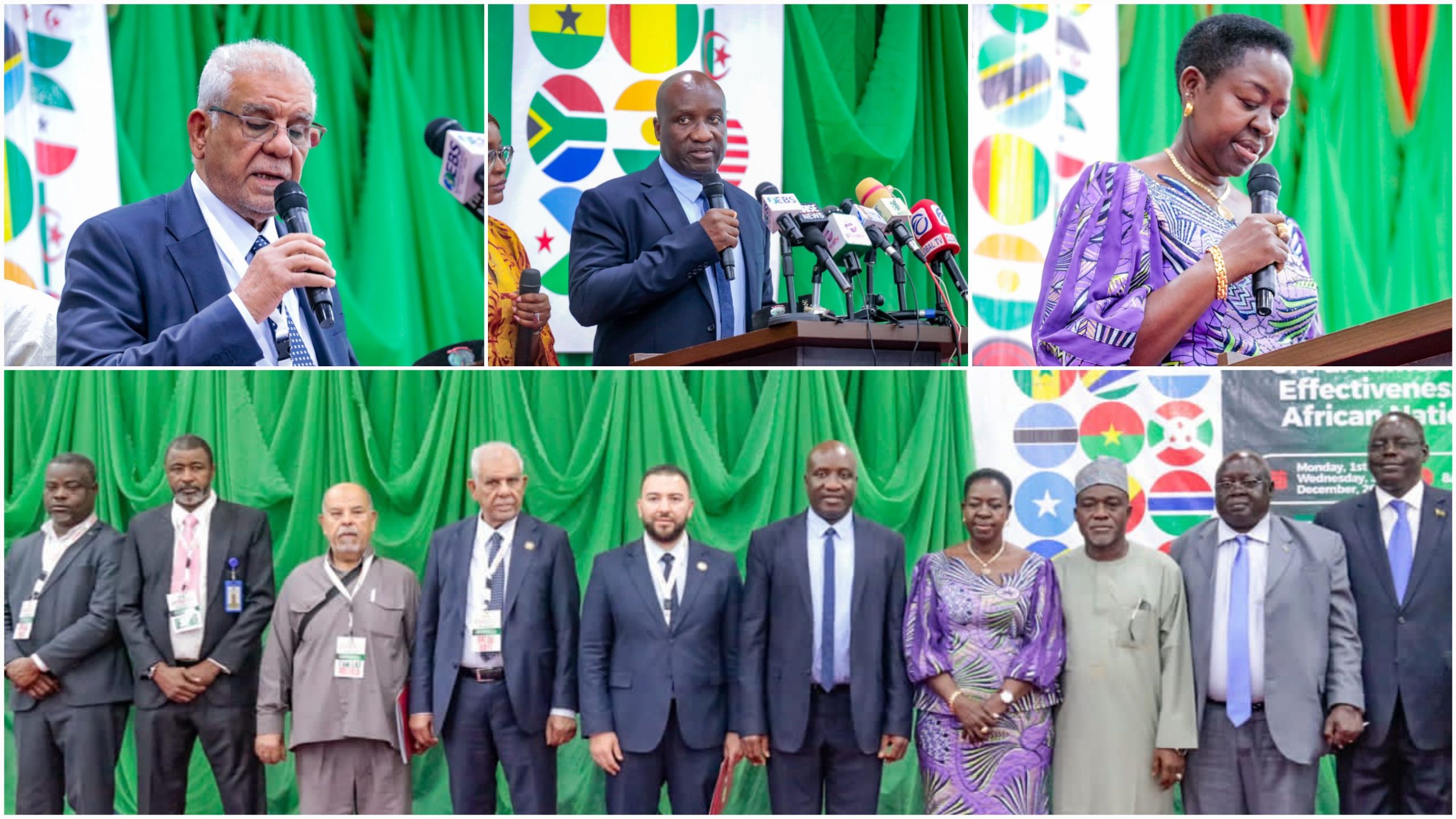
The maiden African Legislative Aides Conference (ALAC) opened in Abuja on Monday with a resounding continental call for the empowerment, professionalisation and digital transformation of parliamentary support staff, as Barr. Emeka Nwala, Chairman of the 10th National Assembly Legislative Aides Forum (NASSLAF), was unveiled and inaugurated as the Pioneer President of the African Legislative Aides Association (ALAA).
The historic inauguration, conducted by Rt. Hon. Jemma Nunu Kumba, Speaker of the Transitional National Legislative Assembly of South Sudan, also saw Libya’s Abdulmohemin Tumia announced as Deputy President.
The association will now serve as the umbrella body for legislative aides across Africa, offering a unified platform to strengthen democratic governance and parliamentary efficiency on the continent.
The three-day conference, held at the NAF Conference Centre, Abuja, drew delegates from several African countries, senior parliamentary leaders, diplomats, scholars and policy experts, all converging under the theme: “Empowering Legislative Aides as Strategic Drivers of Parliamentary Effectiveness in African Nations.”
Nwala: “Aides Must Become Central Actors in Africa’s Democratic Transformation”
In his welcome address, Barr. Emeka Nwala described the gathering as a landmark step toward strengthening democratic institutions across Africa.
He said the conference was designed to “encourage capacity development, professionalism and programmatic convergence” among legislative aides, noting that effective democracies are built on knowledge-driven parliamentary systems.
Nwala warned that the collapse of parliaments in parts of Africa citing Gabon, Burkina Faso and Niger underscored the urgent need to recommit to institutional stability.
“We are convinced that this continental forum will offer a veritable platform to support democratic strengthening in Africa. Our parliamentary leaders must have renewed optimism that as their aides, we are strategically positioned to drive change,” he said.
He expressed gratitude to the Nigerian National Assembly leadership, especially Senate President Godswill Akpabio, for supporting the initiative, and thanked South Sudan’s Speaker Jemma Nunu Kumba for delivering the keynote address.
NBA President Afam Osigwe SAN: “Aides Must Be Independent, Professional and Well-Resourced”
President of the Nigerian Bar Association (NBA), Mazi Afam Osigwe (SAN), called for full professional recognition of legislative aides, insisting they must be insulated from politics, empowered with modern tools, well-remunerated, and institutionally protected.
“Aides should not only be seen but listened to. Their work sustains democracy. They must be allowed to function as professionals and the legislature must incorporate their expertise into lawmaking,” he said.
Libya’s Musa Faraj Calls for New African Social Contract, Stronger Institutions
The Deputy President of Libya’s High Council of State, Musa Faraj, delivered one of the conference’s most powerful speeches, calling for a fundamental resetting of Africa’s social contract.
He declared that sustainable democratic transformation “cannot be achieved solely through the ballot box,” but through strong legal frameworks that guarantee justice, transparency and civic partnership.
Faraj outlined key institutional reforms needed across African countries, including:
Full judicial independence
Anti-corruption legislation and enforcement
Protection of whistleblowers
Mandatory financial disclosure for officials
Administrative decentralisation
Laws guaranteeing access to public information
Legislative support for civic participation, women, youths and marginalised groups
“The African citizen does not merely seek a state that provides services, but a state he owns and actively helps to build,” he said.
South Sudan’s Speaker Jemma Nunu Kumba: “Aides Are the Quiet Custodians of Democracy”
Delivering the keynote speech, Rt. Hon. Jemma Nunu Kumba described legislative aides as the “institutional backbone” of parliaments, stressing that no legislature can function effectively without a professional corps of clerks, researchers, legal advisers, analysts and administrative staff.
She said that across Africa, including South Sudan, legislative aides remain the “permanent institutional memory” of parliaments, surviving political transitions and ensuring procedural integrity.
Kumba warned that Africa risks falling behind without urgent investment in digital governance, legislative technology, research capacity and data-driven oversight.
“Africa cannot afford to leave digitalisation to chance. Empowering our aides with digital tools is not a privilege; it is a necessity for effective governance,” she said.
She also addressed gender-based harassment in parliaments, urging the adoption of Inter-Parliamentary Union (IPU) guidelines to protect female aides and promote equal opportunity.
Africa Bids to Host Future Editions; ALAA ID Card to Be Issued
The conference also announced that African countries would begin bidding to host future editions of the Legislative Aides Conference.
Delegates were further informed that an official ALAA identification card would be issued to all registered members across the continent.
Speaking on the significance of the new association, a conference official, Ajikwa, said Nwala’s emergence reflected confidence in his experience leading more than 8,000 aides in the Nigerian National Assembly.
“African Legislative Aides Association will serve as the engine room of parliamentary engagement across Africa,” he said.
The inauguration of ALAA marks the first time legislative aides across African parliaments have been organised under a continental structure.
As speeches from Nigeria, Libya, South Sudan and the African Bar community converged, the message was unmistakable: Africa’s democratic future depends on empowered, professional, well-equipped and institutionally protected legislative aides.
And with the emergence of Barr. Emeka Nwala as Pioneer President of ALAA, the continent has taken a decisive step toward building stronger parliaments and deeper democratic governance.