Follow Us on Google
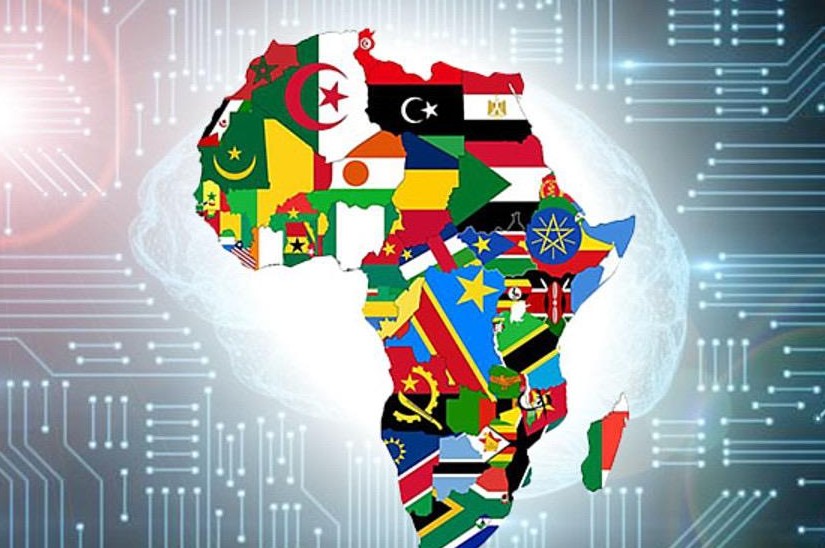
When schoolchildren look at most classroom maps, Africa appears small, wedged beneath Europe and stretched across the bottom half of the world. Yet cartographic accuracy tells a different story. At 30.4 million square kilometers, Africa is larger than the United States, China, India, and much of Europe combined.
The Equal Earth projection, designed in 2018, restores this proportionality, while the Mercator projection, still widely used, continues to shrink the continent on paper. The African Union and advocacy groups such as Africa No Filter and Speak Up Africa have now thrown their weight behind the “Correct the Map” campaign, calling for adoption of projections that represent Africa’s true size.
The campaign is not about lines on a page. It is about recognition. Distorted maps reinforce distorted perceptions. A small Africa appears less significant, less powerful, and less central. Correcting the map is about showing Africa as it truly is: vast, complex, and indispensable to global progress. Yet once we accept Africa’s scale, we must also accept the infrastructure challenges that come with it, especially in energy.
Read Also: Over 60,000 farmers to benefit from free fertiliser, farm inputs
A Vast Continent, an Uneven Grid
Africa’s energy paradox is stark. It has the largest solar potential of any continent, enormous reserves of critical minerals, and immense wind resources, yet over 600 million Africans still lack access to electricity. Centralized grids, modeled after European and North American infrastructures, have proven unable to match Africa’s realities. Extending high-voltage transmission across deserts, forests, and sparsely populated regions is prohibitively expensive. Where grids do exist, instability is common, with blackouts interrupting industries, healthcare systems, and digital networks.
Urban centers experience surging demand as populations grow, while rural communities remain off-grid or reliant on diesel generators that are costly and polluting. The continent’s sheer physical scale, once restored on a corrected map, highlights the limits of this outdated approach. If Africa is large enough to hold much of the industrialized world within its borders, then its infrastructure cannot be built on borrowed blueprints. It requires solutions tailored to its geography.
Read Also:
The Case for Decentralization
Decentralized energy systems, generating power at the point of consumption, eliminate dependence on distant infrastructure. In Africa, where distances between communities are vast and topographies diverse, decentralization is not a luxury but a necessity. It allows rural schools, clinics, and businesses to access electricity without waiting for costly grid extensions. It allows urban districts to stabilize supply independently of overburdened central networks. It reduces systemic vulnerability, since failure of one unit does not cascade into national blackouts.
Decentralization also aligns with resilience in crisis. In regions affected by drought, floods, or wildfires, centralized lines are often the first assets disrupted. Autonomous generation ensures continuity of critical services even when broader infrastructure fails. For a continent as vast as Africa, decentralization is not simply an alternative model but the only one that reflects the continent’s true size.
The Neutrino® Energy Group and Neutrinovoltaics
The Neutrino® Energy Group has developed neutrinovoltaic technology to meet precisely these needs. Unlike solar photovoltaics, which depend on sunlight, neutrinovoltaics rely on interactions with neutrinos, cosmic rays, and ambient non-visible radiation that permeate the Earth at all times. By engineering alternating layers of graphene and doped silicon at nanometer scale, the company has created materials that vibrate under particle interaction.
These vibrations generate an electromotive force, producing direct current electricity continuously, regardless of weather, time of day, or location.
This solid-state system contains no moving parts, making it durable and requiring minimal maintenance. Laboratory research has validated the underlying physical interactions, such as neutrino-electron scattering and coherent elastic neutrino-nucleus scattering. Field testing of prototype devices has demonstrated the ability to sustain kilowatt-scale output. The Neutrino Power Cube, a modular unit weighing around 50 kilograms and delivering 5 to 6 kilowatts, exemplifies how neutrinovoltaics translate scientific discovery into deployable infrastructure.
To understand the potential, scale provides context. If 200,000 Neutrino Power Cubes, each delivering 5 kilowatts, were deployed, the combined output would be 1,000 megawatts. That is the equivalent energy capacity of a medium-sized nuclear power plant. This calculation illustrates how decentralized systems, when aggregated, can provide not just household-scale electricity but also infrastructure-scale supply. Africa’s size demands precisely this kind offlexible scaling, where small units build into vast networks without requiring monolithic projects.
The Neutrino Life Cube: Survival and Autonomy
For Africa, where energy access challenges often intersect with water scarcity and climate extremes, the Neutrino Life Cube offers a particularly relevant application. The system integrates a compact neutrinovoltaic generator delivering 1 to 1.5 kilowatts with an air-to- water purification unit capable of producing 12 to 25 liters of potable water per day.
Together, these features address two of the continent’s most pressing needs: electricity and clean water.
In rural clinics, the Life Cube can power refrigeration for vaccines while simultaneously providing safe drinking water. In disaster relief scenarios, it can support shelters by powering lighting, communications, and cooling while supplying water for displaced populations. In off-grid schools, it can sustain computers and connectivity equipment, enabling digital education. The Life Cube represents decentralization not as theory but as practical relief in places where grid lines will not arrive for decades, if at all.
AI and Material Optimization
Artificial intelligence amplifies these innovations. The Neutrino® Energy Group employs AI-driven simulations to optimize nanomaterial configurations. Variations in graphene layer thickness, doping concentrations, and lattice alignments all influence resonance efficiency.
Rather than relying on slow, iterative physical testing, AI models predict outcomes across thousands of virtual experiments, narrowing down the most promising architectures for fabrication.
This methodology accelerates research timelines, lowers costs, and steadily improves performance. It also mirrors how AI is being applied in Africa itself, from agricultural forecasting to healthcare diagnostics. The convergence of AI and neutrinovoltaics ensures that the technology evolves in tandem with Africa’s broader digital transformation, producing systems that are not only resilient but intelligently optimized.
Scaling for Africa’s Energy Future
Africa’s energy demand is projected to triple by 2040. Meeting this demand exclusively through centralized expansion would require unprecedented investment and infrastructuredevelopment that many states cannot finance. Decentralized technologies such as neutrinovoltaics provide a complementary path, enabling leapfrogging in the same way thatmobile phones bypassed landline networks. By deploying compact generators and Life Cubes at community and household level, electrification can expand without waiting for megaprojects.
The modularity of neutrinovoltaic systems allows flexible scaling. A single household can operate one Power Cube, while enterprises can combine multiple units. In regions where renewable sources like solar and wind are abundant, neutrinovoltaics provide a continuous baseline supply that complements intermittent generation. Together, they form hybrid systems capable of delivering both reliability and sustainability.
Correcting the Map, Correcting the Grid
The symbolism of the “Correct the Map” campaign extends beyond cartography. Just as Africa must be recognized in its true physical proportions, so too must its energy challenges be recognized in proportion to its reality. Outdated grids are insufficient for a continent of this magnitude. Energy systems must reflect Africa’s scale, diversity, and growth.
The Neutrino® Energy Group’s neutrinovoltaic technology, embodied in the Power Cube and Life Cube, offers one such pathway. Continuous, maintenance-light, and independent of central grids, it provides communities with the autonomy to generate their own power and water. It aligns infrastructure with geography, ensuring that Africa’s vastness is not a liability but a foundation for development.
Recognition and Resilience
Correcting the Mercator projection is about acknowledging Africa as it truly is: large, central, and significant. Correcting Africa’s energy system is about acknowledging its needs in equal proportion. Decentralization is not an abstract principle but a practical necessity for a continent too large and too diverse to be bound by outdated models.
Holger Thorsten Schubart and the international team of scientists and engineers at the Neutrino® Energy Group are advancing solutions that respond directly to this imperative. By transforming particle physics into continuous electricity and integrating it with survival technologies like water purification, their work provides tools suited to Africa’s realities.
In cartography and in energy, recognition matters. A bigger Africa on the map demands bigger answers in infrastructure. The Neutrino® Energy Group’s neutrinovoltaic systems and Life Cubes show that such answers are not distant possibilities but active projects. In times when scale and resilience must align, acknowledging Africa means building energy systems that match its true size.