Follow Us on Google
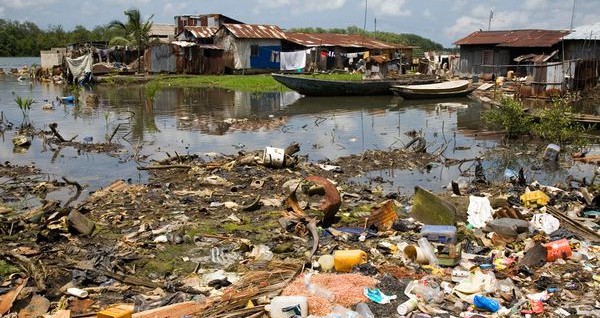
At an event to commemorate this year’s World Environment Day, the federal government observed that climate change is a major threat to sustainable development. Director of the Department of Climate Change, Federal Ministry of Environment, Iniobong Abiola-Awe, who stated this at an event to mark the WED organised by the Shehu Musa Yar’Adua Foundation in Abuja, hinted that developing countries, such as Nigeria, are particularly vulnerable to climate-related risks due to rapid population growth, urbanisation pressures, infrastructure deficits and other developmental challenges.
She also said that rising temperatures, ecosystem degradation, sea-level rise, extreme weather conditions and growing socioeconomic vulnerabilities are increasingly threatening sustainable development. She explained that Nigeria faces increasing risks of flooding, desertification, biodiversity loss and others.
Nigeria is among gas-flaring countries in the world despite measures to curb the menace. Available figures showed that Nigeria lost about $56.75billion to gas flaring between 2002 and 2024, with cumulative green gas emission exceeding 714 million tonnes of carbon dioxide equivalent. Data from the World Bank indicated that Nigeria flared about 5.3 cubic metres of gas in 2022 across 174 flare sites.
Besides, the World Health Organisation (WHO) has revealed that Nigeria recorded an estimated 175 deaths per 100,000 people linked to household and ambient air pollution. The World Bank, on irs part, said that ambient air pollution caused about 11,200 premature deaths in 2018 in Lagos. And cost of treating pollution-related illnesses was valued at about $2.4billion.
The WED is celebrated annually on June 5 to create awareness and action for the protection of the environment. The theme of the 2026 World Environment Day, “Inspired by Nature, For Climate, For Our Future,” marks a critical shift from incremental promises to urgent legally binding climate action. It is also a clarion call on governments to scale up action to address their environmental challenges.
Marking the day, the United Nations (UN) Secretary-General, Antonio Guteress, warned that the earth is “sending distress signals everywhere,” citing the past 11 years as the warmest on record. He also called for urgent action to limit the 1.5-degree temperature overshoot, slash emissions and accelerate the transition to renewable energy.
Similarly, the United Nations Environment Programme (UNEP) stated that the earth is sending urgent signals such as raging wildfires, rising seas, and extreme heat—and called for immediate global climate action under the campaign theme #Now For Climate. UNEP Executive Director, Inger Anderson, stated that the planet has “for years been sending signals that its limits are approaching,” meaning the time for incremental, delayed action has passed.
UNEP used the occasion to call on individuals, businesses, and governments to step in and send positive signals back to the planet by reducing emissions and restoring ecosystems and adopting nature-based solutions.
Instructively, the federal government is addressing severe climate challenges such as coastal flooding, desertification and urban vulnerabilities by committing to reduce green house emissions by 29 per cent by 2030 and 32 per cent by 2035. It also targets net-zero emissions by 2060. The government is working hard to achieve the 17-point UN Sustainable Development Goals (SDGs) by prioritising the eradication of poverty, safeguard the environment and ensure shared prosperity by 2030. It also wants to provide clean water and sanitation for all as well as affordable and clean energy for its citizens.
While these lofty goals are achievable within the deadlines, the government should scale up in renewable energy, Compressed Natural Gas (CNG) cars and vehicles and provision of potable water to all Nigerians. Most homes and small industries in the country can be powered with solar energy. Good enough, sunshine is available almost throughout the year across the country. Government can invest in hydro and wind energy sources. The government should work hard over the eradication of open defecation, which remains the first step towards ensuring a clean environment. Government should address gas flaring, air pollution and pollution-related ailments.
The tree-planting campaign should be intensified in all the 774 local governments of the 36 states and Abuja. There is also the need for climate change education in schools. Protecting-the-environment campaign should be taken to all parts of the country as well. Nigerian farmers are enjoined to adopt climate-smart practices. They should convert agricultural waste into organic fertilizers. This approach is environmentally-friendly.