Follow Us on Google
By Rita Okoye
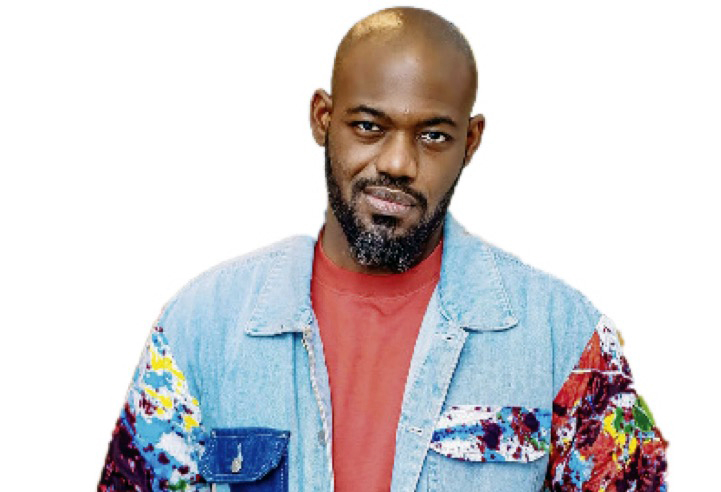
Michael Onome Ejoor is a prominent Nigerian actor, director, content creator and master of ceremonies (MC), who has built a notable career in Nollywood. He gained widespread recognition for his compelling performance as Inspector Onome in the Netflix crime-thriller series, To Kill a Monkey.
In a podcast interview with Paul and Baaj, Ejoor reflected on his journey into Nollywood, his transition from acting to directing, his experience with mental health, relationships, success and the pressures facing young people today.
How did you end up here with us? You were working in the financial district in East London, and all of a sudden, we are seeing you on set in Mushin?
Acting found me. It was one of the hardest times of my life. This was in 2015, and I was 27. My mum was diagnosed with chronic kidney disease. I lost my job, and I was also going through heartbreak. I had no money, and a really good friend of mine, Tim Godfrey, was doing a musical at the National Theatre.
He saw that I was really depressed and said, “You know what? Just get out of the house.” I thought, “So, what’s going to happen to the acting part? I know I can do the singing part.” I started going for rehearsals, and it helped distract me from everything that was going on. It was the week of the performance, and the male lead didn’t come for rehearsal. The director said, “I need to work on this scene,” referring to Waje’s character arc. Then he said, “Oh, Michael, take the script.” I said, “I’ve watched it so many times. I know the lines.”
We did the scene, and people started clapping. I was clapping for Waje, and she said, “They’re not clapping for me. They’ve seen me do this many times.” The director walked up to me and said, “I thought you said you weren’t an actor.” I said, “I’m not an actor. I just did that thing you people do.” On the day of the final show, the male lead was stuck in traffic. Who did they put inside the costume? Me.
You just learned the lines for his part? You had no thought that you might have an opportunity to understudy?
I knew almost everyone’s lines because I was just excited to be there. I was thinking, “Oh, so this is how you guys do this thing? I thought somebody was feeding you the lines from the bottom.” It doesn’t impact the performance for me. I really wish I could say this person’s name because it is in a positive light. They have to feed this person their lines, but her performance is always brilliant.
From the stage, how did you find yourself in front of the camera?
I remember we were housed for the weekend. The cast members went to Waje’s room, and she joked, “Michael, come and audition for The Voice so I can win again,” because her talent won the first season. I said, “I don’t see myself becoming a musician.” She asked, “Do you see yourself becoming an actor?” I said, “From where to where?” She said, “What I’ve seen during rehearsals is something.” She had a proper conversation with me, and I was so excited that I finally got to act with Waje.
Did you later go to any acting school?
I went to acting school. Five years later, I was already in your faces on television. [Laughs] By that time I had done Unbroken.
Why did you decide to go to acting school?
I loved acting so much that it felt like some form of injustice not to learn it properly. I was working in procurement. I studied accounting and finance, among other things. I appreciated the craft so much that I felt I needed to put pen to paper and properly learn it.
How did you end up behind the camera, as a director?
When I’m in a scene, I’m too concerned about everything else. I really care about the film holistically, not just the performance I’m bringing to it. Even directors began asking, “Oh, do you direct? Because you did this.” I would say, “No, I’m just very interested.”
I started under-studying people like Biodun Stephen. I’m going to say this, and I apologise if it sounds harsh: I feel there are as many bad directors as there are bad actors. It’s pretty much the same percentage. I didn’t say it from a director’s point of view, but on the last project I directed in January, I picked up the phone and called Biodun Stephen. She wasn’t available. I tried to call Yemi Morafa at different points. I called J-Blaze for another scene, and he was available. What I’m saying is that people always reduce the success of a film to the acting, but there are so many other aspects involved.
There’s another aspect of you that people didn’t get to know about until much later. Were you comfortable sharing your mental health journey?
I wasn’t comfortable sharing it.
What gave you the courage to do it?
I had always wondered if people would think I was crazy or wouldn’t want to work with me. I was scared that people would use it against me. But I remember when To Kill a Monkey came out, Omowunmi Dada called me and showered me with praise.
Would you love to share the full story?
It’s already online. [Laughs] I’m very fine. I’m a huge advocate, and I work very closely with Lagos Mind.
I started getting depressed and dealing with mental health issues when I was in secondary school. The opportunity to help mitigate what people go through is something I’m very interested in.
Other News
For your fans to know you a little bit better: what’s the fastest way to know that a colleague is pretending to have all that money when you can tell they don’t?
Probably the most obvious way is over-showing and name-dropping.
Have you ever trusted someone in business and regretted it?
I’ve trusted people personally and regretted it. In business, not really.
What’s the most expensive lesson success has taught you?
Try to find your tribe and core friends before you become successful. I promise you, you will second-guess everything.
I’m very glad that I made my friends before this phase of my life started.
What’s something people think is love but isn’t?
Sex. I think sex is sex. I don’t really know why people attach it to love. People say, “Oh, there’s making love,” but I feel sex is really the sexual urge that you have. I guess you have better sex with people you care about, but it’s not necessarily a show of love, in my opinion.
You just said you have better sex with people you care about. Am I assuming you mean people you might be in love with?
I think that’s only because you feel safer with them. And that’s because your bum bum is showing while you are at it.
What I’m trying to say is that you feel safer with this person. It doesn’t necessarily mean that the feeling can be attributed to love.
I would assume something as interpersonal and sensual as sex, when those things come together, really points towards love.
It means that you like and care about the person, but you may not necessarily be in love with them.
What’s the one question nobody wants their partner to ask?
“Am I really your first choice”?
Has anybody asked you that question, and have you asked anybody that question?
I can’t imagine that I am many people’s first choice. There are better versions of humans out there. It’s like asking, “Am I who you really want in life?” Because usually, we don’t get what we want. We settle and jump to the next step. But, on a serious note, a lot of people are running around because there’s so much pressure around marriage.
Don’t you think the pressure has gone down compared to how it used to be?
It’s the same. It’s just that the stakeholders are different now. The people who were putting the pressure on us before were our parents. Now, people pressure themselves because they don’t want to be alone.
Why do you think they don’t want to be alone?
I think humans are just so co-dependent. We don’t enjoy our own company. People judge other people. A woman is not considered a woman if she hasn’t kept a home or had children. I’ve even heard of men who were not given promotions at work because someone said, “Oh, if you can’t keep a home…”
Any last words for the young people out there?
It’s tough, especially in this particular climate. I remember when I was the age of the average Gen Z person, I bought my first car, brand new, tear rubber. That is one of the hardest things to see now. Some Gen Zs can’t even afford to use Uber. My first car was ₦3.5 million.
Life is just happening, and I want to say to you guys: hang in there. Don’t feel like you can’t acknowledge that life is “life-ing.” I’m tired of seeing people killing themselves because of situations. Someone once killed himself because of an affair. Why are we creating such an environment where people feel so much pressure and constantly feel bullied? Let people make mistakes. And another thing: scroll. You won’t die if you scroll. You don’t have to comment on everything. You won’t die. You don’t have to have an opinion on every single thing that is out there.