Follow Us on Google

By Juliana Taiwo-Obalonye
Reports of sexual and gender-based violence (SGBV) continue to make headlines across Nigeria, from the alleged rape of women and girls to domestic violence, sexual exploitation and abuse of vulnerable persons. Behind these disturbing reports are survivors struggling with trauma, families demanding justice and, often, a painful question: will speaking out bring justice or expose them to further harm?
For victims of abuse allegedly perpetrated by security personnel, that question carries an even greater burden. The person they accuse may be armed, backed by an institution and empowered to arrest, detain or question them. Approaching the authorities for help may therefore appear less like a path to justice and more like another risk to their safety.

In conflict-affected communities, internally displaced persons’ camps, detention facilities and other vulnerable settings, the consequences can be particularly devastating. Women and girls who should find protection in the presence of security personnel may instead face the fear of harassment, intimidation or abuse.
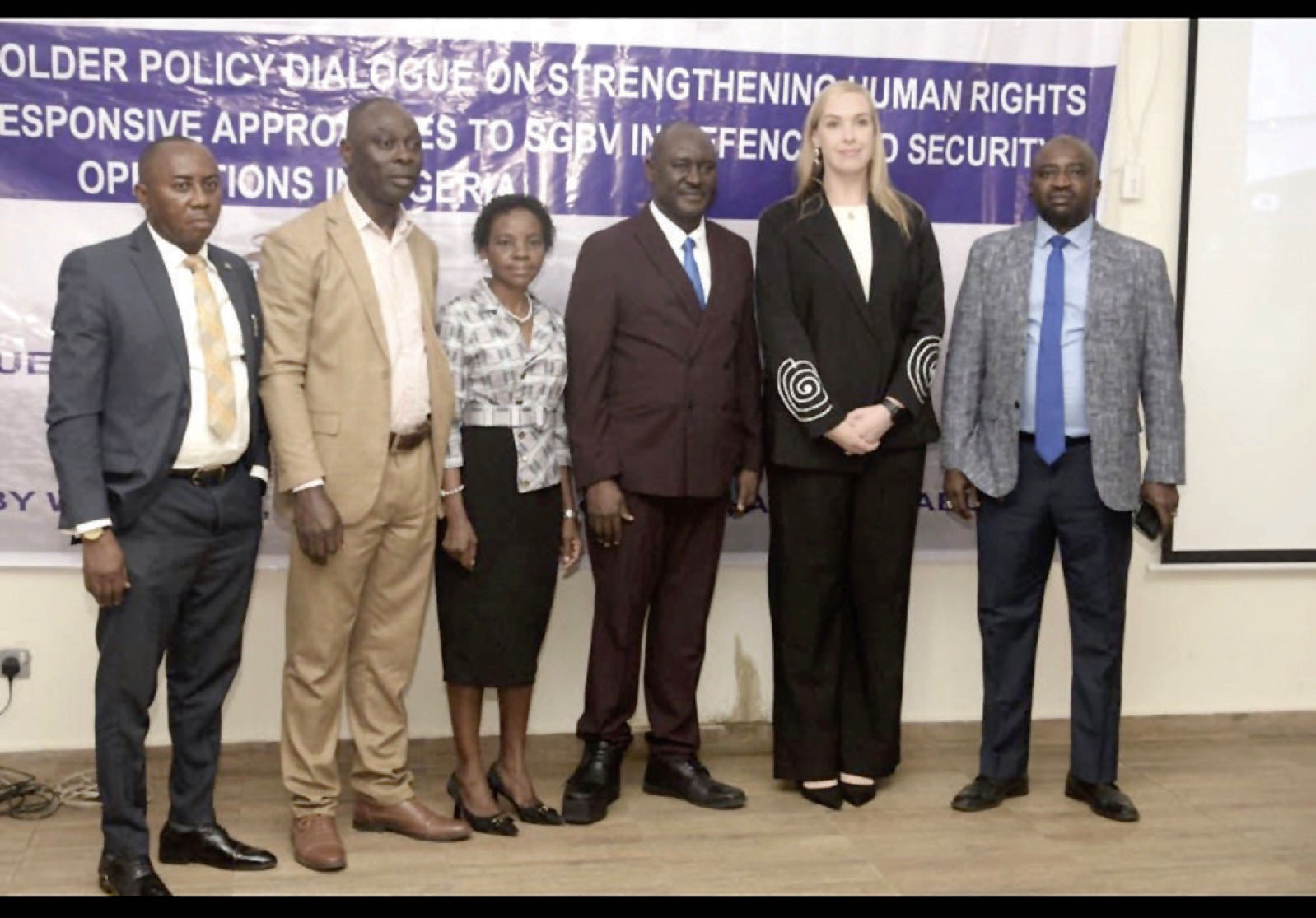
This troubling reality formed the focus of a national policy dialogue in Abuja, where the National Human Rights Commission (NHRC), the Civil Society Legislative Advocacy Centre (CISLAC) and Transparency International Defence and Security (TI-DS) called for safe, confidential and survivor-centred reporting channels for victims of SGBV involving security personnel.
The call goes beyond establishing complaint desks or introducing new policies. It touches the heart of a crisis in which the people who need protection may be too frightened to identify those they believe have harmed them.
At the dialogue, the Executive Secretary of the NHRC, Tony Ojukwu, warned that SGBV was no longer merely a consequence of insecurity in some situations but had become “a feature of the security response itself.”
The commission, he said, had documented a “disturbing but consistent pattern” of SGBV through field monitoring, its Human Rights Situation Room and engagements with internally displaced persons, detainees and conflict-affected communities.
For survivors, however, documenting an incident is only one part of the struggle. The next steps—reporting the alleged perpetrator, securing protection, accessing medical and psychological support and pursuing justice—can be equally daunting.
The fear behind the silence
Imagine being a woman in a conflict-affected community who has suffered sexual abuse and must decide whether to report it. If the alleged perpetrator belongs to a security agency, the decision may involve weighing the possibility of justice against the fear of retaliation, exposure, stigma or further intimidation.
The survivor may worry about whether her identity will remain confidential, whether her complaint will be investigated impartially or whether the person she accuses will learn about the report before she receives protection.
For some, the fear of being disbelieved or blamed may be enough to keep them silent. Others may have little confidence that an investigation will lead to meaningful consequences.
These are among the barriers identified in the communiqué issued at the end of the October 6, 2026, dialogue organised by CISLAC/Transparency International Nigeria with support from the Government of Ireland.
Participants identified fear of retaliation, stigma, institutional barriers, concerns about confidentiality, power imbalances and a lack of confidence in complaint mechanisms as factors discouraging survivors, witnesses and security personnel from reporting SGBV.
The result is a dangerous cycle: abuse may go unreported, perpetrators may escape scrutiny, and institutions may remain unaware of the extent of the problem.
The representative of Transparency International Defence and Security, Yi Kang Choo, captured this dilemma in a question that resonated throughout the discussion: “Who do you call when the person you fear is wearing a uniform?”
“For most of us in this room, that question is hypothetical. For too many people in conflict-affected communities, in Nigeria and around the world, it is not,” she said.
Her question exposes a fundamental contradiction in the protection system. When citizens cannot safely report alleged abuse by those entrusted with their security, the credibility of the institution itself comes under threat.
When policies exist but victims cannot speak
Nigeria has laws and institutional structures intended to protect citizens from violence and abuse. The Violence Against Persons (Prohibition) Act 2015, constitutional protections and international commitments, including the Convention on the Elimination of All Forms of Discrimination Against Women and the Maputo Protocol, provide important frameworks for protecting rights.
Security agencies also have internal disciplinary structures, ethics units and complaint mechanisms. Yet the existence of these arrangements does not automatically guarantee that survivors will feel safe enough to use them.
Choo cited Transparency International’s 2025 Government Defence Integrity Index, which assessed 17 sub-Saharan African countries. Nigeria scored 28, an improvement from 22 in 2020, but remained in the “very high corruption risk” category.
Although Nigeria scored 83 for compliance and ethics units and 88 for disciplinary measures, its whistleblowing score was only 17.
The figures highlight the gap between institutional arrangements and the confidence required to report wrongdoing.
“In other words, the systems may exist on paper, but people do not yet feel sufficiently safe or confident to use them,” Choo said.
For a survivor, this gap can determine whether an allegation ever reaches an investigator. A reporting system that offers no credible assurance of confidentiality or protection may exist in name but remain inaccessible to the people it was designed to serve.
The Executive Director of CISLAC/Transparency International Nigeria, Auwal Ibrahim Rafsanjani, said the response required more than policies on paper.
“These challenges require more than the existence of policies on paper. They require institutional systems that personnel and members of the public can trust and safely use,” he said.
The communiqué consequently recommended confidential reporting channels, stronger safeguards for complainants and witnesses, clear procedures for investigating allegations and appropriate referral pathways to medical, psychosocial, legal and protection services.
Such measures recognise that justice begins before a case reaches the courtroom. It begins when a survivor can disclose an experience without being exposed to further harm.
The cost of silence goes beyond the survivor
Other News
The consequences of underreporting extend beyond individual victims. They can weaken relationships between communities and the security agencies deployed to protect them.
Nigeria continues to confront terrorism and insurgency in the North-East, banditry in the North-West and other security challenges across the country. In these environments, the cooperation of residents is essential to gathering intelligence, identifying threats and protecting vulnerable populations.
When women and girls fear those in uniform, they may hesitate to provide information, seek assistance or cooperate with security operations.
Ojukwu stressed that public trust was indispensable to effective security operations.
“Intelligence gathering, community cooperation and post-conflict stabilisation all depend on trust. When women and girls see security forces as protectors, not predators, operations succeed,” he said.
He added: “A security operation that is not human rights-centred and gender-responsive cannot win peace.”
The NHRC executive secretary was careful to distinguish individual cases of misconduct from the conduct of the wider security establishment, noting that the vast majority of officers were professional and disciplined.
“Let me be clear: This is not an indictment of our institutions. The vast majority of our officers are professional and disciplined,” he said.
“But even one case of SGBV by a state actor undermines the legitimacy of the entire operation, destroys trust with the communities we are mandated to protect, and violates the Constitution, the Armed Forces Code of Conduct, the VAPP Act 2015, and our international obligations under CEDAW and the Maputo Protocol.”
For communities already traumatised by conflict and displacement, the implications are particularly serious. People fleeing violence should not have to contend with the possibility of abuse while seeking safety.
The communiqué therefore urged security agencies to conduct mandatory SGBV risk assessments before, during and after operations, particularly in conflict-affected and fragile communities. It also recommended identifying vulnerable groups and high-risk locations and incorporating appropriate safeguards into deployment plans.
Why more women in uniform matters
The composition of security institutions is another concern.
Choo noted that women account for less than 11 per cent of the Nigeria Police Force, advocating greater participation of women in recruitment, leadership and decision-making.
“Having more women in uniform will not, by itself, end abuse. But institutions where women can serve and lead at every level are better placed to recognise abuse, respond to survivors, and challenge cultures where misconduct can go unaddressed,” she said.
Greater representation, however, must be accompanied by effective safeguards and accountability. Women officers also need safe internal channels to report harassment or abuse without fear of professional retaliation.
The communiqué called for gender considerations to be integrated into recruitment, training, deployment, operational planning, leadership and personnel management. It also urged security institutions to strengthen oversight and track complaints, investigations, disciplinary actions and referrals.
These recommendations are intended to move gender responsiveness from a general commitment to an operational requirement.
The Comptroller-General of the Nigeria Immigration Service, Kemi Nandap, said the Service was strengthening its internal mechanisms through its Gender Unit, Anti-Corruption and Transparency Unit, SERVICOM and Code of Conduct and Ethics.
She said protection principles had been incorporated into training curricula and operational procedures as part of efforts to maintain zero tolerance for SGBV.
“Strengthening safe reporting channels and ensuring that survivors can report without fear of stigmatisation or reprisal is central to building public trust in our institutions,” Nandap said.
The challenge now is to ensure that such commitments translate into accessible and dependable protection for everyone who needs it.
From promises to protection
The October 6 dialogue brought together representatives of security and defence institutions, oversight bodies, civil society organisations, diplomatic missions, development partners, human rights practitioners, the media and other stakeholders.
Their communiqué called for stronger collaboration, independent oversight where appropriate, timely investigations and clear pathways linking complaints to disciplinary action and, where warranted, prosecution.
It also stressed the need to place survivors and affected communities at the centre of interventions, respecting their dignity, confidentiality and choices while ensuring access to appropriate support.
For survivors, these commitments will matter only when they produce tangible changes: a complaint received without intimidation, an investigation conducted without interference, medical and psychological support made accessible, and protection provided against retaliation.
The Netherlands, through its diplomatic representation at the dialogue, reaffirmed the importance of human rights and gender equality in its engagement with stakeholders. The event was organised with support from the Government of Ireland.
But the ultimate responsibility for turning these commitments into practice rests on the strength of Nigeria’s institutions, the conduct of their personnel and the willingness of authorities to investigate allegations fairly.
The communiqué also called for measurable indicators, regular monitoring and sex-disaggregated data to identify patterns, assess institutional responses and guide reforms. Without such evidence, authorities may struggle to determine whether reporting systems are working or whether survivors continue to face the same barriers.
Rafsanjani’s warning that policies must be matched by trusted institutions captures the central challenge.
For a woman who has suffered abuse, the measure of reform is not the number of policies launched or meetings held. It is whether she can seek justice without risking another violation.
Nigeria’s security institutions are entrusted with protecting lives, preserving public order and defending the vulnerable. That responsibility cannot be fulfilled if those seeking protection are afraid to speak.
The question posed by Choo therefore remains urgent: “Who do you call when the person you fear is wearing a uniform?”
Until survivors can answer that question with confidence, the silence surrounding SGBV will remain more than a personal burden. It will continue to undermine justice, public trust and the very security the nation is working to achieve.