Follow Us on Google
By Moses Akaigwe
In unexpected driving situations, sudden braking is often an instinctive response. However, braking too hard can cause the wheels to lock, leading to a loss of steering control due to the brakes locking the tyres, and potentially resulting in a more serious accident.
Many drivers may not fully understand the risk of locked wheels during emergency braking and how conventional braking systems have limitations in overcoming this condition.
This article is here to thoroughly discuss Anti-lock Braking System (ABS) technology, an advanced innovation in modern braking systems designed to significantly improve driving safety.
Understanding ABS, Its development history
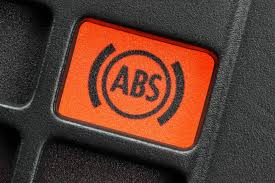
ABS stands for Anti-Lock Braking System, which functions to prevent car wheels from locking during sudden braking.
By preventing wheel lock, this system ensures that traction is maintained, allowing the driver to control their vehicle better, even on slippery road surfaces.
The development of ABS technology began with aircraft in 1929, where it was used to prevent aircraft wheels from locking. It wasn’t until the 1970s that this technology was introduced to motor vehicles. ABS was first introduced on mass-production cars by Mercedes-Benz in 1978.
Since then, ABS has become one of the important innovations in driving safety and has been adopted by many car manufacturers worldwide, including Hyundai, which offers this advanced braking technology in various models of their vehicles, such as the Hyundai the Creta, Hyundai Stargazer, and Hyundai Staria.
Why is ABS so important? Because this technology is very helpful in emergency situations. Imagine if you brake suddenly on a slippery road; without ABS, your car’s wheels would likely lock, making the car difficult to control and at risk of skidding. With ABS, the car’s wheels will continue to rotate, giving you more control during braking.
Other News
.How ABS works in cars
The basic principle of ABS operation is to prevent car wheels from locking during sudden braking. When you press the brake pedal hard, the wheel speed sensors send information to the control unit. If the system detects that a wheel is starting to lock, the ABS system will automatically reduce the brake pressure on that wheel to prevent locking.
This happens repeatedly, very quickly, so the wheels keep rotating and the car maintains stability.
When ABS is working, you might feel a vibration in the brake pedal, as well as hear a distinctive “clicking” sound. This is a sign that the ABS system is active, automatically adjusting brake pressure to prevent wheel lock. This experience is very useful, especially on slippery roads or when you need to stop in a short amount of time.
Differences Between CBS and ABS
You may have heard the term CBS (Combined Braking System) and are confused about its difference compared to ABS.
Basically, CBS is a braking system that combines the front and rear brakes under one control to maximise braking power.
Although similar to ABS, CBS does not have the ability to automatically prevent wheel lock. Instead, ABS prevents wheels from locking by repeatedly adjusting brake pressure.
The main difference between CBS and ABS lies in how they control braking. ABS automatically controls brake pressure to prevent wheels from locking, while CBS focuses more on the distribution of braking force. ABS is superior in emergency situations, especially on slippery roads or during sudden braking. Meanwhile, CBS is more suitable for two-wheeled vehicles, such as motorcycles, which require a more balanced distribution of braking between the front and rear wheels.
Although both have advantages, ABS technology is more recommended for cars because it can provide greater control over vehicle handling in various road conditions. So, which is better? ABS, of course, especially for modern cars like the all-new Hyundai Santa Fe and the new Creta..