Follow Us on Google
The expression of shock by Nigerians at the disclosure by the Defence Headquarters (DHQ) of plans by some soldiers to oust the government of President Bola Tinubu was not surprising. To put it mildly, the development sounded strange. According to the Director of Defence Information, Major-General Samaila Uba, early investigation into the alleged coup attempt has been completed and forwarded to appropriate superior authority in line with extant military regulations.
The military also explained that the preliminary investigation was comprehensive and conducted in line with established procedures, adding that it examined the circumstances surrounding the conduct of the affected soldiers.
“Accordingly, those with cases to answer will be formally arraigned before an appropriate military judicial panel to face trial in accordance with the Armed Forces Act and other applicable service regulations. This ensures accountability while upholding the principles of fairness and due process,” the DHQ stated.
Nipping the plot in the bud is commendable and proactive. It is, however, hoped that the allegation will be thoroughly interrogated and proven beyond reasonable doubts, to borrow a cliché from lawyers. Coups and military administrations have never been solutions to bad government but have rather compounded situations in some instances. Take the experiences in Liberia and Nigeria in 1980 and 1983, respectively, for example.
I recall the excitement that seized some of us, then in secondary school, on April 12, 1980, when Samuel Doe, a Master-Sargent, took over the reins of power in Liberia through a military coup. Our excitement, obviously borne of naivety, had nothing to do with the real situation in Liberia, which we had no firsthand knowledge of. It was rather in support of the coup that was then the fad in many African countries.
The reasons offered for the putsch and some of the actions by Doe and his men also made us wish to be Liberians at that moment. The usurper regime had accused the civilian administration of William Tolbert, which it overthrew, of monumental corruption and holding down the future of the country. And in what seemed the best of intentions, the military chaps promptly embarked on what seemed moral and economic rebirth in Liberia. Part of the actions in that regard was the arrest of officials of the ousted administration and retrieval of alleged looted state funds from them.
While Doe rode on the crest of this revolutionary mission, he was lionized. But with time he was seized by sycophantic members of the ruling class and got carried away. Over time, he became more corrupt than the members of the Tolbert government that he toppled. He resorted to repression, applying state apparatus to silence real and perceived opponents.
Liberians began to take notice of the massive drift by Doe when he started turning his sword against his former comrades-in-arms. The state of anarchy became more pronounced when, after changing the constitution to announce himself president in a highly flawed election, Doe went after his close ally with whom he executed the 1980 coup, Gen. Thomas Quiwonkpa, in 1985, on allegations of attempting to take over the government by force. That and other bizarre actions by Doe paved the way for the civil war that engulfed the country and took a toll on its corporate existence. Liberia is yet to recover from that tortuous route.
Other News
Here in Nigeria, General Muhammadu Buhari and his colleagues struck in the wee hours of December 31, 1983, and overthrew the civilian government of President Shehu Shagari. To be sure, the civilian government, at that time, had failed Nigerians in many respects. Apart from not delivering the axiomatic democracy dividends to the people, it had literally elevated corruption to the status of national policy. The carriage of the senior members of the administration was quite nauseating. To cap it all, the 1983 general election, which many had waited for to vote out the government, was massively rigged in favour of the administration. The mood in the land was abysmally low.
It was in such despondent situation that the soldiers struck and were hailed. Buhari who was made the head of state, expressed disappointment that the politicians had wrecked the country and put the economy in serious predicament. In what seemed the needed assurance, Buhari roared; “This generation of Nigerians and indeed future generations have no other country than Nigeria. We shall remain here and salvage it together.” The plea touched the people and became for them, a mantra for patriotism and rebuilding the nation.
But few months into the administration, it became obvious that Buhari lacked definite programme and policies at fixing the country. He rather alienated himself from the people. The economy sunk deeper, inflation rose higher and basic food items, scarcer. The ill-advised currency change, which seemed targeted at some people, further put pressure on the system.
At the international front, Nigeria was losing it by the day, as it was serially being abandoned by its traditional friends. At home, the human rights record of the administration was piteous, with journalists and critics of the government hurled into detention on flimsy grounds. It was thus not surprising that Buhari was removed by some members of his cabinet led by the then Chief of Army Staff, General Ibrahim Badamasi Babangida (IBB) on August 27, 1985. Babangida, was not better than his predecessor in many respects. For nine years, he rode the country like a rented bicycle. Subsequent Sani Abacha regime was the worst in terms of corruption and dictatorship. By 1999 when Nigeria returned to democracy, the country had lost much in essence and repute.
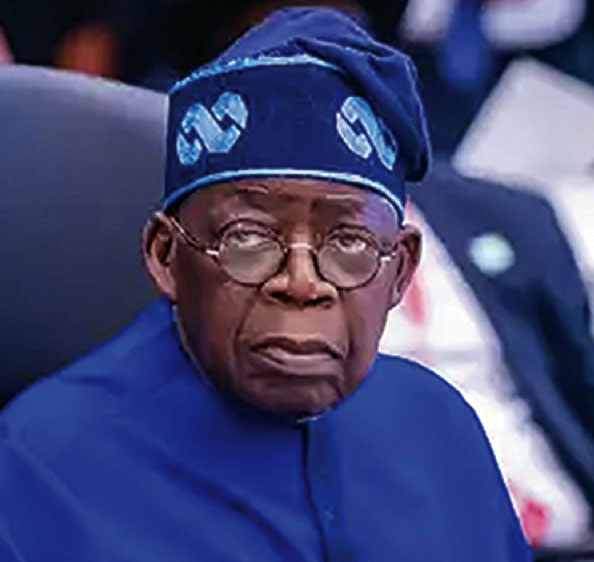
You can therefore understand why some of us heaved a sigh of relief when it was announced that the recent attempts at military take-over had been uncovered and taken care of. The current administration of President Bola Tinubu, is not an answer to the democracy Nigerians fought and died for, no doubts. It is rather a façade, indeed, a mockery of what a democracy can stand for. But any attempt at removing it through the barrel of the gun, is certainly not an option. The coup if successful, would have dealt a huge blow to democracy and constitutional order in West Africa and the Continent where many look up to Nigeria for democracy and rule of law.
After 26 years of uninterrupted democracy in the country, any idea of coup is a distraction and serious disservice to governance. We do not want any coup in Nigeria. Let the soldiers limit themselves to their professional duties of protecting the country against external invasion. They are not trained for civil governance. Democracy must be defended and consolidated.
It however needs be stated that good governance remains the panacea to unconstitutional change of power. To guard against coups, there is need for good governance and respect for the electoral system. Politicians should play by the rule and serve the people with dedication. That is the only way to exorcise the ghost of military coups or attempts in the country.