Follow Us on Google
• Bags lifetime achievement award on gender inclusion
From Juliana Taiwo-Obalonye, Abuja
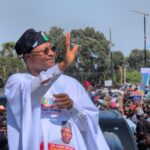
The Chairman of Nigeria Governors Forum (NGF) and Governor of Kwara State, AbdulRahman AbdulRasaq, has called for financial rewards to be given to states and constituencies that elect women into legislative houses.
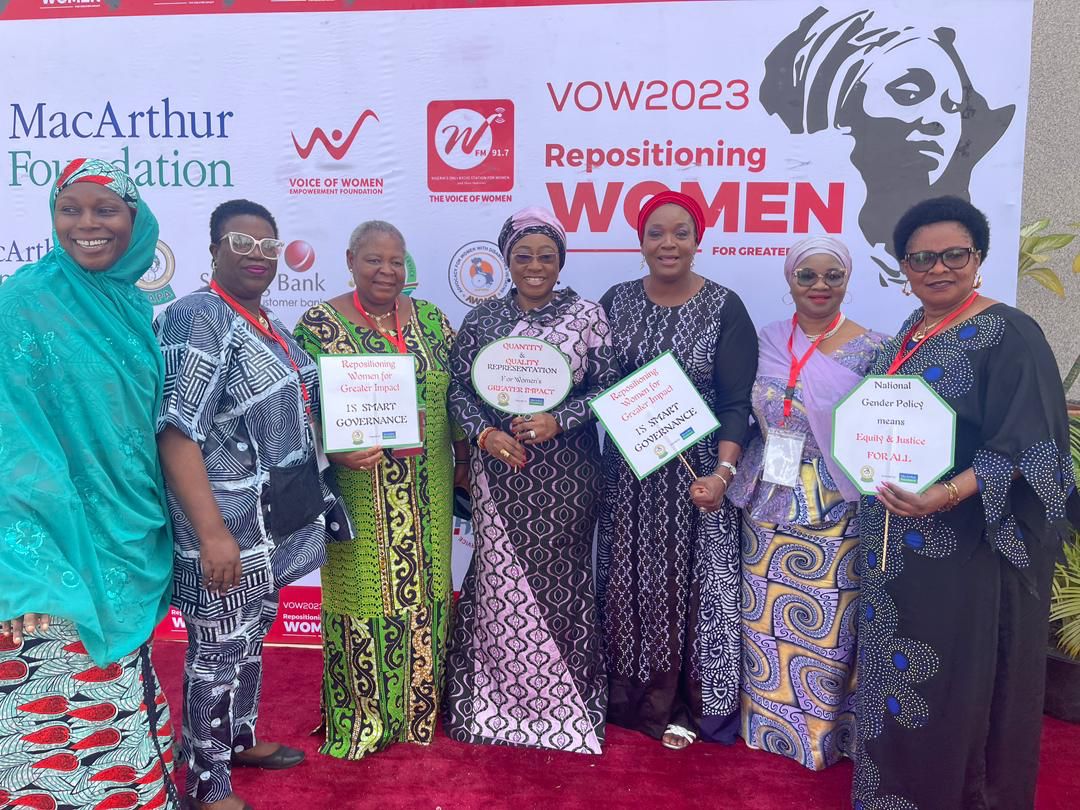
He made this statement at the opening of the 7th edition of the Voice of Women Conference and Awards (VOW2023) held in Abuja. The conference was themed “Repositioning Women for Greater Impact” and was organized by Women Radio 91.7, Nigeria’s only radio station dedicated to women and their families.
The conference is a rallying cry to reshape societal norms and institutional frameworks to allow women to take more significant roles. It aims to promote women’s representation, advocate for gender equality, and nurture the girl child. It is an opportunity for women to come together and discuss ways to reposition themselves for greater impact in politics and governance.
AbdulRasaq suggested that just as states were awarded $2 million for publishing budgets and $3 million for holding quarterly pre-budget meetings through the World Bank’s sponsored States’ Fiscal Transparency Accountability and Sustainability (SFTAS) Programme, the same can be achieved with women representation.
The Governor who said Kwara has always been a trial blazer when it comes to gender mainstreaming which dates back to 2019 when 56 percent female were nominated in the cabinet.
He said: “We’ve gone beyond just appointing women as a matter of choice. We have enacted legislation to compel any government in our state to have at least 35% gender representation in all government offices including at the level of permanent secretaries and of course parastatals. And I must say as well, in Kwara women are in charge because our head of Service is a woman, our Commissioner for finance is a woman. The head of revenue services is a woman and the major responsible positions are held by women.
“This policy have had appreciable effect in the larger political space in our state. Today we now have the youngest female lawmaker in Nigeria. And at this point we salute Erelu Fayemi she was able to get in six female members into the Ekiti State House of assembly. And also Dame Pauline Tallen, she really supported us, she was in Kwara so many times, she was in Kwara more than even the ministers that were from Kwara State then.
“In 2019 when we came in there was no elected female legislature in Kwara. We had to make sure we changed that. We changed it and we got five female legislators. It wasn’t easy because they came from predominantly conservative Muslim constituencies and we were threatened, ‘you will lose your election, they can’t win.’
“You see, if we don’t venture we won’t win. So we tried to push and they won and that is the first step and I hope in the next election cycle we will do better. And I also encourage other states to emulate what we have been doing.
“We’ve keyed into different educational and sanitation programmes that will encourage girl-child to enroll in schools and complete their education. One of such is the Adolescent Girls Initiative for Learning and Empowerment, the AGILE programme, which is a World Bank sponsored programme. We have similarly introduced the policy of six months maternity leave to encourage women to nurture their children.
“We can keep saying what we have done endlessly. But the important thing is, where do we go from here? And how do we achieve more? Now, using my tenure and cloud as NGF chairman, I have told the DG of the NGF to work with the Nigerian Governors Wives Forum and Erelu Fayemi to work on a deal for our programme for results in which for example, states that elect women into the legislative houses will benefit financially.
“You can assume any amount not just the states, the constituencies. So if a constituency elect a woman for example, the constituency should benefit N5 billion. So if we’re able to pass that through, yes, constituencies will go for the money. And that has happened in fiscal responsibility where states were told if you publish your budget, you get $2 million. So we said $2 million for just publishing budget? I will publish it. So we did that.
“So if you have quarterly pre-budget meetings where communities can contribute into what goes into a budget, not just the governor sitting down writing down what he wants for the community. If you hold community meetings prebudget, you get $3 million. We said we will do that. So we do community meetings now. So it’s enriched governance and capacity building.
“Now, if we have such programmes on gender issues, I’m certain that many constituencies will go for the money even if it’s not for the woman by going for the money, they will get women on the table to make the right decisions to make the change.”
AbdulRasaq also advised women to take advantage of a gender friendly President, like President Bola Tinubu to start now to kick start Amendment to the Constitution.
He said: “The second thing is in the last election cycle, or the constitution amendment, nothing was achieved, but a lot of work was done. Now, this is another circle. We have a president that is gender sensitive, President Bola Ahmed Tinubu. So I think this is the right time to push again for constitution amendment. I know you have the energy to do it. And also when you go in this time, there must be a Plan B. The last time was just let’s go for 35% and that failed. There was nothing much to hang on to. But this time around, okay, if you give us that 35% pass a law that any state that does not elect, a governor must have a deputy governor as a female or vice versa with the house of Assembly. So this is a time to kick start Amendment to the Constitution.
“But for me, I have a difficult task in convincing most of our members at NGF to come on the gender issue and let’s move the country forward. We will all be better off for it at the end of the day, the woman is more than half of humanity because we the men wonder why our kids always have a soft spot for the wives. It’s simple, whereas as African men, we’re mainly concerned about bringing out money while the wives are concerned about the emotional things that concern the children, and so they’re attached to them. So when we come to the table you’ll see that the kids take the side of the women so they’re more than the men on the table.”
The wife of the former governor of Ekiti state and chairperson of VOW2023, Bisi Fayemi, noted that Nigerian women are among the wealthiest and most educated in Africa, but this hasn’t translated into political influence.
According to her, “Nigerian women are among the better educated and wealthiest women in Africa, yet this has not translated into political power. The level of representation of women in elective positions has gone down during the past four General Elections, 2011, 2015, 2019, and 2023.
“Nigeria is not only one of the countries of the world with the lowest level of women’s representation in elective office but also where very little progress has been made in promoting gender equality. In Nigeria, women occupy about 30 percent of all posts in the public sector and 17 percent in senior management and decision-making positions.”
She said: “The most recent Global Gender Gap Index 2023 ranked Nigeria 130th out of 146 countries.
“Nigeria has one of the highest maternal and I can’t mortality rate in the world at 12 per cent of global figures, highest number of child brides at 22 million, which is the highest in West Africa and 11th highest globally.”
Mrs. Fayemi , listed factors mitigating women’s access to political Leadership and decision-making to include cultural and attitudinal barriers, inaccessible political machineries, finances, violence and intimidation and lack of visibility.
She, therefore, stressed the need to change the narrative, be committed to social change, qualitative legal and policy frameworks that can remove oppressive patriarchal norms and values.
Vice President of Liberia, Jewel Taylor, who was represented by her Chief of Staff, listed what Nigerian women can do to accelerate the dynamics and increase the number of women of influence and leadership across the country.
She said, “Simply put, Nigerian women must: Change their mindset and accept the responsibilities that
Nigeria needs them in all aspects of life in order to fulfill God’s mandate.
“Then dream of how your involvement can make the changes we need for a better Nigeria. Next put in place plans of how to achieve your dreams of becoming change agents and Become proficient in the chosen field of influence.”
Others are: “Learn the rules of the game for that sector. Remain committed to your dreams until you succeed. Be the best you can be and succeed. Form strong bonds with others among yourselves. Support each other not matter the challenges. Be a mentor to help others, become change agents and remain a positive role model.”
Taylor stressed the need for collaboration to change the dynamics of the Nigerian Women’s Movement for increased participation and work to stop the biases against their leadership.
Senior Special Adviser to the President on Health, Dr. Salma Anas, stressed that women should be on the table where development plans are rolled out.
According to her, “Nigeria cannot continue to stand on one leg as we do at the moment, women constitute almost 50 per cent of our population and so we need to complement each other by creating the right opportunities as every nation’s success is tied to the activities of women.”
While noting that the nation is focused on the wellbeing of the women and girls, just as the HPV vaccines have been recently rolled out by the government, Anas said, it is a call to action that girls have access to good health so that they can have access to good education.
“Without education, we are nowhere I’m only standing here because my parents made the right decision at the right time to send me to school.”
Commissioner, National Gender and Equality Commission (NGEC), Republic of Kenya, Margaret Karungaru, on her part urged women to support each other to ensure inclusivity in all areas.
“Nigerian women need to support each other, don’t look at women as competitors or adversaries. But support and ensure no one is left behind as we want to see more women in parliament.”
Similarly, Executive Director, Sustainable Gender Action Initiative (SGAI), Mufuliat Fijabi, urged women to restrategise on ensuring the five gender bills that were rejected at the National Assembly are reconsidered for passage.
Ireland’s first elected black female public, Yemi Adenuga, on her part told the women to be strategic as power is not handed down on a platter.
According to her, “Nobody will hand you anything. You have the qualification, you have what it takes, but you won’t be handed anything.
“You have to be strategic. If you are not part of the solution, you are part of the problem.
“Don’t be delusional women will not always vote for women. There are women who are capable candidates we need to source them out.”
The Namibian Deputy Finance Minister, Maureen Hinda-Mbuende, said at the event that she is humbled by how much “the Governor of Kwara State has deployed the goodwill of his office to support women empowerment”.
Chief Executive Officer (CEO) of Women Radio 91.7fm and convener of VOW2023, Toun Sonaiya, stressed the importance of the media in promoting women’s political participation in Nigeria
“We ventured beyond our operational base and are penetrating different geopolitical zones and communities through collaborative partnership with media and women led organisation to amplify women’s voice and advocacy for change.”
She said across the 6 geopolitical zones, the Women Radio Members already benefit from their Corporate Social Responsibility through the Radio doctor, specialized free health radio consultation programme supported by ACT Foundation.
She said in the face of uncertainty, the organisation has remained steadfast in its commitment to be apolitical, maintain its editorial independence, and remain unapologetically female-centric.
The event also featured two fire side panel discussions around issues of women empowerment and victimization.
In attendance were first ladies from different states, female federal and state parliamentarians, ministers and former ministers from across the continent, and gender rights activists, among others.