Follow Us on Google
From Ndubuisi Orji Abuja
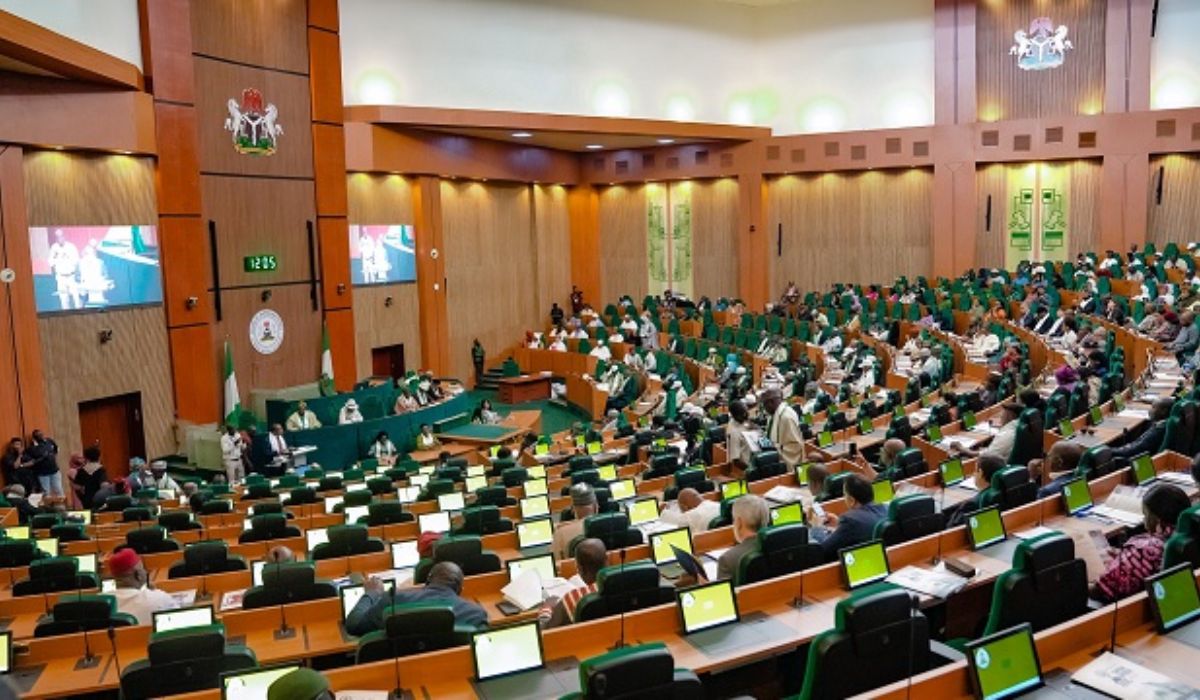
The House of Representatives yesterday rescinded its earlier resolution on a constitutional amendment bill seeking to establish State Police Services.
The House subsequently passed a revised Executive Bill on the same subject for second reading.
The development followed the adoption of a motion by the Chairman of the House Committee on Rules and Business, Francis Waive (APC-Delta), during plenary.
Waive said the action was taken pursuant to Order Nine, Rule 6 of the Standing Orders of the House of Representatives.
The House had on June 11 approved alterations to several sections of the 1999 Constitution, including provisions relating to the establishment of State Police Services.
The lawmaker also noted that a 12-member Conference Committee was constituted on July 9 to harmonise the decisions of both chambers of the National Assembly on the proposed state police framework.
According to him, new developments have emerged regarding the contents of the bill, necessitating a fresh review of its provisions.
“New facts have emerged regarding the provisions of the Bill, which necessitate a critical review and reconsideration of its clauses to align with national security structure.
“Cognizant of the need to rescind the decision of the House on the passage of the bill and the constitution of the Conference Committee on the Establishment of State Police Services.”
Following a voice vote conducted by Speaker Abbas Tajudeen, lawmakers unanimously approved the motion and rescinded the earlier resolution on the bill.
In a related development, the House passed for second reading an Executive Bill seeking to amend the Constitution to create a constitutional framework for the establishment of State Police Services.
The bill was transmitted to the House by President Bola Tinubu and read during plenary by the Speaker.
In the communication, Tinubu said the proposed legislation built on previous legislative efforts and included additional safeguards for the operation of a dual policing structure.
According to the President, the bill is designed to address Nigeria’s evolving security challenges through a more effective and responsive security architecture.
“The proposed legislation is a critical component of our administration’s strategy to reorganise Nigeria’s security architecture to better protect our citizens, and I am confident that the House of Representatives will act quickly to consider and pass this bill.”
Tinubu expressed confidence that the House would give the proposal expeditious consideration in the interest of national security and public safety.
Meanwhile, Tajudeen has said that the proposed State police would not be a tool of oppression in the hands of state governors, if established.
Other News
Abbas, who spoke at the opening of the National Assembly Open Week 2026 at the main chamber of the House of Representatives, yesterday, stated that the state police law will have adequate safeguards to make it impossible for abuse by state governors.
He explained that the Executive version of the State Police Bill, which was transmitted to the parliament by President Tinubu, was “ more robust and more comprehensive than the version this House earlier passed.”
“Nothing tests a government, or a parliament, so severely as the safety of the citizens. Let me speak plainly: our security forces are gaining ground, and we will not rest until every Nigerian is safe. Consider one event from only days ago that shows the courage of men and women who refuse to tire, retreat, or accept defeat.
“In Oyo State, forty-four of our citizens, schoolchildren and their teachers, were seized from their classrooms and taken into the forests. For weeks, the nation held its breath. Then, through a joint operation of our armed forces, our police, our intelligence services, our civil defence corps, and the local hunters and vigilantes who know that terrain, all forty-four were restored to freedom.
“Some of the gallant officers who entered the forest to secure their release did not return, and to them this nation owes a debt that words can never fully discharge. That rescue was not the product of chance. It was the fruit of every appropriation this House has fought to place in the hands of those who protect our children.
“Yet the deeper lesson of Oyo is that a nation of this magnitude cannot be policed in perpetuity from a single command in Abuja. On this question, this House has already acted. In the course of the constitutional reform ably led by our Deputy Speaker, this House passed a State Police Bill and placed the matter squarely before the nation. Tomorrow’s roundtable carries that work forward, in the open and before you.
“I am, indeed, able to share a development that speaks to the seriousness with which this administration regards the safety of Nigerians. His Excellency the President has now transmitted to the National Assembly an Executive version of the State Police Bill, one that is more robust and more comprehensive than the version this House earlier passed.”
He promised that the House will expedite action on the state police bill by the President, noting that the proposed legislation would be subjected to proper scrutiny.
“To the thoughtful citizens and to the Members who have observed that they are yet to see the draft Bills and who fear that this matter is being settled beyond public view, I offer this reassurance: nothing here is concealed. The Bill will pass through Public Hearing and open scrutiny. And I give this assurance to every Nigerian: the framework will carry robust safeguards.
“A state must satisfy clear and demanding standards and safeguards before it may be entrusted with a police service.
There will be accountability, the protection of fundamental human rights, and firm boundaries between federal and state authority, so that no state police force may ever be reduced to the private instrument of a governor.
“We have seen how power conducts itself in the absence of restraint, and we have no intention of repeating that error. This roundtable is our invitation to examine the draft and to submit your memoranda before it becomes law. Your security is far too grave a matter to be designed behind closed doors,” he stated.
On the activities of the House, in the last three years, he stated that the chamber within the period introduced 2747 bills, out of which 363 were passed into law.
He noted that the parliament has collaborated with the Executive in addressing national challenges bordering on the economy, security among others.
“President Bola Ahmed Tinubu, GCFR, asked this nation to accept a difficult but necessary course of reforms. His reforms were not just modest adjustments. They reached into the very foundations of our economy, into how it is financed, how our currency is valued, and how our common revenue is shared and invested in our people. Reforms of such magnitude demand much of a nation, and still more of the institutions charged with carrying them.
“This is where the record of these three years becomes a record of partnership. Every policy of the Executive still had to become law, to pass through appropriation, and to withstand legislative scrutiny. That is the indispensable work this House has performed.
“We laid the legal foundation for the tax reforms that will render our revenue fairer for generations to come. We enacted budgets directing resources toward infrastructure, toward power, and toward the human capital upon which all else depends.
“ We gave statutory force to the reform of student financing. The President furnished the vision; the National Assembly furnished the laws that render the vision enforceable. That is the true measure of legislative support, and it is worth far more than applause,” Abbas said.