Follow Us on Google
• News Central TV presenter recalls near-death experience in Miozambique
By Okorie Uguru
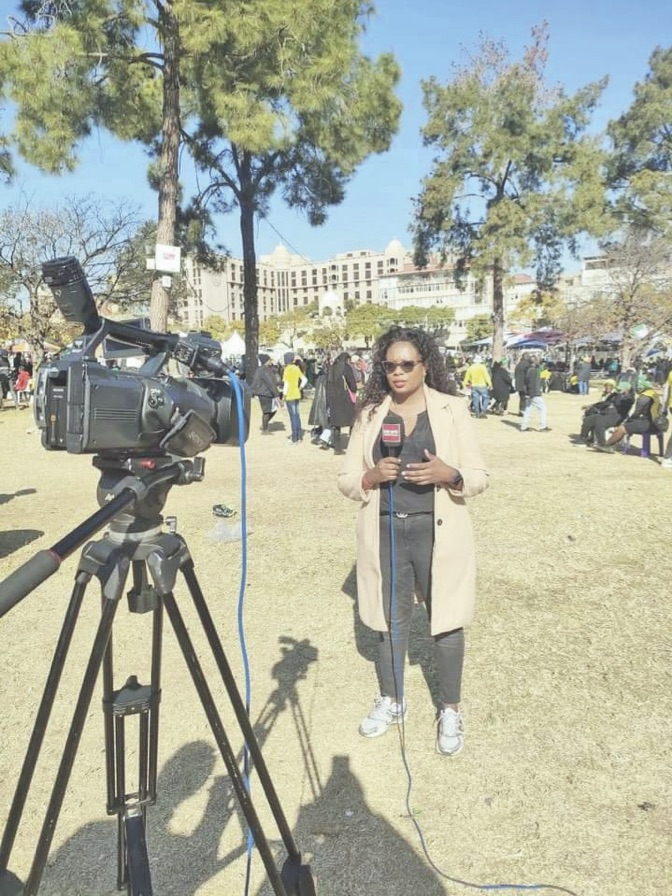
Siziba, a presenter with the Abuja-based News Central Television is used to visiting countries in South, East and Central Africa for news coverage and report. It is something she relishes with passion. However, her last trip to Maputo, the Mozambican capital, was an experience she would not wish her worst enemy. She and her crew almost became a victim of the post-election violence currently rocking the Southern African country.
Bongani had, months back, visited Maputo for a conference and relished the experience: “I was there some months back to cover the FIKANI Mozambique International Tourism Expo. It was a kind of an annual conference. So, the atmosphere in Mozambique then was very beautiful. It was my first time there. I loved everything about Mozambique. I even did a story about Mozambique’s tourism where I talked about so many positives about the country. I did not see any violence, it was calm, and I loved everything about their tourism, about the people,” she recalled.
So, with these pleasant memories about Mozambique in mind, when the post-election violence flared up in Mozambique after the October 9 presidential election, Bongani never hesitated to return to Maputo to cover the story. The ruling government’s party, FRELIMO and its candidate, Daniel Chapo, had won a landslide victory in the presidential election. This had sparked protests in different parts of the country.
However, on return to Maputo on Wednesday, November 13 the atmosphere was not the same. “When we got there, it was a bit calm. The land border between South Africa and Mozambique was closed. Actually, we wanted to travel by road, but when we heard that because of the ongoing protests, the land border had been closed, we had to fly in. When I arrived, it was a bit calm because it was almost evening. We heard that in other places outside Maputo, the country’s capital, there was protest. But in Maputo, there were pockets of protests in different places, but it was not that huge,” she explained.
She had contacted a fellow Mozambican journalist, Charles Mangwiro to guide her while covering the story. Mangwiro had made arrangements for Bongani and her camera man Sbonelo Mkhasibe to get accreditation. So, early morning of the next day, Thursday, November 14, Bongani and her team hit the road, first to the accreditation centre: “So, in the morning, he was taking us to where we would get accreditation, because it was almost evening when we earlier heard that in places outside Maputo there were protest. In Maputo, the protest was not that huge. We woke up very early, around 7am, the offices were still closed, and even now the offices are still closed, but we were driving towards that area. Everywhere was calm, no protest. We just decided to take some footages for television depicting people during the morning rush hour. There were no protests but there were police and soldiers each and every corner. I wanted to do some live crossing so we needed some shots to show that it was calm in Maputo in the morning. We were close by a market where people were just selling, others just moving around.
“Then, my cameraman just got out of the car to get some shots, and the other man and I sat in the car. While he was getting some shots, we understood that close by was FRELIMO headquarters. Those guys from there, you know how it is if it is the ruling party, came and pounced on us, asking why we were shooting videos. We said we were journalists, and that we were just taking streets shots. They just pounced on us; they wanted to take our camera. Then the police came in and they took us to the police station.”
What they thought was a minor misunderstanding escalated into a life-threatening situation. She explained: “We were taken to a nearby police station not far from where we were, it was not even up to three minutes’ drive from where we were. When we got to the police station, we were taken to the charge office I think or the commander’s office. They asked what we were doing. We explained. They looked at the footage from our camera. I think we had about five or six clips of 15 seconds each. Our card was virtually empty because we had only few shots that we have taken.
“It was back and forth, more difficult because some of us didn’t understand Portuguese. Some of the things we couldn’t understand, we asked our Mozambican guide to interpret. They took our passports, phones and camera. We were told to just sit there. They wrote our names in one book and everything. “Before we knew it, men without uniforms with covered faces came in and the police guys who were there just pointed at the three of us. Then those guys took us up and shoved us into one car.
“When they got inside where we were sitting, they just pointed at us and we were shoved into the car. We were driven through the city, but we got to some places, we were told to put our heads down. We were not allowed to talk to each other in the car also. So, we put our heads down so that we didn’t see where we were going. We got to a place and we were told not to lift our heads. That very moment, we were blindfolded, led to some place. In that place, what I can remember is that it has a big wall, because we were covered with clothes, mine is kind of see through.”
Other News
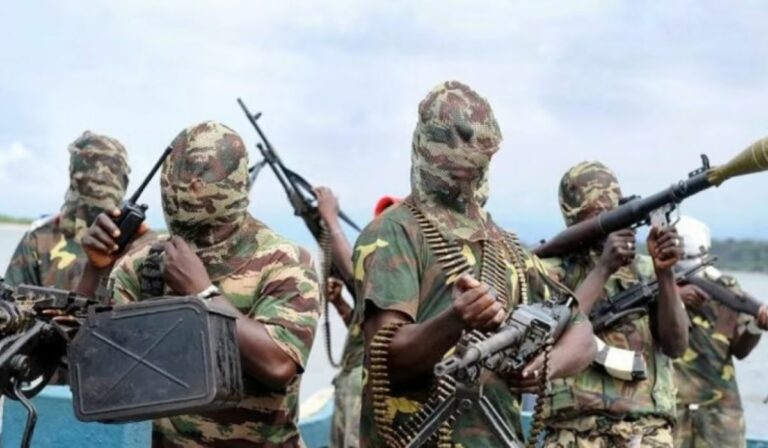
In her words, to add a sinister twist to the whole experience when they got to the unknown place, there were gunmen everywhere.
“Obviously they knew that there were people who were coming. They were waiting for us already. We were then detained at an unknown place that we don’t know.
“But at that place, what I can recollect is that I saw a green tent, and a big wall. We were meant to sit on plastic chairs facing the walls, with gunmen at our back. To me when I got there, I thought that they were just going to shoot us, that movie style, how people are executed in movies when you are forced to face the wall, blindfolded, then you’re shot from the back.”
Fear, panic took over her whole body, however, Bongani said she was managing to utter prayers and silently say, “God save me!”
“At a point, I went blank; because the only thing that I thought of was that this is it. What came into my mind was how people were executed in the movies, because exactly like that was how we were treated.
“I’ve never prayed in my life the way I prayed there up until the extent that I couldn’t pray anymore. My mind became so blank, like nothing came into my mind, not even my family, not any one. My mind was just blank. But the only thing I remember I kept on saying was that God, please save us. Those are the only words that I was uttering.
“Then, the time was ticking; I could see that this is it. So, for me, I accepted my fate.”
Asked about the number of gunmen surrounding them, she said: “I can’t remember the number, but what I know is that they were more than five, six people, because I could hear other people inside the tent, and behind the walls, we could hear some noise from people there.
“I saw my end and I accepted that it is okay. I said this is how I am going to end. Like one of the things that bothered me most then was that I didn’t know where the other two guys were. We sat in the same place but we couldn’t see each other because we were blindfolded and made to sit apart. I didn’t know they were sitting near me. You couldn’t see them. In your mind, you’re just asking yourself, are they safe?
“Around noon of the first day, we were taken out for interrogation one after other. I remember about seven persons were interrogating us in that room. What I picked from how they were interrogating us and also speaking with other Mozambique guys after the incident was that we were spies, and they mentioned a lot about BBC, that we were sent by the likes of BBC to come and collect news, and tell lies to the world about us. I told them I don’t work for BBC, and I was not sent by BBC. For them, I think they thought we were spies sent by the Western media.
“That went on for hour, on the Friday, we got to know that it was supposed to be our last day. Fortuitously, we managed to sneak out information to the outside world. Countries like Nigeria, South Africa, Ghana and few others started asking questions about our whereabouts. The Mozambican government initially denied, but around 9am, we slept the whole night there, up until the next day, we were released around 3pm on Friday November 14. We were freed.”
Days after the narrow escape from death, Bongani said she is still dealing with the trauma of the harrowing experience in Maputo:
“Since I came back, let me start from the airport, I couldn’t be where people are. Anytime I am among people, I would feel like someone is going to shoot me from the back. I kept fidgeting, everyone I was seeing, for me, was someone that wanted to kill me, that kind of feeling of not being safe. I had to move away and stay by the side because I couldn’t be around people.
“And since I came back, I have not gone outside my house. I am just having the feeling that if I go out, what if someone shoots me? I don’t know, maybe it is still the trauma. I don’t feel safe.”