Follow Us on Google

From Fred Itua, Abuja
Every republic eventually confronts the question of what it owes the citizens it wounded and then asked to serve. Ambassador Lawrence Agubuzu’s autobiography, Zero Hour Graduate: A Nigerian Diplomat’s Journey Through War and Service to Triumph, poses that question with unusual force. It is a personal chronicle, but it is also a political document of some consequence. Its central proposition is that Nigeria remains a troubled country, assembled through colonial convenience and not organic consent, and that the wounds of the civil war, though buried beneath decades of subsequent history, continue to shape the life chances of those who lived through it. A nation that declines to examine such testimony risks repeating the conditions that produced it.
Agubuzu got into Nsukka as a student in a country that was about to disintegrate, and his graduation into adulthood coincided with the outbreak of the Nigeria Biafra war in 1967. He presents himself as a graduate of zero hour, a young man whose passage into maturity was inseparable from the collapse of the nascent republic around him. The phrase captures a generational truth. The men and women who came of age in those years did not inherit a settled state. They inherited a rupture, and they were obliged to construct their moral and professional lives upon it.
The author’s wartime conduct is instructive for the manner in which it complicates familiar categories. His parents, unwilling to countenance the loss of a son to the battlefield, persuaded him against enlisting in the Biafran Army, and he submitted to their wishes. He did not, however, retreat into passivity. He devoted himself to the Olo and Amagu Umulokpa Civil Defence Organisation, offering succour and shelter to the multitude of refugees fleeing the advancing federal forces.
He was then drawn, by circumstance and by a sense of duty, into the clandestine Biafran Organisation of Freedom Fighters, where he served as an intelligence officer. The account reminds the reader that civilian agency in war is rarely a choice between combat and indifference.
The memoir’s wartime chapters furnish its most harrowing passages. Agubuzu recounts three separate occasions on which he came perilously close to death. He describes the hazards of operating behind enemy lines, the constant danger of discovery, and an episode in which he threw himself into a swollen and treacherous river to rescue a drowning woman, an act that nearly cost him his own life.
He writes of the fall of his home town of Olo and of the desperate search for scattered relatives amid general disorder. His broader reflections are no less significant. He documents the starvation deliberately employed as an instrument of war, the mobilisation of religion and ethnicity as instruments of propaganda, and the structural weaknesses that, in his considered judgment, doomed the secessionist project.
This is the analysis of a participant who has abandoned both triumphalism and nostalgia, and it deserves attention in a political culture that still invokes secession lightly.
The book’s most lasting contribution, however, lies in its treatment of the aftermath. When Agubuzu joined the Ministry of External Affairs in 1971, the federal government had proclaimed reconciliation, rehabilitation and reconstruction as its watchwords. His account suggests that the practice within one important institution fell short of the proclamation.
He describes what he presents as a systematic and largely unacknowledged pattern of discrimination against officers of East Central State origin. His own training class, he recalls, was divided along invisible but keenly felt lines. Colleagues from other regions were dispatched promptly to prestigious postings abroad, while officers from the former secessionist region were held at headquarters under the pretext of unspecified security concerns.
When restrictions eventually eased, such officers were permitted assignments only within West Africa and nowhere beyond it.
Other News
The personal cases that he relates give the pattern its human weight. One colleague was compelled to abandon his engagement to marry after his intended bride was deemed unsuitable by the state.
Another was recalled from his post merely for having worn a garment associated with the defunct republic. These episodes are narrated with restraint rather than rancour, and that restraint lends them credibility. They suggest an institutional logic in which suspicion, once licensed by the circumstances of war, hardened into routine administrative practice. Readers will recognise that such logic does not expire with the cessation of hostilities. It endures until it is named, examined and dismantled.
The political significance of this testimony becomes clearer when it is set beside the constitutional promise of the Nigerian state. Section 14(3) of the 1999 Constitution requires that the composition of the government and its agencies reflect the federal character of the country, so as to command national loyalty and to prevent the dominance of a few persons or groups. That principle is an acknowledgement that exclusion is a recurrent danger in a plural state.
Agubuzu’s account, whatever its contested details, supplies a case study in how that danger can manifest itself within the very institution charged with representing the nation abroad. It invites a sober question: how many other institutions retain an unwritten record of similar practices, and who is positioned to write it?
It would be a misreading, however, to treat the book as a catalogue of grievance. It proceeds to narrate a career of considerable and varied distinction. Agubuzu served as a diplomat in Liberia and in Washington. He served as a state commissioner for education in Anambra State. He rose to high office within the Organisation of African Unity, where he played a part in the deliberations that produced the New Partnership for Africa’s Development and the eventual transformation of the organisation into the African Union.
He contributed to the diplomatic campaign that secured the election of Chief Emeka Anyaoku as Secretary General of the Commonwealth, and he served as ambassador in Zambia, where he attained the distinction of doyen of the diplomatic corps. The record rebukes the premise on which exclusion rests. A country that restricted such talent to the margins of its foreign service, even for a season, spent a scarce national resource carelessly.
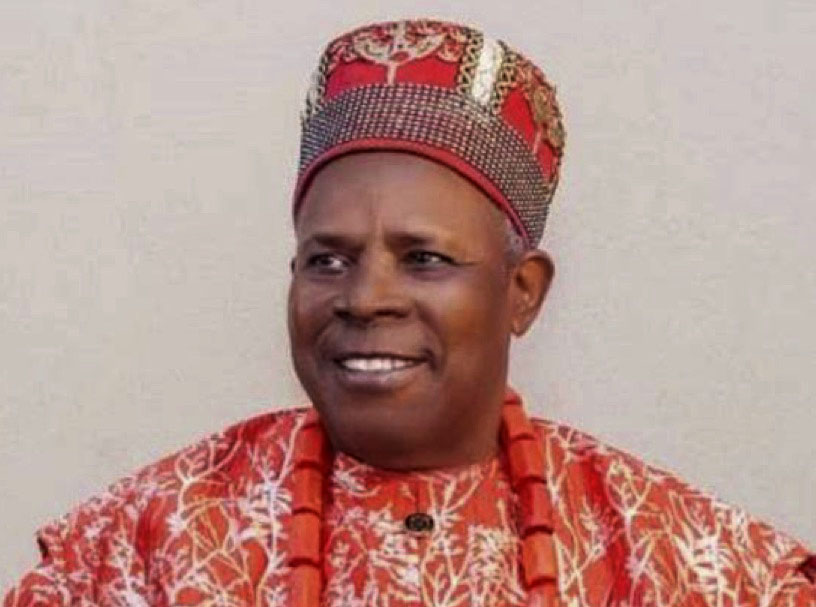
The narrative closes on a dignified and unexpected transition. Having concluded a lifetime of service to the modern republic, the author returned to his ancestral home to accept the throne of the newly constituted Ezema Olo Kingdom in Enugu State.
In a single life, he thus united the offices of career diplomat and traditional monarch, which Nigerian political thought too often treats as rivals. His example suggests that the modern state and inherited institutions can reinforce one another when the former honours the latter and the latter serves the common good.
The book’s final virtue is its generosity. Agubuzu is careful to acknowledge the many colleagues of other regions who supported and championed him across the decades, and he resists any temptation toward blanket condemnation of a particular tribe or class of persons. That discipline is itself a political lesson. Grievance, properly documented, can strengthen a nation, whereas grievance expressed as collective accusation fractures it. His testimony therefore avoids both the silence that conceals injustice and the stridency that perpetuates it.
What emerges is a memoir that aspires to something beyond the merely personal: an attempt to record, with the precision of a trained diplomat and the candour of an elder statesman, what one troubled nation asked of one of its most devoted sons, and what it too often withheld in return.
For a republic approaching another cycle of contested elections, the lesson is plain. National unity is not secured by proclamation alone. It is secured when the institutions of the state treat every citizen as a full participant, and when the testimony of those who were once excluded is received as a contribution to the national record and not as a threat to it.