Follow Us on Google

A former Acting Deputy Commandant-General of the Nigeria Security and Civil Defence Corps (NSCDC), Dr Benito Eze, has attributed the deaths of 37 suspected illegal miners in Niger State to an alleged failure to follow the Corps’ established procedures for arrest and detention.
Eze said the NSCDC has laid down operational guidelines governing arrests and detention, particularly when security personnel are conducting large-scale operations.
He made the remarks while discussing the incident and the procedures that should guide NSCDC operations.
According to Eze, a large-scale operation initiated at the state or command level should first receive approval from the Commandant-General of the Corps.
“The Nigeria Security and Civil Defence Corps has standard operating procedures in aspects of arrest and detention of personnel. What must have gone wrong is non-adherence to those standard operating procedures that are already laid down,” he said.
He explained that the Commandant-General could also determine whether other security agencies should participate in an operation, stressing the importance of inter-agency coordination.
“Operationally, when any command or state commandant involved has intelligence to carry out a large-scale operation, first of all, they must obtain approval from the Commandant General,” Eze said.
“The Commandant General can also advise whether such an operation should be conducted alongside other agencies—that is where synergy counts.”
Eze said he therefore believed the Niger incident pointed to a failure to comply with the Corps’ prescribed procedures.
Other News
“I attribute what happened in Niger to the fact that the standard operating procedure stipulated and laid down by the Corps was not followed,” he said.
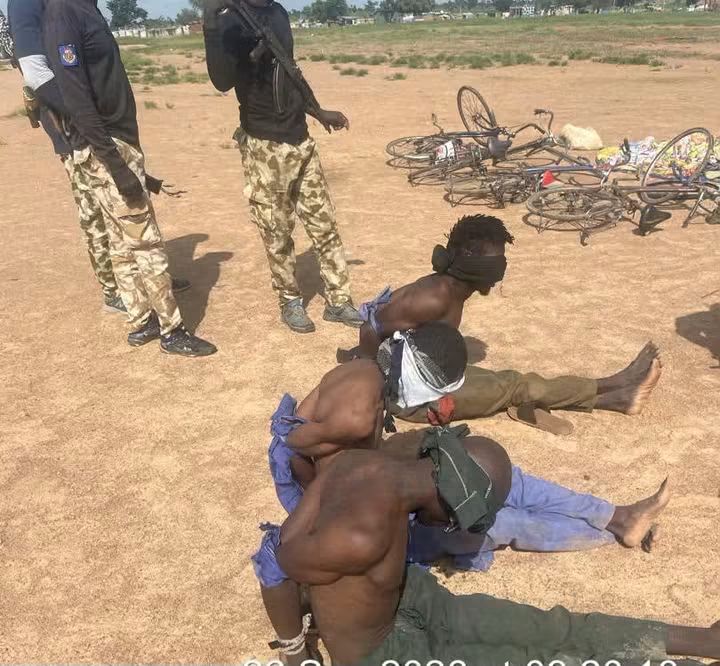
The 37 detainees died on September 17 while in the custody of the NSCDC Niger State Command after being arrested during anti-illegal mining operations. Authorities have yet to establish the definitive cause and circumstances of the deaths, with the Federal Government setting up an independent 10-member committee to investigate the incident.
Eze described the incident as a national tragedy and cautioned against assigning blame before the conclusion of the investigation.
“This is what I regard as a national tragedy. It has happened, and trading blames on individuals will not take us anywhere,” he said.
He urged authorities to rely on the findings of the investigation and use them to strengthen the Corps’ operations.
“Let us strictly get the reports from the committee and work on it,” he added.
Eze also called for continuous training and retraining of security personnel, describing it as essential to ensuring that officers understand and comply with established operational procedures.
“Secondly, there should be provision for training and retraining of personnel. That is key,” he said.