Follow Us on Google
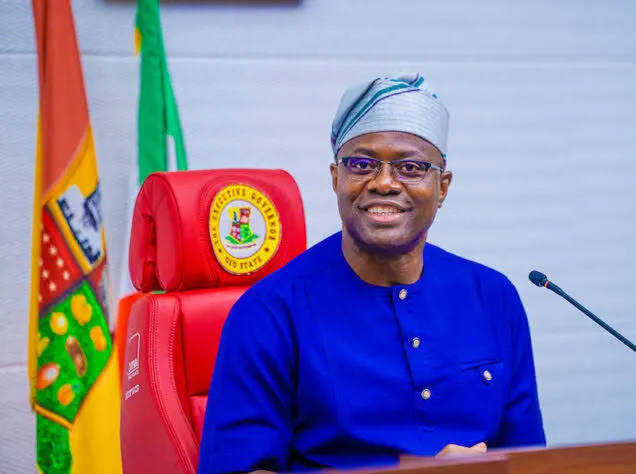
Oyo State Governor, Seyi Makinde, has lamented that the national conversation on petrol subsidy had been wrongly reduced to a choice between subsidising petroleum products and allowing Nigerians to pay full market prices.
Makinde, in the latest edition of his newsletter, The Business of Governance, called for a rethink of Nigeria’s petroleum pricing system, arguing that citizens should not be made to bear additional costs arising from the government’s inability to secure the country’s borders.
According to him, the more fundamental issue is whether Nigeria, as an oil-producing country, has a petroleum pricing framework that is fair, transparent and enables citizens to benefit from the natural resources they own.
“For years, the debate in Nigeria has largely been presented as a choice between subsidising petroleum products or allowing Nigerians to pay the full market price. “I believe we are asking the wrong question. The more important question is: what is the right pricing framework for an oil-producing country like Nigeria?” he said.
The governor said the components used in determining pump prices should be made public, including the crude oil benchmark, refining costs and margins, exchange-rate assumptions, logistics and distribution costs, taxes and levies.
He said making the variables public would enable Nigerians to understand and interrogate how the prices they pay for petroleum products are arrived at.
“What Nigerians deserve to know is the current pricing framework and the assumptions that determine what we pay at the pump: the crude price benchmark, refining costs and margins, exchange-rate assumptions, logistics and distribution costs, taxes and levies, and the other variables included in that calculation,” Makinde said.
He also rejected the argument that Nigerians should pay higher petrol prices in order to eliminate the price differential that encourages the smuggling of petroleum products into neighbouring countries.
According to him, securing Nigeria’s borders is the responsibility of the government and the cost of its failure to do so should not be passed on to citizens. “We should also reject the argument that Nigerians must pay more for petroleum products simply to eliminate the price difference that makes smuggling into neighbouring countries profitable.
“Nigerians should not be made to bear the cost of government’s inability to secure its borders,” he said.
Makinde disclosed that he would unveil an alternative approach to the country’s petroleum pricing system in the coming weeks, saying Nigerians should examine the proposal on its merits.
He said the petroleum debate should focus on whether the existing pricing arrangement serves Nigeria’s peculiar circumstances and guarantees citizens a fair return from the country’s resources.
“Reset Nigeria means being willing to interrogate the system itself. The petroleum question should therefore not simply be whether subsidy should return or remain removed.
“It should be whether the pricing system we are using is the right one for Nigeria and whether it allows Nigerians to derive a fair benefit from the natural resources they own,” he said.
The governor said his proposed Reset Nigeria initiative would extend beyond petroleum pricing to the economy, security architecture, education, institutions and the country’s social and political order.
He argued that Nigeria’s problems could not be solved merely by replacing individuals in government, saying attention must also be paid to reforming systems and institutions that repeatedly produce poor outcomes.
“Too many of our people are still trapped in poverty. Too many families work hard without experiencing real progress. Too many young Nigerians are unable to see a clear path from education to opportunity,” Makinde said.
He added that insecurity and weak institutions continued to undermine the wellbeing and economic prospects of Nigerians.
Makinde said achieving a national reset would require accountable leadership as well as active participation by citizens, stressing that rebuilding the country could not be the responsibility of one individual.
“This will not be an instant transformation, nor will it be the work of one person. It must be a deliberate national effort supported by a clear roadmap, measurable priorities and the sustained participation of Nigerians at home and abroad,” he said. The governor said he would continue to outline his ideas for resetting Nigeria’s economy, security architecture, education system, institutions and political order, while inviting Nigerians to contribute to the conversation on areas that should receive priority attention.