Follow Us on Google
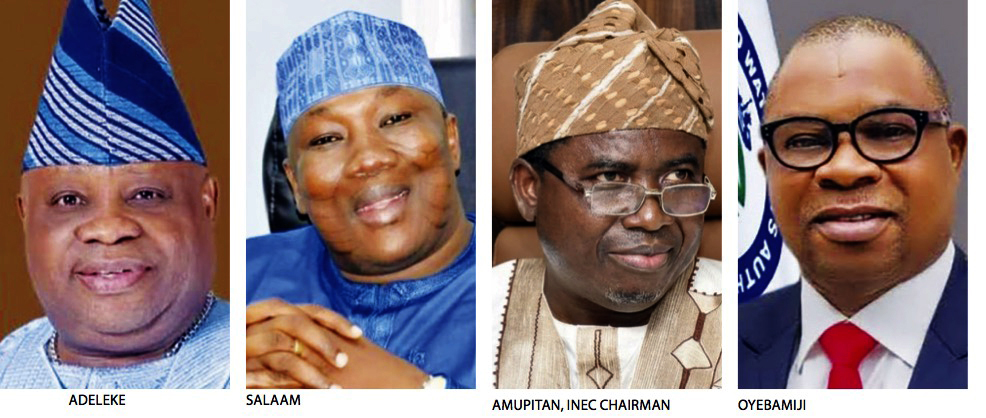

• Adeleke, Oyebamiji, Salaam, 11 others fight for governor’s seat
By Omoniyi Salaudeen, Lateef Dada, Osogbo
All is set for the long-anticipated Osun State governorship poll. Today, eligible voters will troop out in their numbers to elect a new governor who will steer the state’s affairs for the next four years.
According to the final list released by the Independent National Electoral Commission (INEC), 15 political parties and their candidates will be on the ballot after the Social Democratic Party (SDP) was added to the list on Wednesday. They include Accord (A), Ademola Adeleke; Action Alliance (AC), Farinloye Olarenwaju; African Action Congress (AAC), Esan Olajide; African Democratic Congress (ADC), Najeem Salaam; African Democratic Party (ADP), Adeagbo Opawoye; All Progressives Congress (APC), Bola Oyebamiji; All Progressives Grand Alliance (APGA), Adesina Adeyemi-Doro; Allied Peoples Movement (APM), Adewale Adebayo; Action Peoples Party (APP), Clement Adesuyi; and Boot Party (BP), Masilo Adeleke.
Other parties and their candidates are New Nigeria Peoples Party (NNPP), Taofeek Adeleke; Peoples Redemption Party (PRP), Saliu Oyelami; Social Democratic Party (SDP) Francis Olugbenga; Young Progressives Party (YPP), Ogunsakin Olalekan, and Zenith Labour Party (ZLP), Adefemi Adesuyi.
Candidates of the APM and PDP, Adebayo Adewale and Adedamola Adebayo respectively withdrew from the race to support Governor Adeleke.
Parties signed the Peace Accord ahead of this election.
However, the contest is widely seen as a three-horse race between Adeleke of Accord, Oyebamiji of the APC, and Najeem Salam of the ADC. Both the Peoples Democratic Party (PDP) and Labour Party failed to present candidates. The PDP won the 2022 election, but its former candidate, Adeleke, is now seeking re-election under the platform of Accord following internal party realignments. This structural shift has completely redefined local coalition dynamics across the three senatorial districts, leaving voters to evaluate candidate track records rather than traditional party affiliations.
Ahead of today’s election, the Accord candidate and incumbent Governor Ademola had maintained a studied silence on his expectations for the poll. Efforts to get members of the Imole Campaign Council to speak on the party’s prospects also proved abortive, as those contacted declined to comment.
Meanwhile, the two main opposition platforms — the APC and ADC have expressed strong optimism about their chances of victory. Speaking with Saturday Sun, the Spokesperson for the ADC Governorship Campaign Council, Hon. Nurain Adebisi, said the party expected the outcome to reflect the true will of the people. He also urged citizens to remain calm before, during and after the election.
Adebisi expressed confidence in the readiness and neutrality of security agencies. “We expect security personnel deployed for election duty in Osun to be impartial, unbiased and professional, in line with the ethics of their profession and other measures adopted to ensure a successful election,” he said.
Addressing INEC, the ADC spokesperson added: “As a party, we expect INEC to be transparent at every stage of the electoral process and to cooperate with all relevant stakeholders. Proper attention should be paid to internal planning and logistics to prevent sabotage, especially by compromised staff.” Adebisi further appealed to the electorate to approach the polls peacefully, describing the election as “another opportunity for citizens to make crucial decisions and correct past mistakes for the sake of present and future generations.”
Similarly, the Director of Media and Information for the APC, Kola Olabisi, expressed confidence about his party and its candidate, Munirudeen Bola Oyebamiji, citing his intensive campaign across the state. “We are confident that Asiwaju Oyebamiji will emerge victorious because he has toiled day and night, taking his campaign to every nook and cranny of the state. He visited all 30 local government areas and the Area Office three times each. The reward for hard work is success, and we are certain that will be the portion of our party and governorship candidate on Saturday,” he added.
On security, the APC called on security forces to clamp down heavily on political thugs to guarantee a free, fair, credible and inclusive election. Regarding the electoral umpire, the party insisted that “INEC must strictly follow the rules and regulations guiding the election as contained in the Electoral Act (as amended).” This election is coming against the backdrop of one of the most violent and toxic campaign seasons in Osun’s recent political history. From late 2025 into mid-2026, political rallies across the state repeatedly degenerated into violent clashes. In Ilesa, a ward meeting between APC and Accord supporters ended with vehicles vandalised, commercial activities disrupted, and at least seven persons hospitalised. In Ede, the governor’s hometown, alleged thugs disrupted an opposition rally, leading to the burning of campaign materials and the imposition of a 48-hour curfew by local authorities to restore order. In Osogbo, the state captal, stones and bottles were thrown at a high-profile campaign convoy, while in Iwo and Ikirun, security forces recorded multiple incidents involving machete attacks, injuries, and the forceful removal of billboards. Civil society groups documented over 40 cases of campaign violence in six months. The most troubling pattern was that violence was no longer sporadic or random—it was systematic and targeted. Candidates’ offices were raided under cover of darkness, media crews covering events were harassed, and youth groups were allegedly armed, financed, and deployed to secure rallies and intimidate rival supporters. The political rhetoric on radio broadcasts, social media platforms, and town hall meetings became increasingly inflammatory, personal, and dangerous.
Security concerns
That is why security today is not just a routine logistical issue; it is an existential requirement for the integrity of the process. If voters do not feel safe in their immediate surroundings, they will simply stay indoors. And if citizens choose not to come out, the election risks losing democratic legitimacy before the first vote is tallied. The fear of violent attacks, reprisals, and being caught in crossfire has already suppressed political enthusiasm in several rural communities. Party agents, observers, and ad-hoc polling staff have similarly expressed genuine concerns regarding their personal safety in volatile areas.
Other News
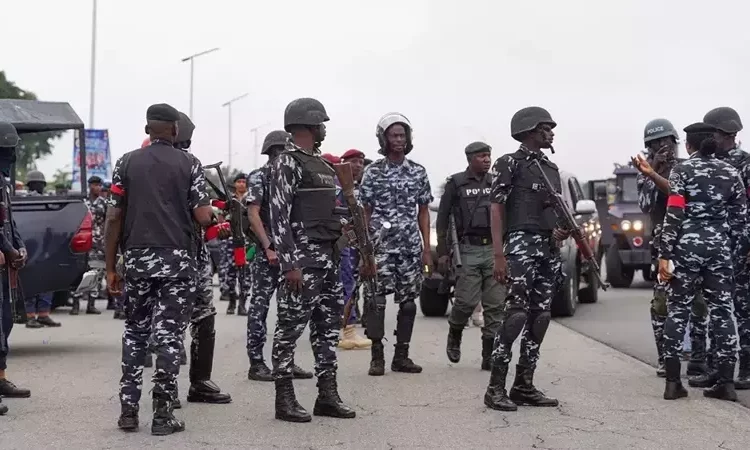
INEC, the Nigeria Police Force, DSS, NSCDC, and military personnel have promised complete security deployments across the state’s 30 Local Government Areas, 332 wards, and 3,763 polling units. The presence of Economic and Financial Crimes Commission (EFCC) operatives to monitor and deter vote-buying is a prominent feature being tested today. For information regarding election guidelines and procedures, voters can refer to the Independent National Electoral Commission (INEC) Portal. However, public and security attention will be sharpest across four specifically identified flashpoint zones.
In Ede North and Ede South, serving as the primary political base of the incumbent governor, tension has remained consistently high throughout the campaign. Following the violent disruption of an opposition gathering and the subsequent security curfew, residents remain wary of potential reprisals. With Accord defending its stronghold, both the APC and ADC have mobilised heavily to challenge the area’s political dominance, and while additional security forces have been dispatched, community trust in impartial law enforcement remains fragile.
In Ilesa East and Ilesa West, the commercial hub of Osun East, the people witnessed some of the most aggressive clashes of the entire campaign period. The lingering memory of past ward-level altercations that left several citizens injured continues to generate anxiety among small business owners and residents. Due to the high density of commercial markets, observers also anticipate intense vote-buying activity here, meaning how financial crime operatives handle illegal cash-for-votes transactions in these urban markets will serve as a key metric for institutional enforcement.
Across the state capital and central urban corridor in Osogbo and Olorunda, all three leading political parties maintain entrenched grassroots structures. Over the past two months, campaign convoys traversing the area were subjected to stone-throwing, while political billboards were systematically pulled down. Today, the core challenge for security agencies will be managing high-density crowds at polling centres and, more crucially, securing the central collation points where post-election tensions frequently flare up.
Further west in Iwo and Ikirun, opposing youth groups have clashed repeatedly over poster placements, billboard spaces, and rally venues. Although traditional rulers and local peace committees convened multiple mediation sessions to calm tempers, deep-seated inter-party rivalries persist. Security officials report that early deployment is being prioritised in these communities to project visible authority, deter mischief makers, and reassure the electorate. If these critical flashpoints remain peaceful and orderly throughout the voting window, the rest of the state is likely to mirror that stability. Conversely, if conflicts erupt at these key locations, voter turnout will contract sharply, and the overall credibility of the electoral exercise will face serious questioning.
Reliability of electoral technology
Beyond physical security, this poll represents an essential administrative test for the electoral umpire. All eyes are fixed on the commission because the Osun election is widely viewed as a litmus test for Nigeria’s broader democratic framework ahead of 2027. Following controversies and technical challenges recorded during previous national cycles, observers want concrete evidence that administrative lessons have been absorbed and applied. First, the commission must ensure free, fair, and credible logistics. That commitment begins with the early and complete arrival of sensitive materials, ballot papers, and trained personnel at every voting point. In 2022, Osun earned praise for early voting starts across a majority of polling units; maintaining or exceeding that benchmark is vital today. Late arrivals inevitably fuel suspicion, raise tempers, and create operational gaps susceptible to manipulation. Presiding officers must demonstrate strict political neutrality and technical competence, as any evidence of partisan conduct by official staff could ignite immediate local protests.
Second, the commission must validate the operational performance and integrity of its electronic accreditation and transmission infrastructure. Voting across the state relies on the Bimodal Voter Accreditation System (BVAS) alongside the INEC Result Viewing (IReV) portal. To check polling locations and portal services, voters can consult the INEC Official Portal. Observers will monitor biometric accreditation to ensure BVAS devices operate efficiently without widespread network failures or battery drain, as well as prompt result transmission to guarantee Form EC8A polling unit result sheets are uploaded to the public IReV portal immediately following vote counts. Unexplained delays or technical failures during the upload phase invariably breed public scepticism. In an era dominated by real-time citizen reporting and mobile communications, transparent management of any technical glitches will be necessary to sustain public trust.
Voter inducement and vote-buying
Perhaps the most critical vulnerability surrounding today’s exercise is the pervasive issue of vote-buying. Severe socio-economic pressures have effectively turned electoral processes into economic marketplaces for vulnerable voters. Over the past fortnight, local monitoring groups noted political agents operating “stomach infrastructure” schemes by distributing branded household goods, food packages, and direct cash disbursements across residential neighbourhoods. Reports indicate that the inducement offer for a single vote has escalated dramatically from previous norms to higher sums in competitive urban precincts. Anti-graft agencies have deployed officers across the state, but the practical test lies in whether law enforcement will execute neutral arrests and uphold statutory prohibitions without selective bias.
Vote-buying produces two destructive outcomes: it subverts the genuine democratic expression of the citizenry, and it signals to political actors that policy manifestos and governance records are secondary to financial mobilisation. If security agencies and electoral administrators fail to curb open financial inducements today, it reinforces the cynical view that democratic mandates are simply bought by the highest bidder. Voter behaviour under prevailing economic stress will define today’s outcome.
In markets across Osogbo, Ilesa, and Iwo, daily public discourse has centred less on formal political manifestos and more on the rising cost of living, transport fares, food prices, and school fees. While socio-economic hardship leaves many citizens vulnerable to short-term financial offers, it simultaneously generates deep dissatisfaction. Turnout figures will ultimately reveal whether voter frustration translates into political apathy or active civic participation. Osun State has consistently served as a political bellwether within the country. Governance trends, voter choices, and administrative outcomes here frequently reflect the broader national political mood. The 2022 Osun governorship election was widely commended as a positive benchmark due to minimal violent disruption and prompt result uploads. Today’s election must meet that standard to reaffirm public confidence in the democratic process.
Ultimately, today’s vote is expected to answer three central questions: whether electoral processes can be managed safely without widespread political violence or voter suppression; whether electronic accreditation and public result portals can function seamlessly to earn the trust of competing political actors; and whether law enforcement agencies and civic groups can effectively counter the open monetisation of the franchise. If electoral authorities guarantee safety, manage technology transparently, and check financial inducements, Osun will strengthen public confidence in electoral institutions. If these safeguards falter, democratic fatigue will deepen across the electorate. The ballot remains the primary mechanism for peaceful civic expression; protecting that ballot, and the citizens who carry it, remains the fundamental responsibility of the state today.
Neutrality of security operatives
The combined commitment of an unbiased electoral umpire and strictly neutral security forces remains the cornerstone of democratic integrity in Osun State. For the electoral commission, maintaining absolute institutional neutrality requires complete procedural transparency, technical efficiency, and uncompromising independence across all stages of polling. When the electoral umpire acts strictly as a fair and transparent arbiter, it instils confidence in the electorate and guarantees an equitable playing field for every political party. Citizens and observers seeking official updates, administrative guidelines, or public announcements can access voter tools via the INEC Official Portal. Administrative precision—ranging from the prompt delivery of voting materials to the seamless electronic transmission of polling unit results—ensures that the final tally accurately captures the genuine mandate of the people rather than operational shortcomings.
Equally critical is the unyielding professionalism of security personnel deployed across the state. Law enforcement officers, military detachments, and anti-graft operatives must demonstrate complete non-partisanship, treating all political actors, voters, observers, and election workers with equal protection and impartiality. Security forces must firmly resist any attempt to misuse state authority, intimidate peaceful voters, or interfere with legitimate polling activities. By maintaining visible, intelligence-driven presence at polling stations and central collation centres, security agencies can deter political thuggery, suppress vote-buying schemes, and prevent post-election unrest. When security officers uphold their oath of neutrality and enforce the law without bias, they create a safe environment where citizens can exercise their constitutional franchise without fear of harassment or reprisal.
Ultimately, the credibility of this election relies on institutional devotion to democratic principles rather than political allegiance. As a crucial political bellwether, Osun State presents an opportunity to prove that democratic processes in Nigeria can be conducted peacefully, transparently, and free from institutional distortion. When the electoral commission and security agencies fulfil their duties with strict neutrality, they restore public trust in democratic governance and set a positive precedent for upcoming national cycles. Protecting the sanctity of the ballot and ensuring that the true choice of the electorate prevails is the ultimate duty of the state, reinforcing the principle that power ultimately belongs to the people.