Follow Us on Google
Cheques, the once dominant means of corporate settlements, are now facing digital extinction.
The rise in digital payments is submerging cheques, which may never resurface as Nigeria’s payments landscape undergoes a quiet but decisive transformation.
Once a staple of salary payments and formal banking transactions, the cheque is steadily losing relevance as customers and businesses increasingly choose faster, easier and more secure digital alternatives.
According to the Central Bank of Nigeria (CBN)’s 2025 annual report, the value of cheque transactions fell by 49.78 per cent to N1,837.13 billion from N3,658.14 billion in 2024, while the volume of transactions declined by 57.79 per cent to 1.49 million from 3.53 million in the same period.
The sharp decline reflects not just changing consumer behaviour, but a broader reordering of Nigeria’s payment system around real-time transfers, mobile banking, internet banking and QR-enabled solutions.
For context, cheque usage in Nigeria has been on a downward trajectory for several years, however, the pace of decline has accelerated as digital channels become more deeply embedded in everyday banking.
From the rise of bank transfers, USSD payments, mobile apps and point-of-sale terminals, this has reduced the need for paper-based instruments that require physical handling, clearing delays and back-office processing.
For many users, the reason is simple: digital payments are more convenient. A transfer can be initiated instantly, confirmed immediately and tracked electronically. A cheque, by contrast, still depends on manual issuance, presentation, clearing and, in some cases, the risk of dishonour.
In a business environment where speed matters, the older instrument looks increasingly outdated.
This shift is also being reinforced by the growth of the broader cashless economy. As more transactions migrate online, banks and payment firms are investing in infrastructure that prioritises real-time settlement. That naturally reduces the relative importance of cheques, especially in urban centres and among younger, digitally fluent customers.
It is safe to state that the scale of the decline is difficult to ignore. A nearly 50 per cent fall in the value of cheque transactions in one year and a drop of almost 58 per cent in volume point to a structural change rather than a temporary slump. It is not merely that people are writing fewer cheques; the instrument itself appears to be losing a place in the settlement hierarchy.
Analysing the graph in the apex bank’s report, this pattern is consistent with earlier evidence from the Nigerian payments system.
Cheque volumes had already been declining in previous years as electronic channels expanded. The use of cheques was relatively stable or rising slightly up to 2023, then weakened in 2024 and fell sharply in 2025.
This simply confirms that the pace of displacement is continuing. For banks, that means fewer cheque processing fees, lower clearing-house activity and less dependence on legacy payment workflows. However, the picture is not entirely negative. Lower cheque use is also a sign that more transactions are moving into formal, trackable digital channels. That can improve transparency, reduce delays and support greater efficiency in the movement of funds. In that sense, the decline of cheques is part of a wider modernisation of the financial system.
What banks are doing
Banks are not treating the trend as terminal. Instead, many are adapting by building digital overlays around traditional payment expectations. The planned development of e-cheque functionality and QR code capabilities reflects an attempt to preserve the logic of cheque-based settlement while removing the friction of paper handling.
An e-cheque system could help corporates and other institutional users retain the familiarity of cheques while enjoying faster processing, reduced fraud risk and better integration with digital banking platforms. QR codes, meanwhile, offer a low-friction alternative for merchants and customers who want fast payment initiation without needing card infrastructure.
This matters because cheques still have a role in the corporate sector. Some businesses continue to prefer them for audit trails, authorisation controls and internal governance reasons. For these users, the issue is not only speed, but trust and documentation. The challenge for banks is to design payment products that preserve those features while eliminating the inefficiencies of paper-based instruments.
Economic implications
For the wider economy, the fading role of cheques has mixed implications, though the balance appears to tilt positive. On the positive side, digital payments can improve velocity of transactions, support small businesses, and make it easier to formalise economic activity.
Faster payments can also help firms manage liquidity more efficiently, which is particularly important in a high-interest-rate environment.
There are also benefits for monetary policy transmission. A more digital payments ecosystem can improve visibility into transactions, making it easier for regulators to monitor liquidity flows and financial activity. That can strengthen policy effectiveness over time.
But the transition also exposes persistent weaknesses. Nigeria’s digital payment system still faces challenges around network quality, cyber fraud, power supply, customer education and interoperability. Where digital channels fail, cheques sometimes remain a fallback. So while the decline in cheque use is a sign of progress, it also raises the urgency of ensuring that digital alternatives are reliable and inclusive.
Other News
For rural users, smaller businesses and older customers, the shift can be disruptive if they are not adequately supported. A modern payments system must work not only for large corporates and urban consumers, but across the entire economy. That means infrastructure, trust and ease of use matter as much as innovation.
The biggest shift is happening in corporate payments. Businesses that once relied on cheques for vendor payments, payroll supplements and settlement across counterparties are increasingly moving to bank transfers and digital mandates. That is partly because treasury teams value speed and reconciliation, but also because digital trails are easier to manage in enterprise systems.
For some corporates, cheques still provide a layer of internal control. Multiple signatories, physical authorisation and documented issuance can make them useful in specific governance frameworks. But even here, digital approval workflows and enterprise payment platforms are beginning to replicate those advantages more efficiently.
The implication is that cheque use may not disappear completely, but it is likely to become niche. It will survive in selected segments where paper documentation remains valuable, but its mainstream role in Nigerian banking will continue to shrink.
What the CBN and NIBSS are signalling
The development of e-cheque and QR code solutions by the CBN in partnership with NIBSS shows that regulators are not simply watching the decline in cheque use; they are trying to manage the transition. That is important because a modern payments system must balance innovation with continuity.
The CBN has long pushed for cashless adoption, and the shrinking role of cheques aligns with that policy direction. But policymakers also know that payment habits do not change overnight. Instruments that have been in use for decades do not vanish just because a new app has become popular. They fade gradually, then decisively, and often unevenly across sectors.
By supporting digital alternatives that preserve the trust and familiarity associated with cheques, regulators are trying to ensure that the transition does not create unnecessary friction in business payments.
Experts’ react
Already, the CBN has moved to clear the air over concerns surrounding the availability of coins and lower denomination banknotes, saying their reduced presence in circulation is not due to any plan to phase them out, but a reflection of changing payment habits among Nigerians.
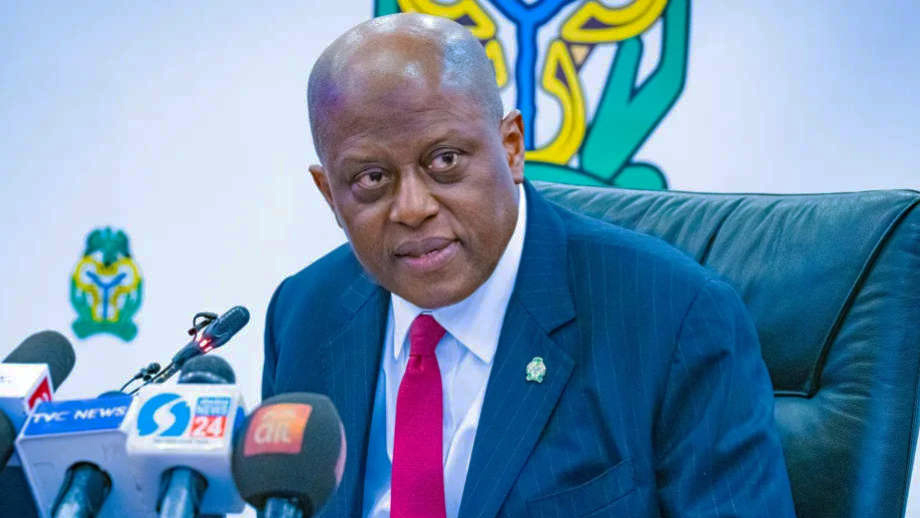
CBN Governor, Olayemi Cardoso, said all banknotes and coins remain legal tender, stressing that the growing preference for digital payments has naturally reduced demand for some denominations.
He explained that as more people embrace electronic payment channels, the demand for certain denominations naturally changes.
“This transition is consistent with our broader payments strategy. As part of our recently launched payments vision for the next two years, we have set ambitious targets to deepen financial inclusion, expand access to payment services and encourage a more efficient and inclusive financial system.
The objective is not to eliminate cash, but to ensure that Nigerians have access to a broad range of secure, convenient and efficient payment options that meet their evolving needs”, Cardoso explained.
Economic and banking analysts say the decline in cheque usage should be read as part of Nigeria’s broader financial digitisation rather than as a sign of weakness in the banking system.
A senior banking analyst with a tier-1 bank, who spoke to Daily Sun on the condition of anonymity, said the trend reflects “the natural consequence of a payment ecosystem that is becoming more instant, more mobile and more integrated.” According to him, cheques were always going to lose ground once digital transfers became widespread and reliable.
“The customer no longer wants to wait for a settlement. Businesses also want certainty. If a transfer is immediate and traceable, the cheque becomes less attractive”, he said.
A second banking source said the movement away from cheques could help reduce operational costs for banks. “Cheque clearing is labour-intensive and infrastructure-heavy. Digital transactions are cheaper to process at scale. Over time, the economics of the banking business improve when customers move to digital rails,” the source explained.
Head, Research at FSL Securities, Chiazor Victor, noted that the fall in cheque volumes is positive from an efficiency standpoint, but not without risks. “The decline is good if it reflects genuine digital adoption. But if it is driven by weak trust in banking channels, cyber concerns or uneven access to infrastructure, then the benefits are less clear,” he said.
Conclusion
The cheque is not dead in Nigeria, but it is clearly on the back foot. Its decline tells a larger story about the country’s financial evolution which points to a system moving away from paper, toward speed, transparency and digitisation.
That is ultimately a positive story for the economy, provided the digital rails are strong enough to carry the weight of the new system. If banks, regulators and technology providers can keep improving reliability, security and access, the fading of cheques will be remembered not as a loss, but as part of the country’s financial modernisation.
For now, the cheque remains a familiar instrument with a shrinking footprint. The future of payments in Nigeria is being written elsewhere, in apps, transfers, QR codes and real-time settlement systems.