Follow Us on Google
From David Onwuchekwa, Nnewi
Sixty years after the death of one of Nigeria’s foremost businessmen and philanthropists, the legacy of Sir Louis Philip Odumegwu Ojukwu continues to resonate in business, education, family life and philanthropy.
Sir Odumegwu, popularly known in his earlier years as “LP” — Louis Philip — died at Nkalagu in the then Eastern Region on September 13, 1966.
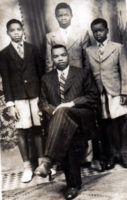
As the 60th anniversary of his death is being observed, members of his family and Ojukwu Transport Limited (OTL), the company he founded, prepare a series of low-key commemorative activities spread throughout the year.
According to one of his grandsons, Dr P. Ike Ojukwu, an Obstetrician and Gynaecologist and a Director of Ojukwu Transport Limited, the family booked Mass in his memory and plans to honour the late business icon in different ways.
“Sixty years is a long time,” Dr Ojukwu said, explaining that the activities would be deliberately low-key but meaningful, with commemoration as the theme.
Among the institutions expected to feature prominently in the anniversary observance is the University of Nigeria, Nsukka, where Sir Odumegwu’s contributions remain part of the institution’s history.
The annual Sir LP Odumegwu Ojukwu prizes for the best graduating students in the Faculty of Business Administration and the Department of Estate Management/Surveying have been revised upwards.
Current winners have been urged to contact OTL to claim the prizes, while the university authorities have been notified.
The Sir Odumegwu Ojukwu Hall at the university’s Enugu Campus will also be remembered.
Other longstanding commitments, including the proposed memorial hospital, scholarships and charitable obligations are in the pipeline.
The late business magnate was conferred with an honorary Doctor of Laws (LLD) degree by the university in the early 1960s, at a time when the institution was emerging as a major symbol of Nigeria’s aspiration for a modern university system.
The university was the brainchild of the late Right Honourable Dr Nnamdi Azikiwe, The Owelle of Onitsha and a close friend of Sir Odumegwu. Its founding was substantially funded by the Eastern Regional Government.
Sir Ojukwu, who served as Chairman or Director of several government agencies and Chairman of the African Continental Bank, played a significant role in mobilising funds for the university.
His support for education reflected a philosophy that he practised throughout his life: that success was not complete unless it opened opportunities for others.
From “LP” to “Sir Odumegwu”
Born in 1909 and from Umudim, Nnewi, Sir Louis Philip Odumegwu Ojukwu was the sixth of the ten sons of Ojukwu Eze Okigbo and the only son of his mother, Ukonwa, among her four children and was deeply attached to his sisters, Mrs Nwosu, Mrs Okoli and Mrs Obi, and their children.
His sister s adored “Diokpala Nnem”, meaning their mother’s first son, a position he took seriously.
Despite becoming a major businessman, his early years were marked by responsibility and struggle. Following the death of his parents, the young Ojukwu gladly took on the responsibility of educating his younger sisters.
His youngest sister performed exceptionally in her examinations that he wrote to her school principal requesting that she be given double promotion, partly to reduce the total expense of school fees.
He also trained at least one of his brothers’ children.
On completion, he insisted that the beneficiary in turn support their mother and train another relative.
For Sir Odumegwu, education was not merely assistance, it was a responsibility that had to be passed from one generation to another.
He also extended his generosity to wards outside his immediate family, directing that they be supported until “Ubulu fa emechie”, a traditional expression referring to the time when one’s brain or capacity to learn had extinguished.
Other News
His own children were not exempt from his high standards.
A poor report card could attract his fury, while academic success brought enormous joy and pride.
Although his sons spent their primary and secondary school years on Lagos Island, he ensured that their holidays were spent with his sisters in Nnewi, Onitsha or Port Harcourt, or with his cousin, Felix Okonkwo, popularly known as Okonkwo Kano, in Kano.
The arrangement reflected another side of the businessman: despite his wealth and demanding public life, family remained central to him.
Solid and unapologetic Igbo man
Family members and associates describe Sir Odumegwu as a “solid and unapologetic Igbo man”, but one who was completely detribalised.
Competence, loyalty and integrity, rather than ethnic considerations, came first for him.
The appointment of Nelson Oyesiku to the National Shipping Line in 1964 is cited as one example. Those who knew him talked of a man of honesty, integrity, boundless energy, kindness, strictness and generosity. He was down-to-earth and extremely family-oriented.
Despite his practical and disciplined side, Sir Odumegwu had appreciated the good things in life.
He favoured Savile Row suits and choice traditional (courtesy of magnate Alhaji Razaq Okoya’s father and others).
Man behind the fleet
At the time of his death, Sir Ojukwu had become a prominent figure in Nigeria’s business landscape.
His residence was ‘Eastern House’ on Hawksworth Road, Ikoyi, Lagos.
Included among his vehicles were LA 1 was a Rolls-Royce Silver Wraith, while LC 1 was a Cadillac.
Others included an Armstrong Siddeley, Oldsmobile, Pontiac, Rover and Land Rover.
Despite the fleet he was known to travel between Lagos and the East, often at night, in a Land Rover or other truck, only with a trusted ‘driver’ and a ‘trusted’ firearm.
It was an unusual picture of a man who had access to luxury but remained comfortable with the ruggedness and risks of travel in his time.
Legacy beyond wealth
For the family, the 60th anniversary is therefore not simply about remembering a wealthy businessman. It is about preserving a philosophy.
Sir Odumegwu believed in hard work, integrity, education, family responsibility and service. He was strict with money because he understood the effort required to earn it, but he could also be remarkably generous when he believed an investment in a person or institution would make a difference.
His life also illustrates an important chapter in Nigeria’s economic history, a period when indigenous entrepreneurs were helping to build businesses, institutions and infrastructure in a newly emerging nation.
Through Ojukwu Transport Limited, educational prizes, institutional support, scholarships, charitable commitments and the proposed memorial hospital, the family says it intends to ensure that his name remains associated not merely with wealth accumulated, but with opportunities created.
60 years after his death,
Sir Louis Philip Odumegwu Ojukwu remains remembered as a businessman, philanthropist, family patriarch and public-spirited Nigerian whose influence extended well beyond the enterprises he built.
His story, perhaps more importantly, remains a reminder that a legacy is measured not only by what a person owns, but by what continues to benefit others after he is gone.