Follow Us on Google
• Warns against destruction of evidence, witness intimidation
• Orders forensic examination of victims
From Isaac Anumihe, Godwin Tsa, Abuja, Noah Ebije, Kaduna and John Adams, Minna
The Federal Government has given the independent panel investigating the deaths of 37 artisanal miners allegedly in the custody of the Nigeria Security and Civil Defence Corps (NSCDC) two weeks to unravel the circumstances surrounding the tragedy and submit its report.
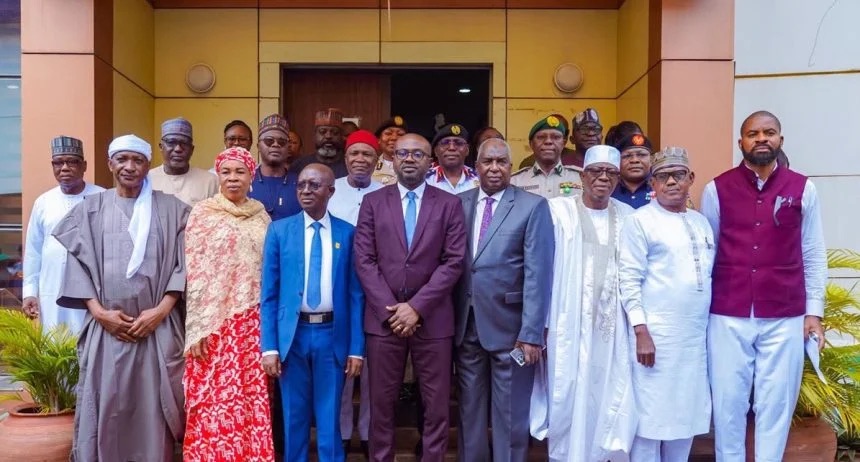
Minister of Interior, Olubunmi Tunji-Ojo, who handed down the deadline while inaugurating the 10-member Independent Investigative Committee, also warned against the destruction or concealment of evidence, intimidation of witnesses or any attempt to obstruct the investigation.
He directed the NSCDC leadership and relevant officers to cooperate fully with the committee and preserve all records and material evidence connected with the incident.
“You have my full authority to co-opt relevant experts, access all facilities and request memoranda from members of the public. You have two weeks to visit all relevant locations, conduct a forensic examination and complete this assignment and submit your report to me,” the minister said.
Tunji-Ojo said any attempt to destroy or conceal evidence, intimidate witnesses or obstruct the investigation would be treated as a serious offence.
The committee is mandated to investigate and document the circumstances surrounding the arrest and detention of the miners and establish, through medical and forensic examination, the cause and manner of their deaths.
It is also expected to determine whether negligence, misconduct, complicity or breach of duty occurred and recommend disciplinary action and compensation where applicable, as well as measures to prevent a recurrence.
The Niger State NSCDC Commandant, Suberu Siyaka Aniviye, and 23 other personnel have been taken into custody in connection with the incident.
Tunji-Ojo said the membership of the committee was carefully selected to guarantee independence, credibility and professionalism.
The panel is chaired by retired Deputy Director-General of the Department of State Services, Jonathan Kure, with former Director-General of the Nigerian Law School, Prof. Isa Hayatu Chiroma, as secretary.
Other members include retired Assistant Inspector-General of Police Hosea Hassan Karma; Professor of Histopathology and former Chief Medical Director of the University of Ilorin Teaching Hospital, Prof. Olayinka Buhari; representatives of the Minna Emirate Council and Niger State Government; National Secretary of the Miners Association of Nigeria, Liman Sulaiman; lawyer and human rights activist, Deji Adeyanju; journalist Zainab Suleiman Okino; and public affairs analyst, George Agbakahi.
Tunji-Ojo assured Nigerians that the investigation would establish the truth and that no officer found responsible would be protected.
“To Nigerians, I say this: We owe you the truth. This committee will give you the truth. No officer, no matter how highly placed, will be shielded if found culpable,” he said.
He appealed to the families of the deceased for calm and patience, assuring them that the government would not abandon them.
Other News
The deaths have generated outrage and demands for an independent investigation following allegations that the miners died while in NSCDC custody in Minna. The Corps had earlier constituted its own investigative team following the controversy.
Meanwhile, Peoples Redemption Party presidential aspirant, Yakubu Kingsley, said the tragedy should compel the authorities to look beyond culpability and address the poverty and unemployment driving Nigerians into dangerous and unregulated artisanal mining.
Kingsley said economic hardship could not justify illegal mining, environmental destruction or criminal exploitation of the country’s mineral resources, but argued that enforcement alone would not resolve the problem.
According to him, artisanal mining had become a survival option in some mineral-rich communities where residents had limited access to formal employment, education, finance and sustainable livelihoods.
“Enforcement alone cannot address a problem whose roots also lie in poverty, unemployment and the absence of viable alternatives,” he said.
Kingsley described accounts emerging from survivors as “deeply distressing” and called for a thorough, transparent and impartial investigation.
He said reports that some of the deceased were teenagers should also raise questions about the economic circumstances pushing children into hazardous mining.
Kingsley called for enforcement against criminal mining networks to be combined with measures to formalise legitimate artisanal mining, improve safety and training and give miners access to finance, technology and legitimate markets.
He also advocated greater processing of Nigeria’s mineral resources locally rather than dependence on the extraction and export of raw minerals, arguing that local value addition would create jobs and reduce the economic desperation driving people into illegal mining.
The 37 victims, he said, “should not be allowed to be another statistic.”
The Arewa Think Tank, however, urged Nigerians to allow the investigation to establish individual and institutional responsibility on the basis of evidence rather than assumptions.
Its Convener, Muhammad Alhaji Yakubu, speaking against the backdrop of calls in some quarters for the removal of NSCDC Commandant-General, Prof. Ahmed Abubakar Audi, said responsibility should not be assigned before the facts were established.
“It is important that we allow the investigation to run its full course. Where there is evidence of wrongdoing, the appropriate individuals should be held accountable, but responsibility should not be assigned without establishing the facts,” he said.
Yakubu said investigators should examine the NSCDC’s chain of command and determine who was responsible for decisions and actions surrounding the detention of the miners.
He also said previous directives attributed to Audi on the treatment and detention of suspects should be examined, including circulars warning formations against holding suspects beyond the period permitted by law.
“Prof. Audi should be judged on the evidence that emerges from the investigation, not on allegations or political pressure. If any officer is found culpable, the law should take its course,” he said.