Follow Us on Google
By Chinyere Anyanwu
Over 30,000 farmers and 10,000 youths in the seven North West states of the country are set to benefit from the North West Development Commission (NWDC)’s major interventions in agriculture and other sectors in the region, including healthcare, education, youth empowerment and security.
Full-scale implementation of the interventions is billed to commence in the second half of 2026.
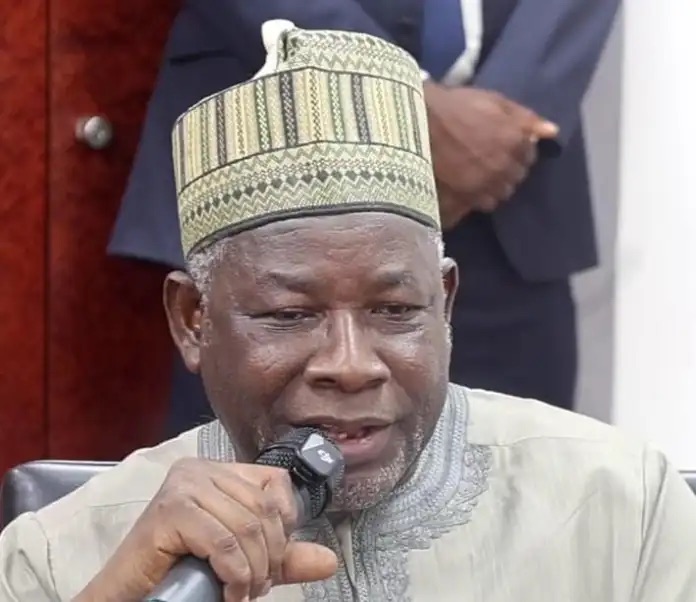
The Managing Director and Chief Executive Officer of the commission, Prof. Shehu Ma’aji, disclosed this during the presentation of the NWDC’s mid-year performance report to the Senate Committee on the North West Development Commission.
Prof. Ma’aji said the period marked a transition from institutional establishment to full operational readiness, with headway recorded in governance structures, procurement planning, strategic partnerships and project development.
According to the report, the agency, established under the NWDC Act, 2024, received no statutory allocation until January 2026. Between January and May, it received N15.17 billion, spent N1.2 billion, and maintained a balance of N13.97 billion as of July 5, 2026.
Ma’aji noted that the commission is intensifying efforts to improve funding from statutory sources, including the Federation Account, Ecological Fund, and VAT, to enable it execute its regional development mandate.
He said procurement scheduling has commenced in line with due process, while consultations with North West states have identified priority areas. Planned projects include upgrading primary healthcare centres, rehabilitating secondary schools, and providing clean water through motorised and solar-powered boreholes.
Others are resettling Internally Displaced Persons (IDPs), youth vocational and digital skills development, security assistance, and agricultural programmes.
A flagship initiative will distribute free fertiliser to 30,000 farming households during the 2026 wet season to boost food production and rural livelihoods.
The commission’s Youth Skills Acquisition Programme targets 10,000 beneficiaries, who will receive technical, vocational and digital training at centres in Kano, Kaduna, and Sokoto. A portal has been created for enrolment and verification. The NWDC will also supply vehicles and equipment to support regional security operations.
Prof. Ma’aji highlighted engagements with the embassies of Kuwait, Saudi Arabia, India and Russia, all of which expressed willingness to collaborate on humanitarian aid, education, human capital development and economic empowerment. A stakeholders’ summit held in Kaduna gathered expert input for a long-term regional master plan.
Discussions are also ongoing with the National Commission for Refugees, Migrants and Internally Displaced Persons (NCFRMI), ADASHE Women Multipurpose Cooperative, eHealth Africa, UNDP and UNESCO on housing for displaced persons, digital skills, healthcare and regional development planning.
Despite the progress, Ma’aji told senators that late and inadequate releases remain the commission’s biggest challenge, urging enhanced and timely disbursements. Although N145.61 billion was budgeted for 2026, actual monthly releases were only about 3 per cent of allocations, slowing project implementation.
The CEO, however, cited differing interpretations of the NWDC Act between the Governing Board and Management, as well as board meeting delays, which have affected the execution of programmes. He assured lawmakers that the agency remains committed to transparency and prudent management of public resources.
The NWDC has established a temporary headquarters in Kano following a donation of office facilities and vehicles by the state government, which further donated land at Hotoro for a permanent headquarters. Kaduna and Katsina have presented buildings for state offices, while Sokoto pledged operational vehicles.
The commission also received computers and printers from Abdulaziz Zubairu, member representing Bungudu/Maru Federal Constituency. Arrangements are underway to establish a liaison office in Abuja to strengthen coordination with the National Assembly, the Ministry of Regional Development, and other federal institutions.