Follow Us on Google

A total of 27 Nigerian universities have been listed in the 2027 Times Higher Education (THE) Interdisciplinary Science Rankings, marking a 50 per cent increase from the 18 institutions featured in the previous edition.
The latest ranking assessed 1,058 universities across 102 countries and territories, with Nigeria improving its global position in terms of representation from 16th to 11th.
Nigeria also emerged as the second-most represented African country, behind Egypt, which had 37 universities in the ranking.
Covenant University led the Nigerian institutions, retaining its position as Africa’s top university for interdisciplinary science and placing joint 49th globally. It ranked ahead of Egypt’s Cairo University, which occupied joint 52nd position.
Landmark University was the second-best Nigerian institution, featuring in the 251–300 global ranking band.
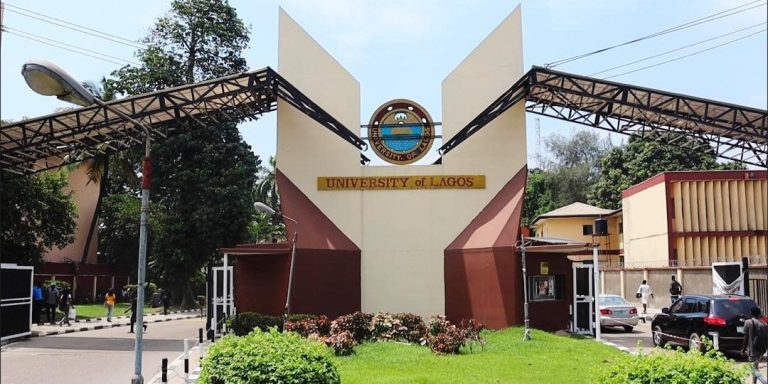
Ahmadu Bello University, Zaria, and the University of Ilorin were placed in the 351–400 category, while the University of Calabar, University of Lagos and University of Nigeria, Nsukka, occupied the 401–500 band.
Ladoke Akintola University of Technology, Obafemi Awolowo University and the University of Benin were ranked in the 501–600 category.
Eight universities made their first appearance in the 2027 edition. They include the Federal University of Technology, Minna; Michael Okpara University of Agriculture; Joseph Sarwuan Tarka University; University of Jos; Rivers State University; Babcock University; Bells University of Technology; and Nile University of Nigeria.
Osun State University also returned to the ranking after being absent for one year.
The 27 institutions comprised 14 federal universities, seven state-owned universities and six private universities. Seven additional Nigerian institutions were listed as reporter institutions.
Other News
Despite the increase in the number of universities represented, the country’s performance in the higher ranking categories remained a concern.
Chairman of the Nigerian Tertiary Education Research and Applications Consortium, Prof. Emeritus Peter Okebukola, said the broader participation was encouraging but noted that the number of Nigerian universities in the global top 300 fell from five to two.
He added that the number in the top 500 also declined from eight to seven.
Okebukola linked the performance challenges to inadequate funding for interdisciplinary research and insufficient institutional support, including facilities, administrative assistance and research policies.
However, Ahmadu Bello University and the University of Calabar recorded notable improvements, moving from the 601–800 band in the previous edition to the 351–400 and 401–500 categories, respectively.
The ranking evaluates universities’ performance in interdisciplinary scientific research using 11 indicators covering inputs, processes and outputs.
Inputs account for 19 per cent of the overall score, processes contribute 16 per cent, while outputs carry 65 per cent.
The Massachusetts Institute of Technology retained the global first position.
NiTERAC said it would assist Nigerian universities in strengthening their submissions ahead of the 2028 edition. Its national rankings results are scheduled for release on December 15, 2026.