Follow Us on Google
By Sopriala Membere
Nigeria’s cost of living crisis did not begin with inflation. It began long before food prices spiralled and transport fares became unbearable. It began the moment the Nigerian State gradually withdrew from the basic responsibility of making life bearable for ordinary citizens.
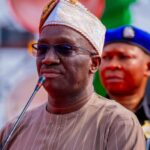
This is what makes the recent interventions of Chibuike Rotimi Amaechi whilst addressing ADC party faithful in Lagos, particularly significant. Beyond partisan politics, Amaechi’s years in public office were shaped by a governing philosophy that understood a simple but increasingly forgotten truth: the true purpose of government is to reduce the pressure of survival on citizens.
The unfortunate reality of Nigeria is that, the average citizen privately funds electricity, water, security, transportation, healthcare, and often even education simultaneously. The state increasingly exists not as the guarantor of survival, but as a distant observer to its own existence. Citizens are therefore forced to construct parallel systems around the failures of government. Generators replace electricity grids. Boreholes replace public water infrastructure. Vigilantes emerge where formal security collapses. Private schools substitute failing public education, while personal vehicles compensate for the near absence of reliable public transportation.
The consequence is devastating, as Nigerians are no longer taxed merely by government, they are taxed by the collapse of the Nigerian state itself.
What millions now spend daily simply to survive institutional failure has become one of the harshest invisible taxes in the country. Worse still, many citizens have gradually normalized this condition, accepting abnormal hardship as though it were a natural feature of Nigerian life.
Recent reforms under the administration of Bola Ahmed Tinubu have only intensified this pressure. The tragedy is not necessarily that reforms themselves are irrational. Serious economies occasionally require painful adjustments. The deeper problem lies in the sequencing of those reforms, the absence of social protection for vulnerable Nigerians, and the reality that the enormous revenues generated from citizens’ sacrifices have not been meaningfully reinvested into improving public welfare.
Citizens can endure hardship when they believe suffering serves a collective national purpose. What destroys public trust in reforms is the perception that public pain merely finances elite excess, recklessness, and the continued culture of impunity within political circles–which is sadly the reality we are presently faced with.
I will go further to postulate on what makes Nigeria’s economic crisis fundamentally different from inflation in more functional societies. Here, hardship is cumulative. Every institutional weakness eventually arrives at the doorstep of ordinary citizens as financial pressure.
A failed road eventually becomes inflation. A collapsed rail system becomes food inflation. An unstable power sector suffocates businesses and destroys productivity. Weak public schools become crushing financial burdens for families struggling to educate their children, while for millions of poorer households, the absence of quality education becomes a quiet inheritance of limitation and despair. Insecurity, too, does not end in violence alone; it mutates into market scarcity, hunger, and death—a brutal “buy one, get two free” package delivered by the failure of the Nigerian State.
Bad governance never truly disappears. It merely changes form before eventually arriving in somebody’s kitchen, settling quietly into the daily lives, struggles, and suffering of ordinary Nigerians.
Of all the major aspirants positioning themselves for Nigeria’s highest office, this is perhaps what most distinguishes Chibuike Rotimi Amaechi. A careful interrogation of his years in public office, first as Governor of Rivers State and later as Minister of Transportation, reveals a politician who appeared to understand the dangerous chain reaction between institutional failure and economic hardship long before it became today’s national emergency.
During his years as the Chief executive in Rivers State, public attention often focused on the visibility of projects: roads, schools, urban renewal, and institutional intervention and expansion through agencies like the Rivers State Sustainable Development agency. Yet beneath those projects sat a broader philosophy of governance that is easier to appreciate today than it was in real time.
Amaechi governed as though he believed disorder itself was expensive, and he was correct.
The rehabilitation and expansion of road networks across Rivers State was not merely an urban project. It was an attempt to reduce the economic penalties imposed by movement paralysis. Every hour spent in avoidable traffic is an economic cost. Every failed road increases logistics costs. Every transport delay eventually raises market prices.
The same philosophy was evident in education. Under Amaechi’s administration, Rivers State embarked on one of the most ambitious public education infrastructure programmes in Nigeria at the time. His government constructed over 311 fully furnished model primary schools across Rivers State, as well as 24 model secondary schools equipped with ICT centres, science laboratories, boarding facilities, libraries, and modern learning infrastructure. The administration simultaneously introduced free basic education policies, distributed uniforms and textbooks to pupils, and assumed responsibility for the payment of primary school teachers’ salaries previously managed by local governments. Beyond infrastructure, the Amaechi government invested heavily in human capital development within the education sector by sponsoring teachers for specialized training programmes in partner nations across Europe, encouraging participation in internationally recognized professional assessments such as the Cambridge Teachers’ Standards examinations, and prioritizing continuous capacity development for educators. Significantly, Rivers State under Amaechi became one of the very few states in Nigeria to consistently allocate approximately 26% of its annual budget to education, in line with UNESCO’s recommended benchmark for educational investment. Theses famous model schools and investments were often viewed politically through the lens of aesthetics or ambition, yet the deeper significance of public education is economic as much as it is social. In societies where governments effectively absorb the cost of education, families retain greater financial stability and room to breathe. But where public education collapses, poverty begins to reproduce itself across generations, and the child of the poor inherits limitation, thus condemning them to a ceratin faith.
The same philosophy was evident in healthcare, agriculture, and power investments under his administration in Rivers State. Amaechi appeared to understand that economic hardship is not caused by income alone, but also by the cost of societal failure.
In healthcare, Amaechi’s administration embarked on one of the largest primary healthcare expansion programmes in Rivers State at the time. His government built, staffed, and equipped 160 modern primary healthcare centres across the wards and local governments that make up the State, many designed to operate on a 24-hour basis with resident medical personnel. The administration also constructed specialized facilities such as the Rivers State Dental and Maxillofacial Hospital and the Prof. Kelsey Harrison Hospital in Port Harcourt. By 2014, Rivers State healthcare expansion programme contributed significantly to the State achieving 100% routine immunisation coverage according to WHO assessments. Illness remains one of the fastest routes into poverty anywhere in the world, and in countries with weak public systems, a single medical emergency can financially destabilize entire households for years. Amaechi’s healthcare interventions, whatever criticisms may exist around implementation, reflected an understanding that access to functioning public healthcare is itself a form of economic protection for ordinary families.
The same logic extended to agriculture. Long before food inflation evolved into today’s national emergency, the Rivers State government under Amaechi pursued agricultural revitalization through fisheries, mechanized farming initiatives, and the revival of state agricultural assets such as Risonpalm. Most notably, the administration established the Songhai Rivers Initiative Farm on approximately 314 hectares of land in Tai Local Government Area as part of a broader agro-industrial, agro-tourism model and youth employment programme. Over 150 young Rivers youths were trained in agricultural systems at the Songhai Integrated Farm in the Benin Republic before returning to manage and replicate the same skills locally at Songhai Rivers Initiative Farm in Rivers State. The the Rivers State government invested in the Songhai farm project as part of a planned agricultural development framework aimed at diversifying the State’s resource base. Beneath those policies was a recognition that food security is inseparable from economic stability. A country that cannot efficiently produce or distribute food eventually imports inflation into the homes of its citizens.
Perhaps even more significantly, Amaechi’s administration treated electricity not merely as infrastructure, but as an economic lifeline. Under his tenure, Rivers State witnessed substantial improvements in power generation capacity, with projects linked to the Trans-Amadi industrial axis and broader efforts that reportedly increased electricity availability in parts of the state. At a time when businesses across Nigeria were collapsing under the weight of generator costs and unstable power supply, the administration’s emphasis on electricity reflected an understanding that darkness itself is expensive. Under Amaechi’s tenure, Rivers State significantly expanded electricity generation capacity. Available power rose from about 70 megawatts to 715MW generated capacity through investments in independent power projects, electricity distribution stations, 7 transmission substations, injection substations and 228 transformers, all linked to industrial and urban corridors such as Trans-Amadi, Omuku and Eleme. Every hour without stable power increases production costs, destroys small businesses, discourages investment, and transfers additional survival costs directly onto citizens.
Beyond the visibility of individual projects, the scale of physical infrastructure expansion under Amaechi was itself unprecedented in Rivers State at the time. His administration reportedly constructed and rehabilitated approximately 890 kilometres of roads across the state—a figure many observers noted exceeded the combined road infrastructure delivery of several previous administrations put together. From urban renewal projects in Port Harcourt to strategic link roads connecting rural and riverine communities, the road expansion programme embarked upon by Mr Amaechi was not merely about concrete and asphalt.
Other News
Taken together, these interventions revealed a broader governing philosophy: that functional public systems are not luxuries. They are economic shields protecting ordinary people from the brutal cost of institutional collapse.
Yet these realities rarely dominate Nigerian political discourse because politics itself has become excessively performative. Leaders are increasingly evaluated through rhetoric, media choreography, online branding, and emotional signaling rather than measurable administrative results.
But hardship is rarely solved theatrically. No speech reduces food prices. No propaganda fixes logistics. No slogan lowers transportation costs. Eventually, governance becomes practical, not performative; systems either work, or ordinary people suffer the consequences.
This is where Amaechi’s later years as Minister of Transportation become especially relevant to contemporary conversations about the cost of living. Nigeria remains one of the most logistics-distorted economies in the world, where the movement of goods and people is unnecessarily expensive, dangerous, and inefficient. Entire sectors operate under inflated costs because transportation systems remain weak, and the burden ultimately falls on consumers.
What the transportation reforms under Amaechi represented, beyond their political symbolism, was an attempt to reduce the structural cost of movement within the Nigerian economy. Under his supervision, the 186-kilometre Abuja–Kaduna standard gauge railway, constructed at an estimated cost of about $876 million, altered mobility and commercial movement between both cities, while the Lagos–Ibadan standard gauge rail line, financed largely through Chinese-backed financing estimated between $1.5 billion and $2.5 billion, targeted one of Nigeria’s most commercially strategic economic corridors.
His tenure also witnessed the revival of the long-abandoned Warri–Itakpe railway corridor, reconnecting critical industrial routes after decades of neglect, while work simultaneously advanced on the Kaduna–Kano rail modernization project intended to extend modern rail infrastructure deeper into Northern Nigeria. Beyond passenger transportation, the administration pursued broader freight reforms aimed at reducing congestion and logistics bottlenecks across the economy. Inland dry port projects were developed in locations such as Oyo Kaduna and Kano linked with rail tracks to decentralize cargo movement away from Lagos ports and reduce pressure on Apapa’s overstretched logistics network.
Simultaneously, the Ministry advanced negotiations, approvals, and regulatory frameworks surrounding the development of strategic deep seaports including the Lekki Deep Sea Port,(which was started and completed under the supervision of Mr Amamechi) the Bonny Deep Sea Port, and the proposed Ibom Deep Sea Port, all envisioned as long-term gateways for trade expansion, industrialization, and maritime efficiency. These projects were designed not merely as maritime infrastructure, but as economic multipliers intended to increase cargo capacity, reduce shipping delays, improve export competitiveness, and reposition Nigeria as a dominant logistics hub within West and Central Africa.
Beyond rail and port infrastructure, Amaechi’s tenure also witnessed one of Nigeria’s most significant maritime security interventions through the implementation of the Deep Blue Project, officially known as the Integrated National Security and Waterways Protection Infrastructure. At a time when Nigeria’s territorial waters and the Gulf of Guinea had become infamous for piracy, sea robbery, crude oil theft, and attacks on commercial vessels, the administration deployed an ambitious multi-layered maritime security architecture built around the Command, Control, Communication, Computer and Intelligence (C4i) structure first used by Mr Amaechi as Governor to successfully tackle militancy and defeat other forms of insecurity insecurity Rivers State.
The project valued at $195 million (USD), integrated special mission aircraft, surveillance systems, interceptor boats, unmanned aerial assets, coastal monitoring infrastructure, and rapid-response units into a centralized intelligence and operational framework coordinated through NIMASA. For years, international shipping operators, oil companies, insurers, and maritime stakeholders had described piracy in the Gulf of Guinea as an impossible security challenge due to weak coordination, poor surveillance capacity, and the transnational nature of maritime crime. Yet following the operational deployment of Deep Blue assets, Nigeria recorded a dramatic decline in piracy incidents by 80% within its economic territorial waters. By 2022, the International Maritime Bureau reported that Nigeria had been removed from the global list of piracy-prone countries for the first time in 3 decades, while the Gulf of Guinea (which was ranked as the most dangerous waters in world) recorded one of the sharpest declines in maritime kidnappings globally.
The broader economic implications were enormous. Piracy had quietly functioned as an invisible tax on the Nigerian economy through elevated insurance premiums, shipping risks, delayed cargo movement, oil sector insecurity, and rising freight costs ultimately transferred to consumers. The Deep Blue Project therefore represented more than a security initiative; it was an attempt to stabilize Nigeria’s maritime economy, protect trade routes, restore investor confidence, and reduce the hidden economic costs imposed by insecurity across Nigerian waters.
Critics may debate execution timelines, borrowing structures, or project priorities. Those are legitimate discussions. But the underlying economic logic behind the transportation and maritime strides of Mr Rotimi Amaechi is difficult to dismiss: societies become poorer when movement becomes inefficient and insecure. Food rots before reaching markets. Trucks spend days navigating failed roads. Fuel costs multiply transportation expenses. Ports trap imports in bureaucratic stagnation. Maritime insecurity inflates freight charges and discourages investment, and with all these unfortunate factors, the economy bleeds slowly through friction.
In many ways, the philosophy behind these projects embarked upon by Mr Amaechi reflects a broader understanding that infrastructure is not merely concrete, steel, rail tracks, or seaports. It is economic oxygen. When movement and security function efficiently, prices fall, productivity rises, businesses expand, trade flourishes, and ordinary citizens breathe easier. When they collapse, inflation quietly settles into every aspect of national life, presenting the cost of living crisis now sadly face by Nigerians.
Perhaps this is where Amaechi’s broader political relevance now sits. Not in nostalgia. Not in personality cult. Not even necessarily in electoral politics. But in reminding Nigerians that governance has consequences far beyond press conferences and political entertainment.
Ultimately, the cost of living crisis is not simply about prices. It is about whether society itself is organized competently enough for ordinary people to “breathe”, and sadly Nigerians today are struggling to “breathe”.
The greater tragedy is that the country has gradually normalized conditions that should be considered economically violent. Citizens now casually discuss buying fuel for generators, drilling private boreholes, hiring private security, financing private education, and navigating catastrophic transportation systems as though these are natural features of modern life rather than evidence of failure in governance and institutional retreat.
Perhaps the most dangerous development of all is that Nigerians have gradually normalized dysfunction itself. A society does not become truly unstable merely because suffering increases, but because citizens begin adapting permanently to conditions that should never have been accepted in the first place; where darkness becomes normal, failed roads become routine, insecurity becomes familiar, and survival itself becomes a daily personal negotiation with state failure.
Yet the public career of Chibuike Rotimi Amaechi reflects a governing philosophy that insisted on a different idea: that government exists to reduce pressure, not multiply it; to absorb hardship, not transfer it to already struggling citizens.
In today’s Nigeria, where suffering is increasingly normalized, dysfunction is mistaken for endurance, and the cost of living crisis itself now threatens the very dignity of living, that idea no longer sounds merely political.
It sounds revolutionary.
Sopriala Membere, columnist, scholar and member CRA’27 Advocacy Network, writes from Lagos