Follow Us on Google
By Tony Osauzo, Benin
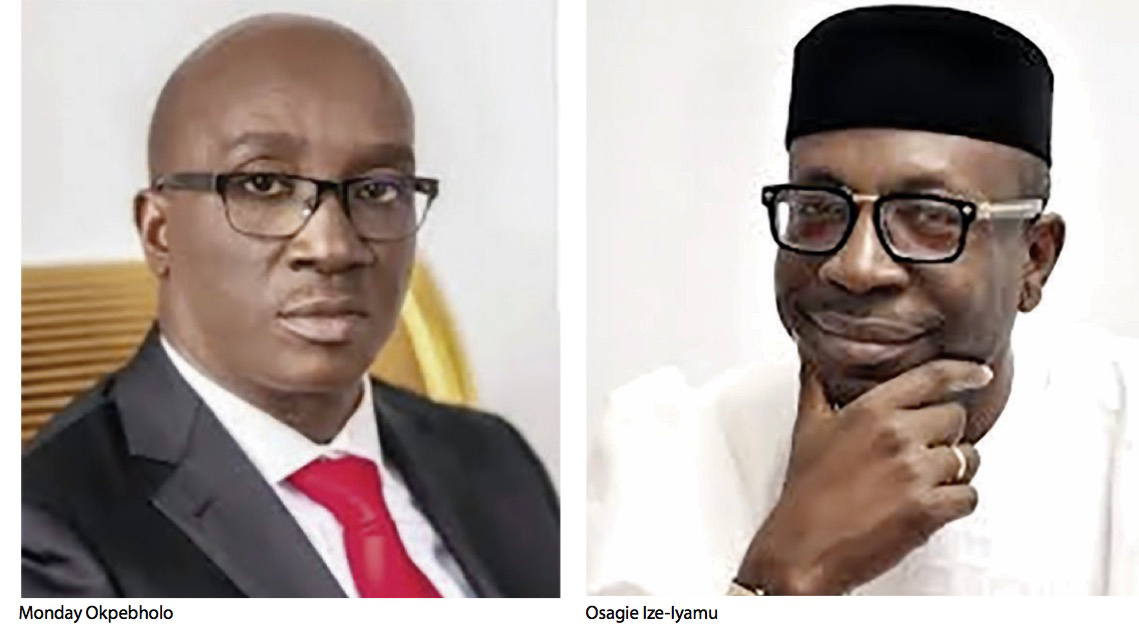
There is a storm gathering over the All Progressive Congress (APC) in Edo State, and its epicentre is Edo South, the state’s most populous senatorial district, its most volatile political terrain, and the arena where Governor Monday Okpebholo’s most consequential and most contested political calculations are playing out ahead of the party’s primaries.
On the surface, the APC’s primary process in Edo State appears to be proceeding according to schedule. Aspirants have purchased forms, consultations are underway, and the party’s state leadership has maintained a posture of studied neutrality. Beneath that surface, however, the political temperature is rising to levels that senior party figures, political observers and grassroots members privately acknowledge could have serious consequences, not just for the primaries, but for the APC’s electoral fortunes in the 2027 general elections.
The flashpoint is the Edo South Senatorial District, where three aspirants, incumbent Senator Neda Imasuen, former governorship candidate Pastor Osagie Ize-Iyamu, and former House of Representatives member Omoregie Ogbeide-Ihama are locked in a contest that has already drawn the governor’s shadow across it in ways that are making even loyal APC members deeply uncomfortable.
Sources within the Edo APC have told Daily Sun that Governor Okpebholo has directed close aides and key political appointees to work quietly but decisively for the emergence of Ogbeide-Ihama as the Edo South senatorial candidate. The governor has not made this preference public. He does not need to. In Edo’s tightly networked APC structure, where patronage flows from Government House outward, the direction of the governor’s political wind is felt before it is seen.
The rationale for Okpebholo’s preference, sources say, is layered. At its most immediate level, it is about control. The governor and his allies are said to be deeply wary of Pastor Ize-Iyamu, not because of any personal animosity, but because of what his emergence would mean for the balance of power within the state chapter. A senator of Ize-Iyamu’s profile, political independence and grassroots following, they fear, would be impossible to subordinate to the governor’s agenda. He would be a power centre unto himself, capable of building a parallel political structure that could eventually challenge Okpebholo’s dominance.
There is also the matter of Ize-Iyamu’s wife, who was recently appointed Chief Medical Director of the University of Benin Teaching Hospital, a federal appointment of considerable prestige. The governor’s camp has circulated the argument, privately but insistently, that giving the Ize-Iyamu family both the senatorial ticket and a major federal appointment would amount to a dangerous concentration of political and institutional power in a single household.
Critics of this argument dismiss it as a convenient rationalisation for what is fundamentally a power play. “Since when did a spouse’s professional appointment become a disqualification for a candidate?” one senior APC member told Daily Sun. “That argument is designed to sound reasonable while the real objective is something else entirely.”
But the governor’s moves in Edo South are not motivated solely by internal calculations. Sources point to a debt of political honour owed to FCT Minister Nyesom Wike, whose support proved pivotal to Okpebholo’s emergence as governor. Wike has since visited Edo State twice to commission buses for the New Edo Line Transport Company and construction equipment for the state’s 18 local government areas, high-profile gestures that underscore the depth and visibility of his investment in the Okpebholo administration.
Ogbeide-Ihama, it is understood, was the subject of a prior agreement between Wike and former Governor Godwin Obaseki, a commitment made at the time Obaseki defected from the APC to the PDP to seek reelection, and which Obaseki reportedly failed to honour. With Wike now a key political ally of the APC’s federal structure and a man whose loyalty to Okpebholo has been publicly demonstrated, the governor finds himself in a position where delivering the Edo South senatorial ticket to Ogbeide-Ihama is not merely a political favour; it is the settlement of a debt that underpins his own political survival.
Underlying all of this is a reality that defines the behaviour of virtually every sitting governor in Nigeria’s political ecosystem: the relentless logic of second term politics. Governor Okpebholo, barely two years into his first term, is already governing with one eye on 2028. His management of the primaries is not simply about choosing capable legislators; it is about constructing a National Assembly delegation that will be reliably aligned with his interests, deployable in his service, and supportive of his reelection bid.
Other News
A senator as independently powerful as Ize-Iyamu, who has twice contested the governorship, commands deep loyalty across Edo South, and owes nothing to the current government for his political standing, does not fit that template. Ogbeide-Ihama, by contrast, would arrive in the Senate with his ticket owing something to both the governor and to Wike. That creates a dynamic of mutual obligation that Okpebholo’s political strategists view as infinitely more manageable.
This is not, it must be noted, an unusual calculation in Nigerian politics. But in Edo State, where electoral behaviour has historically been unpredictable, where the memories of disputed primaries and their consequences are still fresh, and where the Edo South electorate has demonstrated a willingness to punish the APC at the ballot box when aggrieved, it is a particularly high-risk strategy.
Supporters of Pastor Ize-Iyamu are not accepting the situation passively. They argue forcefully that he played a critical role in mobilising support for Okpebholo’s governorship election, made significant sacrifices for the APC during its most difficult moments in Edo State, and that the party owes him a fair and transparent primary at the very minimum. The suggestion that he should be edged out through backroom manoeuvres, they say, would be both a betrayal and a blunder.
APC State Chairman Jarret Tenebe’s controversial television statement that the Edo South ticket would not go to a “serial election loser”, has added fuel to an already volatile atmosphere. Tenebe insists he mentioned no names, offering the classic political deflection: “who the cap fits, let him wear it.” But the political class in Edo State understood exactly whom the cap was being fitted for, and Ize-Iyamu’s supporters responded with fury.
The senatorial leaders of Edo South attempted to project unity at a meeting convened at the home of former Deputy Governor Dr. Pius Odubu, presenting a collective front against external interference in who emerges their senator. But sources within the meeting told Daily Sun that the unity was largely performative. Behind the facade, many of the same leaders are quietly positioning themselves in alignment with the governor’s preference, a pattern that is both familiar and troubling in Edo’s political history.
Beyond the Edo South senatorial race, the APC faces friction in the contest for the Oredo federal constituency, where incumbent Representative Esosa Iyawe faces challenges from former council chairman Osaro Obazee and Dr. Paddy Iyamu, the immediate past Commissioner for Education. State House of Assembly races across multiple constituencies are equally tense, with allegations of pre-determined outcomes already circulating in party circles.
The relatively calm situations in Edo North, where former Governor Adams Oshiomhole’s return to the Senate was publicly endorsed by Tenebe, effectively foreclosing competition and Edo Central, where Senator Joseph Ikpea is positioned to retain his ticket, only throw the turbulence in Edo South into sharper relief.
Political observers are sounding increasingly urgent alarms about what an opaque, governor-directed primary process in Edo South could mean for the APC in the general elections. Edo South has the largest voter population in the state. Its electorate has proven its willingness to punish perceived injustice at the polls. A primary outcome that is widely seen as imposed, particularly one that sidelines a candidate of Ize-Iyamu’s standing in favour of a former PDP figure whose ticket owes more to inter-elite agreements than to grassroots legitimacy, risks triggering exactly the kind of voter alienation and internal protest that costs parties winnable elections.
“The governor’s impartiality in handling the primaries is critical,” one longtime APC stakeholder told Daily Sun. “If members feel the process was rigged, some will stay at home. Others will vote against the party. And in Edo South, both outcomes are enough to hand the seat to the opposition.”
The warning is clear. Whether Governor Okpebholo, in his calculus of second-term survival, debts of political honour and control of the legislature, chooses to heed it before the primaries begin is the question on which the APC’s 2027 fortunes in Edo State may ultimately turn.