Follow Us on Google

By Omoniyi Salaudeen
With barely seven weeks separating Nigerians from the January 16, 2027 presidential and National Assembly elections, the major opposition parties are fighting their fiercest battles not at campaign rallies, but inside courtrooms.
Instead of consolidating alliances, mobilising voters, and articulating alternative policy visions, the African Democratic Congress (ADC), the Nigeria Democratic Congress (NDC), and the Peoples Democratic Party (PDP) are trapped in a web of legal crises over leadership legitimacy, disputed primaries, and membership registers.

For an electorate hoping for a robust democratic contest, the immediate casualty is political choice: the pool of viable opposition candidates on the ballot is shrinking by the day. Over the past few weeks, judicial pronouncements have nullified or displaced several high-profile opposition flagbearers, leaving dozens of others hanging by a judicial thread. What makes this wave of pre-election litigation existential is that these are not routine squabbles over party patronage or campaign offices; they are existential battles over statutory compliance that directly determine ballot access. Under the strict timelines of the Electoral Act 2026 and the 1999 Constitution (as amended), a candidate disqualified by a procedural defect risks permanent exclusion from the ballot, regardless of political pedigree, financial war chest, or grassroots appeal.
ADC predicaments
Nowhere is this pre-election peril more acute than in the African Democratic Congress (ADC), where a bitter leadership tussle has cast a dark shadow over the presidential ambition of former Vice President Atiku Abubakar and the party’s entire slate of legislative candidates across the federation.
On November 5, 2026, Justice Peter Lifu of the Federal High Court in Abuja (in Suit No. FHC/ABJ/CS/1819/2025) delivered a seismic judgment nullifying the ADC’s caretaker national leadership led by former Senate President David Mark and former Osun State Governor Rauf Aregbesola. By extension, the court invalidated all administrative and electoral actions taken under that arrangement, most notably the presidential primary that produced Atiku as the party’s standard-bearer.
Specifically, the suit was instituted not by the ruling All Progressives Congress (APC), but from within: former ADC Deputy National Chairman (North-East) Nafiu Bala Gombe challenged the coalition takeover, contending that the imposition of interim officers violated both the ADC constitution and the Electoral Act. In its ruling, the court rejected a purported resignation letter tendered against Gombe after finding his signature inauthentic, and ordered that leadership revert to the party’s constitutionally recognised organs.
ADC presidential candidate, Atiku Abubakar, through Phrank Shaibu, Director of Strategic Communication, ADC Presidential Campaign Council, dismissed the judgment as a calculated attempt to weaken the ADC and frustrate his 2027 presidential campaign. “There is no shaking,” he said.
The ADC predicament exposes the inherent tension between coalition politics and internal party democracy. As constitutional lawyer and commentator, Dr. O. G. Ogbom, observed in a legal analysis on judicial intervention in party affairs: “Courts should not become managers of political parties. But political parties cannot become immune from the authority of the courts.”
That boundary defines the party’s current quagmire. While the ADC has filed a 17-ground notice of appeal and sought an injunction restraining the Independent National Electoral Commission (INEC) from altering its records, and while party chieftains like Kenneth Okonkwo have faulted Justice Lifu’s ruling as legally flawed, settled Nigerian jurisprudence holds that an appeal does not automatically operate as a stay of execution. Until the Court of Appeal grants interim relief or overturns the lower court’s verdict, the judgment remains valid and subsisting. For Atiku and down-ballot ADC candidates, this creates a perilous race against the electoral calendar. Even a belated out-of-court political settlement between contending factions cannot automatically cure a statutory breach already pronounced upon by a court of competent jurisdiction. Once an infraction touches on statutory eligibility or valid sponsorship, party executives cannot simply waive it behind closed doors.
NDC setbacks
The Nigeria Democratic Congress (NDC), which has attracted heavyweight political blocs, including Rabiu Kwankwaso’s Kwankwasiyya movement and prominent former APC stalwarts, is confronting a parallel crisis: the friction between hasty political alignments and strict statutory rules governing candidate nomination. Within a span of 12 days in November, the party suffered two major judicial setbacks to its senatorial ambitions.
First, on November 12, Justice Mohammed Umar of the Federal High Court in Abuja sacked Onyeagucha Uchechukwu as the NDC senatorial candidate for Imo East, ordering INEC to recognise Uche Nwole instead. The court ruled that Nwole had emerged from a valid primary election monitored by INEC and could not be arbitrarily displaced via a post-primary consensus arrangement cooked up by party leaders.
Twelve days later, on November 24, the party was dealt an even heavier blow in Delta State. Justice Hyeladzira Ajiya Nganjiwa of the Federal High Court in Warri nullified the nomination of former Deputy Senate President, Ovie Omo-Agege, as the NDC candidate for Delta Central Senatorial District. Ruling on a suit filed by Professor Alexander Osondu Akpodiete, the court held that Omo-Agege’s name was absent from the authentic NDC membership register submitted to INEC at least 21 days prior to the primary, a fatal violation of the Electoral Act, while also noting his participation in the APC senatorial primary on May 18, 2026.
In his ruling, Justice Nganjiwa stressed that only individuals duly captured in a party’s statutory register can lawfully contest its primaries, adding that the statutory window for conducting a fresh primary had elapsed.
Although Omo-Agege has rejected the verdict and directed his legal team to appeal, insisting that the NDC submitted only a single register to INEC containing his name, the ruling underscores how quickly high-profile defections can unravel when procedural documentation lags behind political deal-making. In Nigerian election jurisprudence, cross-carpeting at the eleventh hour has long been a standard political manoeuvre; under the current statutory regime, however, onboarding a prominent defector without satisfying the 21-day register rule is akin to building a mansion on quicksand.
A member of the APC, who did not want his name in print, told Sunday Sun: “You cannot be in two parties at the same time and expect the law to look the other way. The court has simply enforced what the Electoral Act already says.”
PDP turbulence
The Peoples Democratic Party (PDP), while spared the coalition-induced upheavals of the ADC and NDC, has remained bogged down by entrenched factionalism and competing claims to its tickets. On September 24, 2026, the Federal High Court in Gombe, presided over by Justice Aliyu, nullified the May 26 governorship primary that produced former Minister of Communications and Digital Economy, Professor Isa Ali Pantami, as the flagbearer of a PDP faction backed by Nyesom Wike, ordering a fresh exercise following a suit by aggrieved aspirant Usman Aliyu Garry. Although Pantami subsequently won the court-ordered rerun primary on September 29 and was eventually cleared by INEC after an initial exclusion, Garry’s appeal remains pending before the Court of Appeal, keeping the Gombe ticket under a cloud of uncertainty.
Conversely, on November 13, the Federal High Court in Abuja ordered INEC to reinstate Ladi Adebutu as the PDP’s Ogun State governorship candidate within 24 hours after declaring his earlier removal from the candidate list unlawful. Delivering that judgment, Justice Peter Lifu rebuked the electoral umpire for acting outside its statutory remit, warning: “INEC does not have the power to remove names or disqualify any candidate on its own. The power to disqualify a candidate after the name has been forwarded resides with the Federal High Court or State High Court.” While INEC has since appealed that decision, the ruling serves as an important constitutional reminder: the courts are not acting as partisan instruments against the opposition, but as neutral arbiters policing both party executives who flout their own rules and regulators who exceed their statutory powers.
Reasons for litigation floodgates
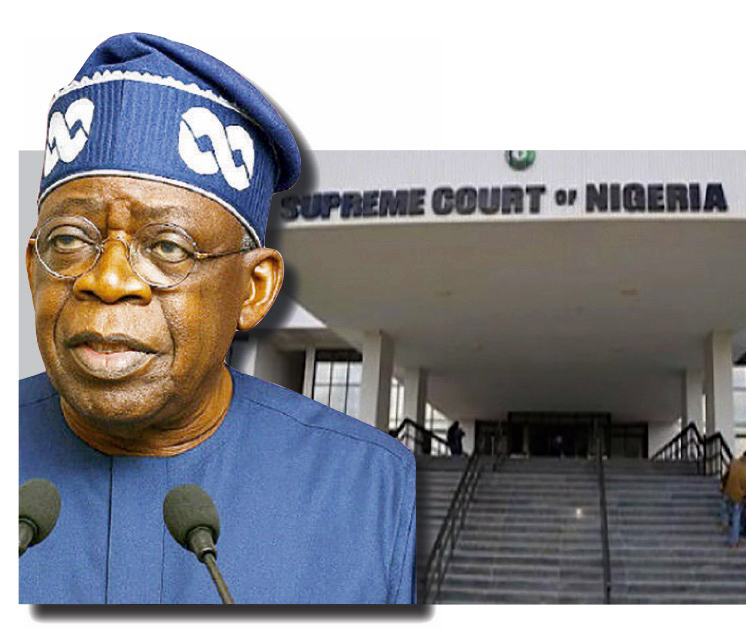
Underpinning all these courtroom battles is the Supreme Court’s landmark unanimous judgment delivered on September 24, 2026, in INEC v. Zenith Labour Party (with lead judgment by Justice Emmanuel Akomaye Agim on a seven-man panel led by Justice Adamu Jauro). Reversing an earlier Court of Appeal decision, the apex court restored Sections 77(5), 77(6), 77(7), and 84(2) of the Electoral Act 2026, provisions requiring every political party to submit its digital membership register to INEC at least 21 days before primaries, barring the use of any external register, and disqualifying non-compliant parties from sponsoring candidates.
Legal analysts note that the Supreme Court’s pronouncement effectively closed the escape routes historically exploited by party bosses to impose anointed candidates or accommodate last-minute defectors. As constitutional and election law commentator Menseh Madaki, Esq. noted in an analysis of the verdict, parties must now conduct their primaries and conventions strictly within the “register-and-21-day framework, on pain of losing eligibility to field a candidate under Section 77(7),” even as he flagged an unresolved doctrinal tension over whether consensus nominations under Section 84(2) can bypass register rules for late defectors.
Other senior practitioners have been blunt about the consequences of political impunity. Reacting to the apex court’s judgment, constitutional lawyer Festus Ogun warned politicians against selective obedience to electoral statutes: “If politicians and political parties refuse to abide by the provisions of the law, they must learn the hard way. You cannot pick and choose which law to obey during the electoral process. You cannot fail to do what you are supposed to do and expect positive results. The law must always catch up with you.”
Yet, senior advocates also caution against viewing the September 24 ruling as a self-executing guillotine. As a Senior Advocate of Nigeria (SAN) clarified in the wake of the verdict, the apex court’s decision “is a general interpretation of the law” and “does not affect any nomination at all; INEC needs a fresh court pronouncement to delist them, some people must complain before INEC can act.” That single legal reality explains the current deluge of pre-election suits: aggrieved aspirants and sidelined party officials are weaponising the restored statutory provisions to challenge hasty consensus deals and eleventh-hour defections before the window closes. As President Bola Tinubu’s aide, Tunde Rahman, aptly observed, “the law has apparently become the new primary election.”
Impending verdict for 2027
Taken together, the travails of the ADC, NDC, and PDP establish an unmistakable precedent for Nigerian politics: celebrity endorsements, political war chests, and backroom elite pacts cannot cure a defective nomination. Political coalitions cannot be built on ad-hoc shortcuts or midnight consensus deals. They demand meticulous institutional preparation, transparent membership audits, and strict fidelity to party constitutions and electoral statutes before a single primary vote is cast.
With the final list of candidates already published and the statutory window for candidate substitution or fresh primaries firmly shut, the clock is now the opposition’s fiercest adversary. Even where appeals succeed, the financial resources, executive bandwidth, and campaign momentum lost to protracted litigation between Abuja, Warri, and Gombe cannot be recovered at the ballot box. Conversely, if pending appeals fail, affected parties will not merely replace disqualified flagbearers, they will forfeit entire constituencies on the ballot without a fight.
Beyond individual political casualties, the cumulative danger for Nigeria’s democracy is stark: a fragmented opposition, demoralised grassroots supporters, and an uncompetitive election decided by procedural defaults long before voters queue at polling units on January 16, 2027.
Fear grips candidates
Faced with internal legal battles, opposition parties and their candidates are now waiting in fear for the court’s final verdict ahead of the 2027 general election. With barely seven weeks to the presidential and National Assembly elections, opposition parties are spending an extraordinary amount of time fighting legal battles that threaten their candidates, undermine their organisational structures, and distract them from the business of winning public support.
They are in fear because the impending court verdict is a raging storm. It can sweep away any candidate whose nomination process fails to meet the basic requirements set by electoral law.
That fear is not abstract. In Nigeria, a flawed primary, a disputed delegate list, a defective substitution, or a failure to comply with the Electoral Act and INEC guidelines can end a candidacy overnight, no matter how popular the aspirant is or how much money has been spent on campaigns. The courts have repeatedly shown they will not save a candidate whose party got the process wrong, and that precedent hangs over every opposition camp like a dark cloud. What makes this moment especially damaging is the timing. While the ruling party is consolidating its structures, fine-tuning its message, and deploying state and party resources toward election day, opposition parties are trapped in courtrooms and warring factions. Instead of selling a credible alternative vision on the economy, security, and cost of living, they are spending scarce time and money on lawyers, affidavits, and emergency appeals.
The effect on voters is corrosive. When parties cannot guarantee that their candidates will even remain on the ballot, public confidence collapses. Supporters hesitate to donate, volunteers hesitate to mobilise, and undecided voters begin to see the opposition not as a government-in-waiting but as a house divided against itself. That is why contending candidates are having sleepless nights, and the reasons are painfully specific.
First, the law is unforgiving on process. The Electoral Act and INEC’s timetable leave little room for error. If a primary was not properly monitored, if delegates were not properly elected, or if a candidate did not emerge through a valid congress, the nomination can be voided. A candidate can win a primary convincingly and still lose everything because the party’s paperwork failed.
Second, rival factions are weaponising the courts. In several opposition parties, parallel executives are laying claim to legitimacy, each issuing its own list of candidates. That means a candidate does not just have to beat an opponent from another party, he has to survive a challenge from inside his own party. Every court date becomes a referendum on whether his candidacy exists at all.
Third, time is now the enemy. With barely eight weeks to the polls, there is no luxury of a long appeal. A judgment delivered in December could leave a party with days, not months, to find a replacement, reprint campaign materials, and rebuild momentum. For governorship and National Assembly candidates, a late disqualification is often a death sentence for the whole ticket.
Fourth, money is already sunk and cannot be recovered. Candidates have paid for nomination forms, funded delegates, hired media teams, printed posters, and opened campaign offices across states. If a court nullifies the process, that investment is gone. Worse, donors who funded a now-disqualified candidate rarely fund a replacement with the same enthusiasm.
Fifth, INEC’s final list is final in practice. Once INEC publishes the list of candidates and ballot papers go to print, the room for correction narrows sharply. A candidate waiting on a court order knows that a favourable judgment that comes too late may be legally correct but politically useless.
Finally, reputation is at stake. In Nigeria’s political culture, disqualification is rarely read as a technicality. Opponents will frame it as incompetence, fraud, or desperation. Even if a candidate wins on appeal, the stain of litigation follows him into the campaign, and voters begin to ask whether he can manage a state or a country if he could not manage his own party’s primary.
Put together, these pressures explain the anxiety. The candidates are not just afraid of losing an election. They are afraid of not being allowed to contest it at all.
Renowned constitutional lawyer and human rights activist, Dr Tunji Abayomi, pushed back the accusation of deliberate suppression of opposition: “It is unfortunate that some people are trying to intimidate the judiciary. In other climes, the judiciary is kept away from political controversy. But in our country, because of what I will call the unholy appetite of politicians, the only judgment politicians accept or respect is a judgment that favours them.
“A court decided on a matter, and you are castigating the judiciary. The judiciary may not be perfect, but by and large, it has to decide according to the law. Even during the military government that was intimidating, the judiciary tried as much as possible to stand up.
“Look at former Vice President Atiku Abubakar. He moves from one party to another. Do you know how many times he has moved from one party to the other? And each time he moved, he imposed himself on an existing political order, dismissed the people managing it, and used his money to intimidate.
“When you open up the chest of a political party without anaesthesia and impose your own heart because your heart is big, you must expect that you will have some problems.
“Regardless of how they feel, the judiciary will never be intimidated. The only thing that can intimidate the judiciary is wrongdoing by the judiciary itself. The opposition should just wake up to piety.”
In the end, the legal battles do more than threaten individual ambitions. They shrink democratic choice itself. If the courts disqualify key opposition figures weeks before the polls, Nigerians will go to the ballot with fewer real options, and the election will be decided less by the strength of ideas than by the survival of flawed processes.
That is the real tragedy of this season. An election should be a contest of visions, records, and promises. It should give Nigerians the chance to reward competence and punish failure. But when opposition parties cannot put their own house in order, they hand the ruling party an advantage it did not have to earn at the ballot box. The incumbent does not need to be popular if the alternative cannot even make it to the starting line.
For voters, the consequence is a narrowing of hope. Many Nigerians are frustrated with the high cost of living, insecurity, and the pain of economic reforms. They are looking for a credible alternative, not just another name on a ballot. If that alternative is consumed by factional wars and legal technicalities, disillusionment will grow, turnout will fall, and cynicism about democracy will deepen.
For the opposition itself, the lesson is brutal but unavoidable. Internal democracy is not a luxury, it is survival. A party that cannot conduct a clean primary, keep a credible membership register, and respect its own constitution cannot credibly promise to run a country. The courts will not overlook those failures out of sympathy, and INEC cannot bend the timetable to accommodate internal chaos.
With barely seven weeks to go, the opposition still has a narrow window to save itself. It must settle its leadership disputes, close ranks behind candidates who emerged through lawful processes, and shift its energy from the courtroom back to the campaign trail. If it fails to do so, history will not remember these candidates as victims of a raging storm. It will remember them as politicians who saw the storm coming, refused to fix the roof, and then wondered why the house collapsed.