Follow Us on Google
By Bobson Gbinije
“All the ills of democracy can only be cured by more democracy”– Alfred Smith (1873-1944). Democracy, by isochronal and intertextual condensing, including but not limited to Jeffersonian, Lincolnian and Grecian normative standard, is the political doctrine that recognises the institutionalisation of liberal structures of governance that enfranchises and gives the people the rights to elect and remove their leaders. It concretises the basis of their participation in the decision–making process and enhances their freedoms. Indeed, a government of the people, by the people for the people.
But, in the Nigerian so-called democratic ambience, the above–mentioned definition of democracy is a consummate misnomer. Democracy in Nigeria is the wresting and larceny of power by rigging, thuggery, ballot box snatching, kidnappings and total Machiavellian acrobatics.
This politically weird means of power acquisition has often given rise to despotism, political impunity, unthinkable corruption and fascism. Fascism grew out of the unstable political conditions that followed on the heels of World War I. Its mass appeal derived from its promises to replace weak democratic governments with strong leadership and to rectify the grievances of individuals and states of the post-war settlement. In the 1920s, fascist dictators began to gain power in several countries. Once they did, tensions arose between themselves and the democratic states-tensions that would lead eventually to war.
Fascism was not a coherent doctrine like Marxism, but all fascists believed in strong, nationalist, authoritarian State, ruled by a charismatic dictator backed by a single paramilitary party. Fascist are fanatically opposed to democracy, socialism, Marxism and liberalism, and were often racist and anti-Semitic. Both in opposition and in power, fascist made effective use of propaganda and terror to win support and to dispose of opposition and political rivals.
The Nigerian so-called democracy of today reflects all the characteristics of fascism and despotism. We have no opposition, indeed Nigeria is a one-party state sunken in the Cauldron of masqueraded totalitarianism. The APC is locked in somnambulistic political slumber. We therefore need to build structures and reorientations that will enhance and concretise the democratisation of our democracy. Otherwise, we will be reechoing the observations of the political analyst, Dr .H. L. Mencken (1880-1956) that, “The saddest life is that of a political aspirant under a cursed democracy. His failure is ignominious and his success is disgraceful.”
We need transparent and credible election process and electoral infrastructures that will make the vote of every Nigerian count as authentic vote. This can only come about through the revolutionisation of the electoral process and not the bastardisation (wuruwuru) of the system. In other words, the electoral process must be free, fair and transparent.
The mindset of the politician which believes that politics is a do-or-die game, hideous power tussle and a mutually assured destruction for all, through the acquisition of power by all means, must be completely removed and exorcised from his political psyche. It is this mindset that constitutes 99 per cent of the problem because they are insincere and want to win elections by any means, including but not limited to bribing election officials, thuggery, kidnapping, rigging, ballot box snatching and manipulation of the judicial process. We call for the implementation of the recommendations of the Uwais report on electoral reforms.
Other News
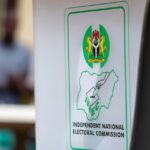
The composition of the Electoral Commission should be the responsibility of a broad spectrum of Nigerians and not the exclusive preserve of the predominant and ruling political party. We must have representatives from the Nigerian Bar Association, civil society organisations, labour unions, women organisations, student unions and youth organisations. This will ensure a free and fair electoral process and will help to lessen political tension.
The question of frivolous and sometimes marathon legal battles after elections have tended to alter our political calendar and precipitated political cataclysm in some areas, Anambra for example. This is not good for our democracy. It is in the light of this, that we call for the harmonisation of the political calendar by ensuring that no one should be sworn into office or assume office until all judicial election matters are concluded. We believe as recommended by Uwais report that there should be an Electoral Offences Commission (EOC) and that prosecution under the EOC should be by an independent prosecutor not by the Attorney-General of the Federation or of the state.
The snatching of ballot boxes and rigging will be greatly ameliorated if elections are held simultaneously on all fronts across the nation. There is need to consider holding elections from 9am to 12 noon. For instance, a voter can come for accreditation, confirm his name in the voters’ register and go home. From 11am, the voter queues up, collects ballot paper, goes into the closet, do the thumb printing there and then bring the thumb printed ballot paper to the open and drop it in the ballot box. The voting process can be over in just one hour. The votes are then counted and the result sheets are given to everybody. This process will not allow professional vote riggers to manipulate the voting process.
The electoral reform process is critically crucial if our democracy must survive beyond 2027. The electoral process is the barometric gauge with which any democratic system is measured and our political history has shown that the electoral process in Nigeria is still submerged in the tortuous labyrinth of gross imperfection.
Our historical adumbrations should of necessity remind our leaders and our politicians of the dangers inherent in the antics of election rigging, corruption and the schismatic signals in the countdown to the 2027 elections without adequate electoral reforms and their total attitudinal reorientation.
We must learn from our past and endeavour to reshape our nation through fundamental change in our electrical process. Our democracy will be lifted from Paleolithic backwardness to progressive heights if we sincerely make positive review of the electoral process through electoral reforms. We call on members of the legislative arm of government at all levels to rise to the occasion. The issue of deregistration of some political parties is fraught with dangerous and should not be toyed with.
We commend the efforts of the Coalition of Democrats for Electoral Reforms (CODER), Conference of Nigerian Political Parties (CNPP), the NBA, the Labour Congress and the Nigeria electorate for their efforts so far in ensuring stable and inclusive democracy. Nigerians must trust and stand on true democracy.
• Gbinije, Mandate Against Poverty (MAP), writes from Sapele, Warri.