Follow Us on Google

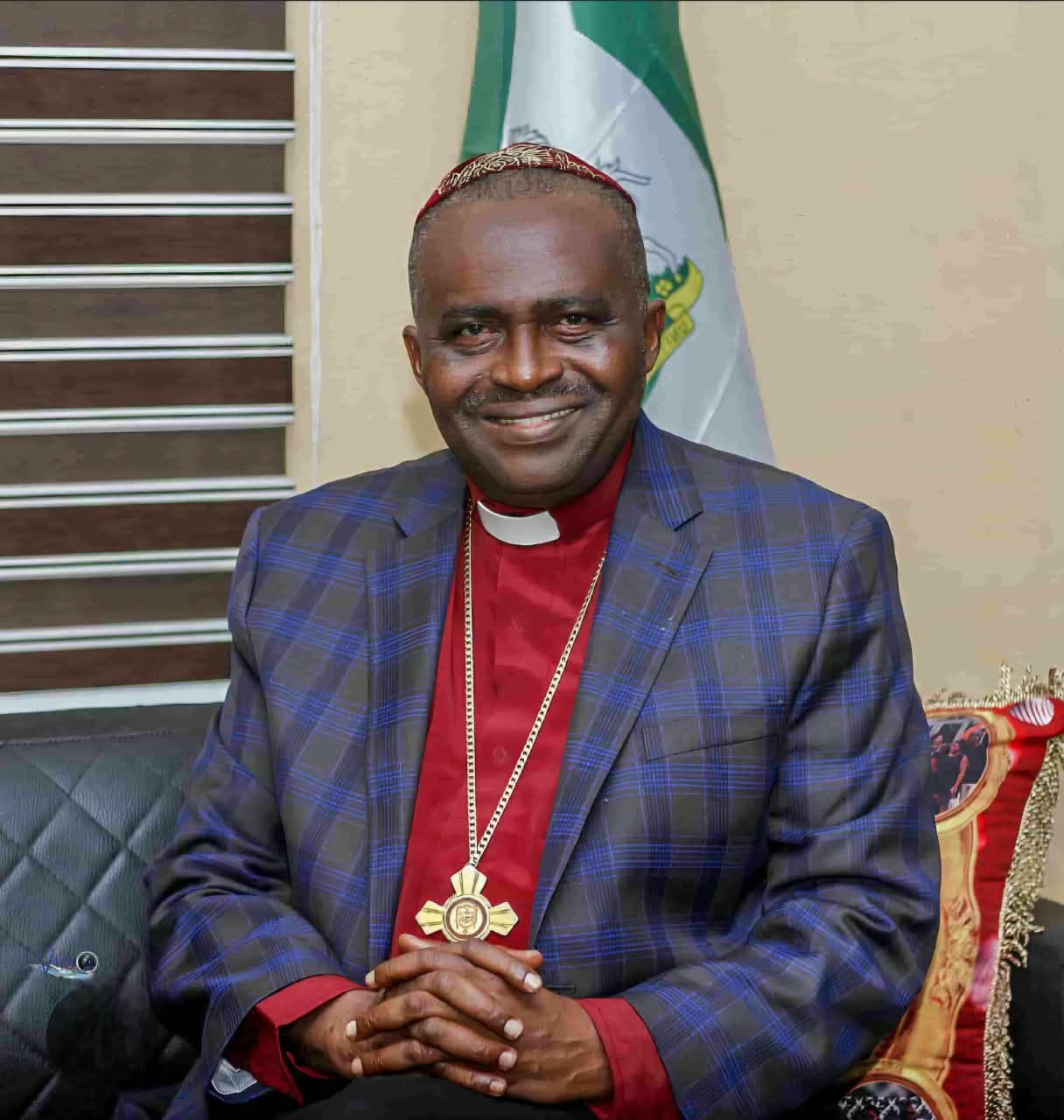
President of Vision Africa and former Special Assistant to ex-President Olusegun Obasanjo on Privatisation, Archbishop Sunday Onuoha, has urged media organisations to adopt clear artificial intelligence policies, establish election verification desks and strengthen fact-checking partnerships ahead of the 2027 general election.
Onuoha also called for specialised training for political reporters, warning that the growing use of AI and digital platforms requires stronger safeguards against misinformation and electoral disinformation.
He spoke through the Methodist Bishop of the Diocese of Kubwa, Bishop Frederick Onoja, while presenting a paper at the launch of Digital Shift in Nigeria’s Newspaper Industry, authored by the Group News Editor of Leadership Newspapers, Dr Sunday Isuwa, in Abuja on Thursday.
Onuoha urged newsrooms to establish dedicated election integrity desks before political campaigns intensify.
He said, “Develop newsroom AI policies with written rules governing AI-generated material and AI-assisted journalism.”
He also called on media organisations to collaborate with credible fact-checking bodies rather than attempting to tackle disinformation independently.
The archbishop urged newsrooms to train political reporters in electoral law, data journalism, digital investigations, AI detection, conflict-sensitive reporting and hate speech monitoring.
He further advocated clear separation between advertising and editorial departments, insisting that sponsored political content should be properly labelled.
On corrections, he called for prompt, visible and transparent policies, while urging media organisations to expand local-language reporting to ensure electoral information reaches citizens in languages they understand.
He also recommended journalist safety training, misinformation hotlines for citizens to report suspicious claims and partnerships with universities and civil society organisations to improve election monitoring.
Onuoha urged journalists to focus election coverage on issues rather than personalities, listing jobs, education, healthcare, security, infrastructure, corruption, poverty, climate change and economic management among the subjects requiring greater attention.
In his welcome remarks, Isuwa warned journalists against allowing the pressure to publish quickly to undermine accuracy, ethics and public trust.
He said digital technology had transformed news production and distribution but could not replace the professional judgement required for credible journalism.
“Digital tools can help journalism reach more people and tell stories in new ways. But technology alone cannot guarantee good journalism. That still depends on ethical practice, careful verification, fairness, and commitment to serving the public,” he said.
Isuwa identified misinformation, changing business models and declining public trust as major challenges confronting the newspaper industry.
He said his book examined how digital platforms had changed the production, distribution and consumption of news, while highlighting the responsibilities accompanying those changes.
The author said the publication was intended to promote media literacy and encourage journalists to adapt to technological developments without abandoning professional standards.
“We need conversations that help journalists adapt without losing the principles that make their work valuable. We need readers who can engage critically with the news they encounter,” he said.
Also,Kano State Governor, Abba Kabir Yusuf, also expressed concern over the growing use of hate speech and personal attacks in political campaigns, warning that such practices were unhealthy for democracy.
Yusuf, who was represented by the state Commissioner for Information and Internal Affairs, Comrade Ibrahim Abdullahi Waiya, said political discourse should centre on issues rather than personalities.
He argued that elected offices deserved respect, irrespective of disagreements with their occupants.
According to him, political actors must distinguish between criticism of officeholders and attacks that undermine the dignity of public institutions.
He warned that politicians who ridicule public offices while in opposition could face similar treatment if they eventually assume those positions.
Similarly,Kaduna State Governor, Uba Sani, called on journalists to ensure that their reports strengthened democracy, particularly as the country approaches another general election.
Sani, represented by the state Commissioner for Information, Ahmed Maiyaki, said journalists must go beyond reporting events to verify facts and examine their implications.
“We must report responsibly so that Nigeria will continue to thrive,” the governor said.
He added, “In these elections, we must look beyond just reporting events, look very deeply, verify facts, and ensure what we report is contributing to democracy.”
Sani said political campaigns and election posters would eventually disappear, while candidates would either win or lose, but Nigeria’s continued existence and stability remained paramount.
He also warned that technological changes were reshaping newsroom operations and putting some media jobs at risk.
According to him, traditional newspaper production, which once required separate stages for content gathering, editing, plate production and printing, had changed significantly with digital technology.
He said the shrinking of newsrooms and production teams meant journalists needed to develop multimedia skills to remain relevant.
Sani noted that artificial intelligence was also threatening jobs in journalism, writing, music and other creative industries, making adaptation increasingly necessary.
The Country Director of the Global Peace Foundation Nigeria and Chairman of the Northern Christian Association, Reverend John Joseph Hayab, said public trust remained essential to the survival of media organisations.
“No matter how much any media organisation makes, when it loses the currency of trust, it’s just a matter of time before it will shut down,” he said.
Hayab urged journalists and publishers to make credibility central to their professional and business decisions.
He also called on citizens to take greater responsibility for democracy rather than leaving the political process entirely to politicians and political parties.
Referring to the election in Osun State, he said citizens’ close monitoring of the voting process offered lessons for democratic participation.
He said, “This republic cannot be allowed to be a republic of politicians. It must be a republic for citizens, and citizens must take ownership of their democracy.”
Hayab added that political parties and their candidates should demonstrate greater commitment to Nigeria beyond their pursuit of electoral victories.
Also speaking, the founder of Aerokeys Nigeria Limited, Kudla Milinda Haske, called for greater public awareness to address low voter turnout and encourage citizens to participate in elections.
Haske argued that the level of participation in previous elections raised questions about the extent to which elected leaders could claim broad popular support.
“If democracy is truly government of the people, by the people, and for the people, a country of 230 million should at least have about 50 million people participating in the election. But we had less than 20 million,” he said.
He maintained that election campaigns should do more to explain the importance of voting and convince citizens that their participation could influence leadership choices.
Haske also urged stakeholders to deploy credible and respected voices to encourage voter participation and promote peaceful elections.
He called on Nigerians to take the 2027 general election seriously and ensure they were prepared to exercise their voting rights.