Follow Us on Google
By Chukwuma Umeorah and Faheem Lawal
The Nigerian Guild of Editors (NGE) has raised fresh concerns over the credibility of Nigeria’s electoral process ahead of the 2027 general elections, urging the media, the Independent National Electoral Commission (INEC) and voters to play their respective roles in strengthening public confidence in democracy.
Speaking at the fourth Lateef Jakande Memorial Lecture in Lagos, the NGE president, Eze Anaba, said the approaching general election would serve as a major test of Nigeria’s democratic resilience, stressing that the legitimacy of any government is determined by the credibility of the process through which it emerges.
He noted that whenever doubts arise over the integrity of elections, the government produced by such elections is inevitably confronted with questions of legitimacy, a situation that weakens public trust in democratic institutions. “Our country stands on the cusp of another national election, one that has been described in many ways. Some have called it the defining election that will test the resilience and future of our democracy,” Anaba said.
“It is for this reason that we chose the theme of this year’s lecture, ‘The Media, INEC, Voters and the Path to Credible Elections.’ This theme could not be more timely as our country continues its journey towards democratic maturity.”
He added: “We all know that the legitimacy of any democratic government is ultimately measured by the credibility of the elections approaching tomorrow. Whenever doubts arise about the integrity of an electoral process, the government that emerges is inevitably tainted by questions of legitimacy, creating uncertainty and eroding public trust in both government and democratic institutions.”
He said the media must remain responsible, professional, accurate and fair in reporting electoral activities, while urging INEC to continue discharging its constitutional responsibilities with transparency, competence and impartiality.
“Therefore, as centurions in the temple of democracy, the media must remain responsible, professional, accurate and fair in its coverage of the electoral process. Like Caesar’s wife, the media must be above suspicion in its engagement with the electoral empire, in our case, INEC.
“Likewise, INEC must continue to discharge its constitutional responsibilities with transparency, competence and impartiality. When both institutions perform their respective roles effectively, the electorate will be better informed, more vigilant, and better equipped to make choices that will strengthen and deepen our democracy.”
Delivering the keynote lecture, titled, ‘The Media, INEC, Voters and the Path to Credible Elections,’ Professor Sylvester Odion Akhaine of the Department of Political Science, Lagos State University, argued that Nigeria’s electoral process continues to face structural challenges that undermine democratic consolidation.
He said although the country has conducted several elections since the return to democratic rule in 1999, concerns over electoral credibility had persisted.
“Since the commencement of the Fourth Republic, we have had several general elections, and the eighth is in the offing. None of the general elections would be said to have been free and fair. They were variously dogged by malpractices that robbed them of any credibility.”
He called for reforms to strengthen the independence of INEC, recommending that the power to appoint the leadership of the electoral commission should no longer reside with the executive arm of government. “The appointing power should be removed from the Executive and placed in the Parliament of representatives of our people,” he said while responding to questions after the lecture.
Other News
According to him, assigning the responsibility to the executive raises concerns about partisanship and weakens the autonomy of the electoral management body.
“You can’t saddle that responsibility as it is currently with the Presidency or with the Executive arm. If you do that, you are underlining the abolition of partisanship. You are undermining the autonomy of that body.”
He also identified misinformation, fake news and the rapid advancement of digital technology, including artificial intelligence, as emerging threats capable of complicating election reporting and public discourse ahead of 2027. He noted that the traditional assumption that factual information naturally prevails over falsehood has become increasingly difficult to sustain in the era of social media.
He, therefore, urged journalists to remain committed to the ethics of the profession and verify information before publication.
“The media must stand by the truth,” he said, adding that the constitutional responsibility imposed on the press provides “a progressive and popular ideology” that should guide journalists in navigating the build-up to the next general election.
He also urged voters to become more actively involved in civic education and democratic participation, arguing that voter apathy can only be addressed through sustained political engagement and public enlightenment.
Representing Lagos State Governor, Babajide Sanwo-Olu, the Commissioner for Information and Strategy, Gbenga Omotoso, said the media also faces growing challenges arising from the spread of fake news and unverified content through digital platforms.
“Apart from that, as media people, we have a common enemy in what is going on in the land now. Fake news. How do we stop it? How do we make people know that the possession of an Android phone is not enough qualification to be a journalist?” he said.
Omotoso observed that while technology has expanded access to information, it has also enabled the rapid circulation of false content, making adherence to professional journalism standards increasingly important.
He also welcomed the Federal Government’s plan to support media organisations in addressing the dominance of global technology companies over news content, arguing that sustainable funding remains critical to the survival of professional journalism.
“We all put our financial resources and everything into deploying reporters all over the world to look for news. There are people who just sit in one room because they have the technology to reach anywhere in the world. The content that they create, they use such content, no acknowledgement, no payment.”
He added that stronger financial capacity would enable media organisations to continue performing their constitutional responsibility of holding public office holders accountable and supporting democratic governance.
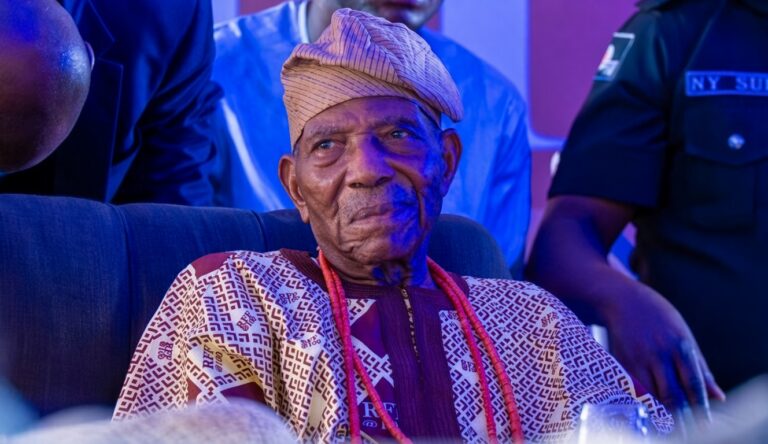
The annual memorial lecture was instituted to honour the late Alhaji Lateef Jakande in recognition of his contributions to journalism, governance and public service, while providing a platform to discuss issues affecting Nigeria’s democracy and the media profession.