Follow Us on Google
•President, ADC, NDC candidates face public scrutiny as campaign begins
By Fred Itua, Abuja
The Independent National Electoral Commission (INEC) lifted its ban on political campaigning on 19 August 2026, formally opening the contest for the presidential and National Assembly elections scheduled for 16 January 2027. With that window now open, three men are expected to dominate the presidential race more than any single party manifesto or policy pledge. President Bola Ahmed Tinubu, former Vice President Atiku Abubakar and former Anambra State Governor Peter Obi will each commence the campaign carrying a distinct set of assets and a distinct set of vulnerabilities.
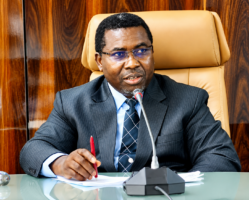
Political analysts tracking the race have narrowed an eleven candidate field, which includes Oyo State Governor Seyi Makinde; human rights activist Omoyele Sowore; and former Cross River Governor Donald Duke, to what most now expect will be a three way contest between Tinubu, Atiku and Obi. What makes this cycle unusually revealing is how closely each man’s greatest strength doubles as his most exploitable weakness. This analysis examines all three.
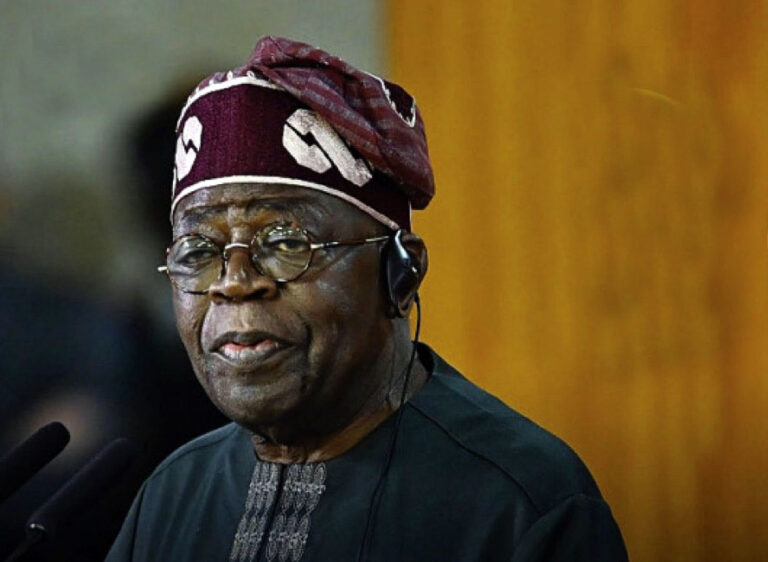
Tinubu: Incumbency’s double edge
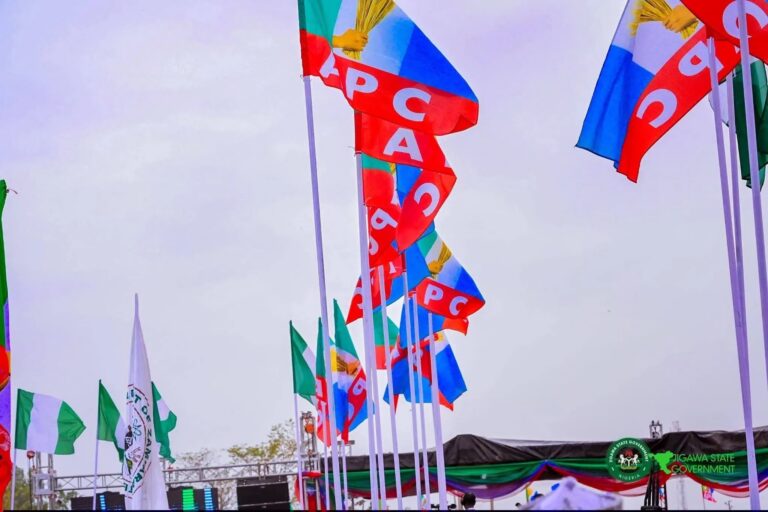
The president’s central asset remains the machinery of the Nigerian state itself. The All Progressives Congress (APC) has, by its own count, absorbed more than 10 sitting governors from opposition parties since 2023, a wave of defections that hands Tinubu a nationwide campaign infrastructure his opponents must still build from scratch. His party controls the overwhelming majority of the country’s 36 states, and that reach translates directly into rally logistics, local mobilisation and ward level presence.
The advantage has now been formalised. On 22 August, Tinubu constituted the APC Presidential Campaign Council, naming former Zamfara-State Governor Abdulaziz Yari as Director General and Imo State Governor Hope Uzodimma as Secretary. Tinubu will chair the council, with Vice President Kashim Shettima and APC National Chairman Nentawe Yilwatda serving as vice chairmen. The 223-member body, drawing together serving governors, legislators and party strategists, gives the ruling party the most developed campaign structure of the three main contenders at this stage of the race.
Tinubu will also point to a record of structural reform. He removed the fuel subsidy on his first day in office, a step successive governments had promised and avoided for a generation. He unified the foreign exchange market, ending years of arbitrage that had enriched a narrow class of intermediaries at public expense. He signed a new national minimum wage into law, raising it from N30,000 naira to N70,000. His campaign presents these as evidence of a president willing to make unpopular decisions for long term national benefits.
The same record supplies his opponents with their sharpest line of attack. The gap between macroeconomic reform and lived experience has widened rather than narrowed. Inflation remains high, the naira has weakened considerably since those reforms began, and ordinary households have borne the immediate cost of subsidy removal without yet seeing its promised dividends.
Nigeria was recently ranked the world’s fourth most terrorism affected nation in the 2026 Global Terrorism Index, which documented a 43 per cent rise in terror incidents and a sharp increase in civilian deaths, a finding that sits uncomfortably beside a presidency that made security a foundational pledge.
Personal scrutiny compounds the political exposure. Questions over Tinubu’s wealth, decades-old civil asset forfeiture proceedings in the United States, and some other unresolved controversies have trailed him since before he became president, and his rivals, Obi in particular, have used those questions to draw contrasts on transparency. The ADC has also criticised the composition of Tinubu’s campaign council, alleging that some members carry unresolved corruption allegations, a charge the presidency has not directly addressed.
The paradox at the centre of Tinubu’s candidacy remains straightforward. Incumbency gives him the campaign machinery to defend a record that incumbency itself has made harder to defend. The same office that supplies him governors, patronage and structure also obliges him to answer, state by state, for every grid collapse, every kidnapping headline and every naira devaluation that has occurred under his watch.
Even his home region, the South West offers less certainty than it once did. Makinde’s entry into the race, on the Allied Peoples Movement (APM) platform, has reshaped the South West’s political conversation. The uncertainty was underlined on 15 August, when the incumbent Osun State Governor, Ademola Adeleke, was declared winner of the state’s governorship election on the Accord platform, defeating the APC’s Bola Oyebamiji by 511,067 votes to 444,815, despite campaign visits to the state by senior APC figures, including former governors. The result, in a state the APC had actively contested, is being read by analysts as an early signal that Tinubu’s South West base is not as secure as party strategists have assumed.
Atiku: The weight of experience, the burden of age
Atiku Abubakar’s case for the presidency rests on a claim no rival can match; four decades inside the machinery of Nigerian politics, stretching back to his first foray into presidential contention in 1993. He served as vice president under Olusegun Obasanjo from 1999 to 2007, has built one of the country’s most extensive business empires, and commands a network of former governors, senators and political operatives. The experience is why the African Democratic Congress (ADC), a minor party before his arrival, has been transformed into a serious national vehicle. Atiku’s supporters argue that a country facing compounding economic and security crises needs a president who does not require on-the-job training.
Since the campaign window opened, Atiku’s operation has emphasised grassroots mobilisation. In early August, he inaugurated state coordinators of the RiseUpNaija Movement, describing it as a drive to mobilise 20 million votes, and campaigned personally for the ADC’s candidate in the Osun governorship race. Unlike the APC, however, the ADC had not finalised the composition or leadership of its presidential campaign council by the time formal campaigning began, with aides saying the announcement would come “at the appropriate time” as consultations over regional balance continued, including reported considerations of figures such as former Sokoto State Governor Aminu Waziri Tambuwal.
Atiku’s length of service is also, by any honest reckoning, his most obvious liability. He will turn 80 in November, in the middle of the campaign, and this is his seventh attempt at the presidency since 1993. Critics have branded him the perpetual candidate, arguing that repeated bids reflect personal ambition more than a coherent governing vision, a framing that alters the views among younger voters being asked to back him for the first time as first time voters themselves.
The same establishment network that gives Atiku his structural advantage also complicates his appeal to the demographic his campaign most needs. His elite connections, the very asset that makes him a credible coalition builder, are read by some as evidence of detachment from a generation demanding what it calls generational transition.
Geography complicates the picture further. Atiku is a Muslim northerner facing an incumbent who is also, through his running mate, closely associated with the north, meaning his path to power depends on persuading southern voters that a northern candidacy still serves their interests. Some of his own allies have privately acknowledged that the strongest possible anti incumbency coalition might eventually require a southern candidate to neutralise zoning politics altogether.
Other News
Atiku’s wealth presents the same duality in miniature. His business portfolio has allowed him to finance national campaign infrastructure on a scale few Nigerian politicians can match, from logistics to legal teams to state level mobilisation. Political scientists studying his career have described his brand of politics as built substantially on clientelism, the exchange of material support for political loyalty, a pattern common across Nigerian politics but one critics argue Atiku has practised more deliberately than most.
Obi: Insurgency without an institution
Peter Obi’s core strength requires no elaboration to anyone who followed the 2023 election. He transformed Nigerian politics almost singlehandedly, winning 12 states and 6,101,533 votes with a campaign built on an anti-corruption message and a movement he did not fully control but which carried him further than any third force candidate in the country’s democratic history. The movement, the Obidients, remains among the most energetic grassroots forces in Nigerian politics, and Obi is currently contesting on the platform of the Nigeria Democratic Congress (NDC) banner, paired with former Kano Governor Rabiu Kwankwaso as his running mate, an alliance widely read as an attempt to extend his appeal into the north, where his 2023 support was thinnest.
As the campaign period opened, the NDC had, like the ADC, not yet settled the composition of its presidential campaign council, with party officials saying an internal meeting would determine the timetable. Kwankwaso has nonetheless been an active voice in the early campaign, publicly questioning the composition of the NDC’s newly unveiled council and arguing that many of its members had previously supported or defended the current administration.
Obi’s reputation for personal discipline and relative austerity, a contrast he has cultivated against wealthier rivals, remains his most durable asset. Yet, the qualities that made his 2023 campaign effective are the ones now working against him. His movement was built as an insurgency, and insurgencies are, by design, loosely structured. Critics both inside and outside his coalition describe his political project as insufficiently institutionalised, arguing that passion is not the same as party structure, and that online enthusiasm does not automatically translate into ward level electoral defence.
His record of party movement, from the All Progressives Grand Alliance (APGA) to the Peoples Democratic Party (PDP), then to the Labour Party, briefly to the ADC and now to the NDC, has earned him a reputation critics call political nomadism, an accusation that sits awkwardly beside a brand built on consistency and principle.
Claims of tension within his own coalition, including a leadership dispute inside the OK Movement that Kwankwaso’s spokesman has confirmed as a live distraction, suggest that merging two large, personality-driven followings has proved harder in practice than it appeared on the day the alliance was announced.
Obi’s northern outreach carries its own complications. Comments from his 2023 campaign, widely interpreted in parts of the north as dismissive of the region’s concerns, have left lasting resentment among some Hausa / Fulani voters, and critics argue that his Kwankwaso alliance will realistically extend his reach no further than Kano and scattered Christian enclaves rather than the north as a whole. Whether Kwankwaso’s personal following will transfer loyally to a joint ticket is a question neither camp can hardly answer with confidence.
Perhaps, Obi’s sharpest structural weakness is one entirely outside his control. He is no longer the sole face of anti-incumbency sentiment. In 2023, his emergence disrupted a two party dominance that had defined Nigerian politics for a generation. In 2027, he shares that lane with Atiku, and unless the two men find a way to combine their support rather than compete for the same voters, the opposition risks repeating the vote splitting arithmetic that returned Tinubu to power on barely a third of the national vote last time.
How each strength becomes liability
Laid side by side, the three candidacies reveal a common pattern. Tinubu’s incumbency delivers structure and resources, now reinforced by a fully constituted campaign council, and simultaneously forces him to answer for every failure of governance that structure has produced, including a governorship loss in Osun on his own party’s watch.
Atiku’s experience delivers coalition building capacity and elite credibility, and simultaneously marks him as the candidate of a political generation many voters argue they are ready to retire. Obi’s insurgent energy delivers authenticity and youth mobilisation, and simultaneously exposes a campaign that has not yet proved it can convert enthusiasm into the institutional discipline a national election demands, a gap underlined by the fact that, more than a week into formal campaigning, his party had yet to name its own campaign leadership.
The pattern holds when the analysis shifts to the voters each is chasing. Among the roughly 10 million newly registered voters aged 18 to 34, Tinubu’s incumbency argument carries the least weight, since this demographic has the least investment in continuity. Among older, more established voters who prize predictability and administrative experience, Atiku’s decades in public life resonate more than his age repels, particularly in the north.
Among voters who backed Obi in 2023 specifically because he was not part of the established political class, any visible move towards conventional alliance building, however tactically necessary, risks diluting the authenticity that drew them to him in the first place.
None of these tensions is necessarily fatal. Incumbents have overcome economic discontent before. Elder statesmen have won late career victories, as Hakainde Hichilema demonstrated in Zambia, prevailing at 59 after five previous defeats. Insurgent movements have matured into governing parties given enough time. But each candidate will spend the coming months campaigning against the shadow cast by his own greatest asset, and how each manages that tension, rather than the strength of his slogans, will likely shape the outcome in January.
The test ahead
With campaigning now formally underway, Nigerians will be choosing between a record they can inspect, an experience they can measure, and a promise they can only partly verify. Tinubu is asking voters to trust that ongoing reforms will bear fruit before it exhausts their patience, a case complicated by his party’s loss in Osun days before the campaign period began. Atiku is asking them to trust that decades of political survival amount to readiness rather than exhaustion, even as his own campaign council remains unformed. Obi is asking them to trust that a movement built on protest can still deliver institutional competence, a question his party has yet to answer organisationally as well as rhetorically.
Each argument has genuine force, and each also carries an evident counter, supplied not by opponents but by the candidate’s own history. Between now and January, all three men will be tested less by what they say about each other than by whether they can resolve the tension their own record raises.
Tinubu is expected to show that the pain of reform is giving way to its promised relief. Atiku on his part, must show that four decades of ambition have produced more than familiarity. Obi is expected to prove that a movement born as protest can still govern like a party.