Follow Us on Google
By Fred Itua, Okwe Obi, Abuja; Femi Folaranmi, Yenagoa; Scholastica Hir, Makurdi; Stanley Uzoaru, Owerri; Jude Dangwam, Jos
The era of political reckoning is upon us. This time, it comes quietly, through the slow accumulation of defections, realignments, bruised egos and grassroots restlessness, until one morning the ruling party wakes up and discovers that the ground it thought was solid has been shifting beneath its feet for months. Nigeria is at precisely such a moment.
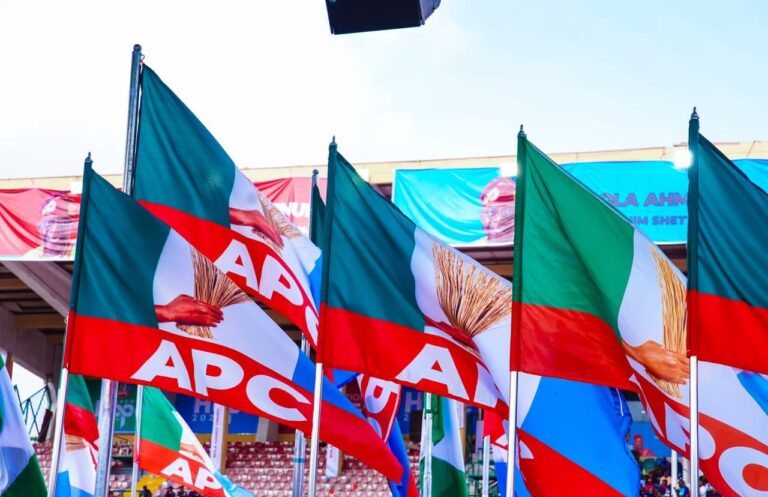
With the 2027 general elections now consuming the waking hours of every serious political actor in the country, the All Progressives Congress (APC) faces challenges from three directions simultaneously; a resurgent Peoples Democratic Party (PDP) that has refused to accept its diminishment as permanent, an African Democratic Congress (ADC) quietly building credible candidacies in specific theatres, and a Nigeria Democratic Congress (NDC) that arrived on the national scene with the kind of momentum that makes established parties nervous.
The battle is being fought differently across Nigeria’s six geopolitical zones. What follows is an honest, zone-by-zone reckoning of where the parties stand, what they are risking, and what 2027 may yet produce.
South-East: Fractured lines in APC territory
Of all Nigeria’s zones, the South East is where the gap between the APC’s official confidence and its actual structural condition is widest. On paper, Governor Hope Uzodimma of Imo State looks formidable. He is the governor, the Progressive Governors Forum chairman, and the man tasked with delivering the South East for President Bola Ahmed Tinubu’s re-election. He has accepted the senatorial call from Orlu Zone, is positioning himself for the Imo West seat, and is working to install a loyal successor in Government House before his tenure expires. The logic is clean; control the transition, hold Orlu Zone together, and use federal backing to dominate the entire 2027 cycle in the zone.
The problem is that the logic is buckling under the weight of personal rivalries that Uzodimma did not create but cannot seem to contain. The reported attempt to remove him as PGF chairman, the collision with former Governor Rochas Okorocha for the Orlu senatorial ticket, and the resentment of sitting Senator Osita Izunaso, who feels his seat has been taken from him without his consent, have combined to produce exactly the kind of internal bleeding that the opposition parties pray for.
The ADC’s Emeka Ihedioha appears to be patient and prepared. His political legitimacy in Imo rests on a foundation that time has not eroded. He won the 2019 governorship, the courts removed him, and millions of Imo people remember the distinction between those two facts. Positioned as the Owerri Zone consensus candidate for governor, he remains the most credible challenger the APC faces in the state, provided Owerri Zone can hold itself together. Imo politics has a long history of zones fracturing at the moment unity matters the most.
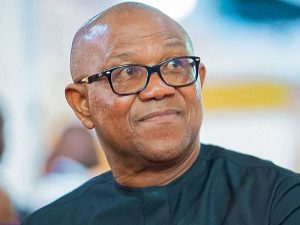
The NDC enters this equation with Peter Obi’s 2023 South East performance as its calling card. The Obidient Movement’s energy has not disappeared, particularly among urban youth who see in Obi something they rarely see in Nigerian politics; a candidate who appears to mean what he says. But winning the presidential vote in Imo is a different exercise from winning the governorship. The former runs on sentiment and a name; the latter runs on ward chairmen, local government structures and the kind of machine politics that requires years to build. The NDC does not yet have that machine in the South East. Until it does, the gap between its presidential and gubernatorial prospects in the zone will remain significant.
South-South: Dickson’s long game and battle for the creeks
The South-South is where the NDC’s national ambitions are being tested at their most personal and most politically interesting levels. Senator Henry Seriake Dickson, the party’s national leader, is not only a politician who has switched parties. He is a man whose political fingerprints are on virtually every significant structure in Bayelsa State, even those now formally belonging to Governor Douye Diri and the APC.
Approximately eighty per cent of the political machinery currently under Diri’s control was originally built by Dickson’s Restoration Team, which became Diri’s Prosperity Team when the governor made his transition. The fact that Diri allowed several of his late deputy’s allies, including three State Assembly members and the Sagbama Local Government council chair from Dickson’s own backyard, to remain outside the APC structure speaks volumes about the delicate equilibrium between the two men. Their understanding not to attack each other is not a friendship. It is a mutual recognition of each other’s capacity for damage.
The defection of Doubara Kumokou, the governor’s younger brother, to the NDC is the kind of development that political analysts note quietly but political operatives track obsessively. When a governor’s own family is divided across party lines, the claim of state dominance becomes harder to sustain with a straight face. In Bayelsa West, and particularly in Sagbama, the NDC’s inroads are real and continuing. Its youth wing in the state has attracted genuine membership, not merely the paid attendance that characterises many Nigerian political gatherings.
Rivers State, meanwhile, remains the South South’s most consequential and most chaotic political theatre. FCT Minister Nyesom Wike has spent the better part of two years remodelling Rivers politics to serve APC interests, creating a rupture with Governor Siminalayi Fubara that has destabilised an entire state and consumed political energy that could have been directed at governance. The PDP is fighting for survival in what was once its most reliable Southern fortress. The NDC, positioned carefully, is attempting to present itself as the home of those who feel let down by both warring factions. It is a credible pitch, but credibility alone does not win elections in the creeks.
South-West: APC’s heartland faces unfamiliar question
No zone was more central to Tinubu’s presidential project than the South West. No zone, therefore, carries the weight of expectation more heavily into 2027. When a region produces a president and the president’s reforms make daily life harder rather than easier for ordinary people in that region, the political consequences are particularly sharp, because the electorate feel both the hardship and the personal betrayal simultaneously.
The APC’s structural advantages in the zone remain formidable. The party controls four of the six governorships and has built ward-level machinery over more than two decades of progressive politics. These are not trivial assets. They translate into vehicles, mobilisers, polling unit agents and the thousands of small acts of political management that determine outcomes when the margins are close.
But Lagos, Ibadan and the other major urban centres of the South West are not the same places they were in 2019 or even 2023. The fuel subsidy removal, the naira depreciation and the cost of living crisis have hit the urban professional and working classes with particular severity, and these are precisely the populations that the APC needs to turn out in large numbers.
The NDC is investing in these urban corridors with deliberate intensity, aware that Obi’s 2023 performance in the South West exceeded what most analysts had predicted and that the social conditions which produced that performance have not improved.
Governor Seyi Makinde’s formal entry into the presidential race, through the Reset Nigeria Movement and its alliance with the Allied Peoples Movement (APM), adds a dimension to the South West’s 2027 picture that neither the APC nor the NDC can ignore.
Other News
Makinde joins the race, not as a protest candidate but as a performer, a governor whose seven years in Oyo State have produced visible results that give him a credibility that declarations and manifestos cannot manufacture. His political base in Ibadan is genuine, his coalition-building instincts are tested, and his ability to sustain a national campaign against better-funded opponents remains the central question mark over his ambitions.
North-West: Kwankwaso’s territory and the APC’s numerical fortress
The North West is where Nigerian presidential elections are mathematically decided. Seven states, the largest registered voter population in the country, and a political culture in which mass followings built over decades of consistent service can outperform party machinery that relies primarily on federal patronage. The APC knows this and has invested accordingly. But the North West in 2027 is more complicated than raw voter numbers suggest.
Rabiu Kwankwaso is not just an NDC politician in the North West. He is a social institution. The Kwankwasiyya Movement, built over his years as governor and senator of Kano State, has its own symbols, its own identity and its own emotional claim on a constituency that cuts across class, age and community. It survived the 2023 election intact and has found in the NDC a national platform that gives it renewed relevance. The APC’s primary process in Kano and Kaduna is expected to generate the kind of internal conflict that leaves multiple powerful aspirants with grievances they cannot resolve through defection, courtesy of the amended Electoral Act. Those grievances do not disappear. They find expression in precisely the kind of quiet anti-party work that turns comfortable margins into uncomfortable defeats.
The PDP retains durable presence in Sokoto and Kebbi. The ADC is a marginal force across the zone. The real contest is between the APC’s institutional weight and the NDC’s movement energy, and the outcome will depend significantly on whether Kwankwaso can translate Kano’s loyalty into the kind of coordinated organisation that delivers not just his home state but meaningful numbers in the surrounding states as well.
North East: Insecurity, neglect and the search for alternatives
The North East carries into 2027 a burden that no other zone shares the same way. The Boko Haram insurgency, though no longer at its devastating peak, has permanently altered the fabric of Borno, Yobe and Adamawa. Millions of displaced persons, destroyed livelihoods, and a generation of young people for whom the Nigerian state has represented primarily absence and failure; these are the human realities against which 2027’s political contests will be fought in the zone.
The APC holds most of the North East’s governorships and has maintained that hold through a combination of federal security investment, incumbency advantage and an opposition fragmentation that has prevented any single challenger from consolidating effectively. The amended Electoral Act introduces a new dynamic here; aspirants who lose at primaries can no longer defect and re-contest elsewhere. Their frustration, previously dispersed across multiple parties, is now concentrated within the APC’s own structure, creating exactly the kind of internal sabotage potential that is difficult to manage and impossible to publicly acknowledge.
The NDC’s presence in the North East is modest but genuine, anchored by civil society networks and community leaders who see in Obi’s project a departure from the purely transactional politics that has governed the zone’s relationship with Abuja across successive administrations. The PDP’s most durable presence remains in Adamawa and Taraba. The ADC is not a competitive force in this zone by any honest assessment.
North Central: The Middle Belt’s moment of decision
The North Central is where Nigeria’s most unpredictable political behaviour has historically been produced, and 2027 is unlikely to change that pattern. The zone’s distinct Middle Belt consciousness, forged through decades of ethnic tension, religious complexity and a sense of being neither fully Northern nor fully Southern in political terms, creates an electorate that national party structures have repeatedly misread.
In Benue State, the emerging opposition picture is instructive. The APC remains dominant through its control of government structures and the incumbent Governor Hyacinth Alia’s administration. But the party’s internal divisions, particularly a faction aligned with SGF George Akume that has found itself in strategic partnership with the PDP, reveal a ruling party whose unity is considerably more performative than structural.
The ADC has built a real, if modest, presence in Benue South through the senatorial candidacy of David Olofu, combining youth mobilisation and civil society engagement with the recruitment of politicians who feel marginalised within the major parties. Its members describe it in terms that suggest genuine belief rather than paid enthusiasm, which is not always the case in Nigerian opposition politics.
The NDC, however, is largely invisible in Benue beyond elite conversations.
Analysts who follow the state closely suggest that the party’s prospects in Benue depend almost entirely on whether it can attract heavyweight defectors from either the APC or the PDP who bring organisational networks with them. Names and credibility alone will not move the state.
In the FCT, the contest is more straightforwardly drawn. Obi won the territory in 2023 with a margin that surprised the political establishment. Wike is determined to reverse that outcome with every administrative and political tool at his disposal. FCT voters, who have historically demonstrated independence of political judgement that distinguishes them from most state electorates, will decide whether institutional power or popular conviction carries the territory.
Political analysts broadly assess the FCT as a straight contest between the APC and the NDC, with the ADC unlikely to feature significantly.
An open contest wearing the clothes of a foregone conclusion
Taken together, the zone-by-zone picture reveals something that the APC’s official communications are unlikely to acknowledge but that its internal strategists understand with uncomfortable clarity; 2027 is not a foregone conclusion. The party holds the commanding heights of Nigerian political power. It controls the federal executive, most of the state governments, and the administrative machinery that has historically converted incumbency into electoral advantage. These are real and significant assets.
But structural power and popular legitimacy are not the same thing, and the distance between them is growing in ways that the APC’s primary process is accelerating rather than containing. Over 180 aspirants were disqualified across the country. State governors used consensus mechanisms to install loyalists over the preferences of party members, and an amended Electoral Act that trapped the aggrieved inside a party whose internal processes they have learned to distrust. These aforementioned issues are not the conditions that produce a disciplined, unified electoral machine.
The NDC, for its part, is building something genuinely new in Nigerian political terms; a national coalition that connects Obi’s urban youth following with Kwankwaso’s mass Northern movement and Dickson’s Southern structural inheritance. Whether that coalition can translate its considerable energy into the ward-level organisation that Nigerian general elections ultimately demand remains the central question of the opposition’s 2027 project.
The PDP, written off prematurely by those who confused its 2023 presidential humiliation with organisational collapse, remains a serious and patient force in the South-South, pockets of the North and parts of the North-Central where its machinery survived the transition to opposition more intact than the headlines suggested. The ADC is a targeted rather than national force, most credible in specific states where it has invested in real candidates with real structures.
The 2027 elections will not be decided by declarations or the confidence of party spokesmen. They will be decided, as Nigerian elections always are, by the quality of structure, the durability of alliances under pressure, and the capacity of leaders to hold together coalitions when the money runs short, the promises run thin and the temptation to defect or sabotage becomes the easiest available option.
On those measures, the contest is considerably more open than either the APC’s bravado or the opposition’s enthusiasm currently acknowledges.