Follow Us on Google
By Kenneth Udeh
As political conversations gather steam ahead of the 2027 general elections, one debate that has steadily dominated discourse in Kwara State is that of power rotation, particularly the rising demand for the governorship to shift to the northern senatorial district.
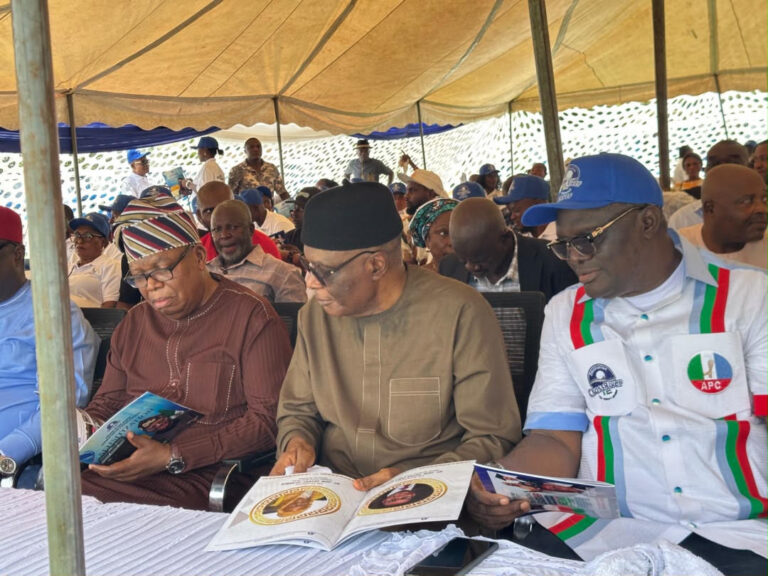
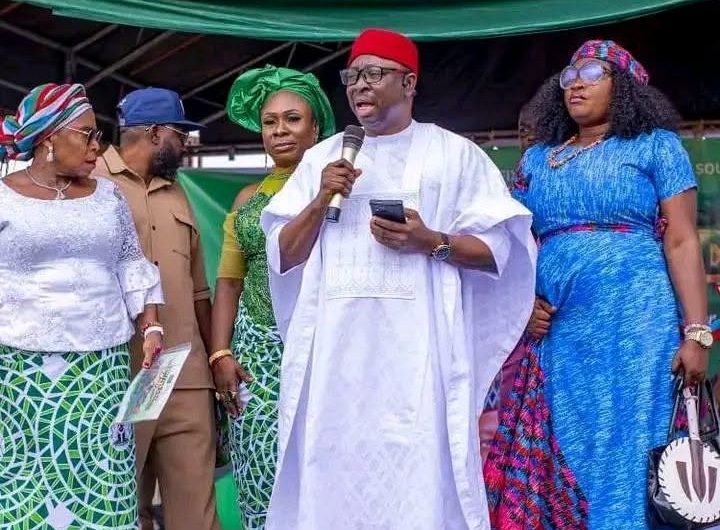
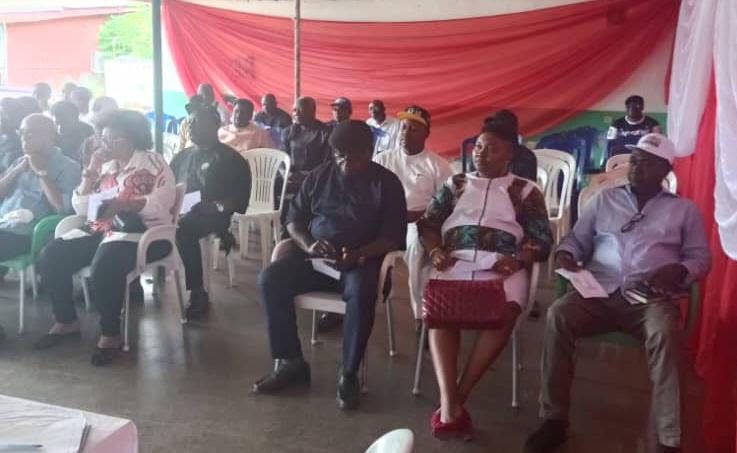
From community halls in Baruten and Edu to strategic meetings in Kaiama, Moro, and Patigi, stakeholders across Kwara North are calling on all political parties, especially the ruling All Progressives Congress (APC) to look towards Kwara North.
While the call is not new, it is gaining unprecedented momentum buoyed by statistical evidence of electoral loyalty, historical imbalance in power distribution, and comparative lessons from neighbouring states where zoning has served as a stabilizing political arrangement.
Genesis of zoning debate
Kwara State, carved out of the old Northern Region in 1967, is a microcosm of Nigeria’s ethno-political complexity.
It is divided into three senatorial districts: Kwara Central (dominated by the Ilorin Emirate), Kwara South (home to the Igbomina, Ekiti and Ibolo blocs), and Kwara North (consisting of the Nupe, Baruba, Bokobaru and Yoruba groups).
Since Nigeria’s return to democracy in 1999, political leadership in Kwara has remained largely concentrated in the Central zone, which has produced the state’s governors for the better part of the Fourth Republic from Mohammed Lawal (1999–2003) and Bukola Saraki (2003–2011) to AbdulRahman AbdulRazaq (2019–2027).
Kwara South had its turn between 2011 and 2019 under Abdulfatah Ahmed, but Kwara North, despite being one of the largest in landmass and the most agriculturally endowed, has remained on the sidelines of executive power since the short-lived administration of Governor Sha’aba Lafiagi (1992–1993).
This long-standing exclusion has fuelled renewed agitation that, for the sake of fairness, and unity, the next governor should emerge from the North.
Voting Patterns: Kwara North’s loyalty from 2015 to 2023
Beyond the moral argument, proponents of zoning cite consistent APC dominance in Kwara North as a strong justification for political reward.
Indeed, since 2015, the North has been the only senatorial district that has never lost to the PDP or any opposition party in presidential or gubernatorial contests.
In the 2015 Gubernatorial Election (APC’s Abdulfatah Ahmed vs PDP’s Simon Ajibola), in Baruten, APC has 18,734 while PDP got 9,374. Edu, APC 22,963, PDP 9,229. Kaiama, APC 14,850, PDP 2,935; Patigi, APC 16, 335, PDP 3,033. Moro, APC 21,068, and PDP 5,447. Total (Kwara North): APC 93,950 and PDP 30,018. APC got 75.8% while PDP had 24.2%.
In the 2019 Gubernatorial Election (APC’s AbdulRahman AbdulRazaq vs PDP’s Razak Atunwa), in Baruten, APC had 26,865, while PDP got 7,090. Edu: APC 26,805, PDP 6,174. Kaiama: APC 14,829, PDP 3,386. Moro, APC 18,985, PDP 5,490. Patigi: APC 18,109, PDP 2,578.
Total (Kwara North): APC 105,593 and PDP, 24,718. While APC got 81.0%, PDP had 19.0%.
And in the 2023 Gubernatorial Election (APC’s AbdulRazaq vs PDP’s Shuaibu Yaman), in Baruten APC recorded 28,060 and PDP, 7,987. Edu, APC 22,458, PDP 17,378. Kaiama, APC 14,431; PDP 6,297. Moro, APC 15,161, PDP 6,823. Patigi APC 13,813, and PDP 6,544. Total (Kwara North): APC 93,923 – PDP 45,029. APC recorded 67.6%, while PDP garnered 32.4%
It is noteworthy that despite the PDP fielding a candidate from Kwara North in 2023, the people still reaffirmed their loyalty to the APC by voting overwhelmingly for its candidate from Kwara Central.
Presidential elections: A consistent pattern
From the Muhammadu Buhari wave in 2015 to the Tinubu resurgence in 2023, Kwara North has consistently voted the APC in overwhelming numbers.
In 2019, for example, the North produced some of the highest vote margins for Buhari across the North-Central region, rivalling even Niger State’s strongholds.
2015 (Buhari vs Jonathan); APC 95,208; PDP Votes 35,833. 2019 (Buhari vs Atiku) APC 95,966; PDP 30,244. 2023 (Tinubu vs Atiku)APC 72,145 PDP 42,347
Across the three election cycles, Kwara North remained a fortress of loyalty, delivering double-digit victory margins in all its five LGAs even during periods of national discontent or local tension.
For the records, no other senatorial district in Kwara can boast of such unbroken voting consistency across three consecutive presidential elections.
Even when opposition parties gained temporary ground in Ilorin or Omu-Aran, the five Kwara North LGAs stood firm behind the APC.
Summarily, the senatorial Kwara North, with a total of 563,065 votes displayed an unbridled loyalty to the ruling party across all the gubernatorial and presidential elections.
The Fairness argument and weight of history
The demand for zoning is not merely political; it is rooted in a deep sense of historical exclusion.
Since 1999, the Central zone will, by 2027, have held the governorship for a cumulative 20 years, while the South has held it for eight years, leaving the North with barely one year under Lafiagi’s truncated military-era tenure.
Political scientist and Ilorin-based analyst captured the sentiment succinctly: “Equity is not about sentiment; it’s about balance. Power rotation sustains inclusion. Kwara North has been loyal, yet unrewarded and that’s a moral question for the ruling party.”
Stakeholders argue that allowing the North to produce the next governor will not only bridge decades of imbalance but also cement AbdulRazaq’s legacy as a leader who believes in justice and state-wide harmony.
Comparative lessons from other states
Kwara is not alone in grappling with zoning debates. Other North-Central states have, over time, embraced rotational politics as a mechanism to preserve peace and fairness.
Other News
Niger State
Since 1999, Niger State has rotated its governorship between its three senatorial zones:
2007–2015 (Niger North): Mu’azu Babangida Aliyu (eight years); 2015–2023 (Niger East): Abubakar Sani Bello (eight years). 2023–present (Niger North): Umar Bago
Governance analysts observe that Niger State’s steady adherence to power rotation has minimised inter-zonal tensions and guaranteed inclusive representation across all districts. This, they note, has been a key factor in sustaining political harmony in the state.
This balance, despite periodic political frictions, has helped maintain relative cohesion in the state.
The APC leadership there emphasized that equitable rotation enhances stability and loyalty.
Analysts therefore argue that Kwara risks future discontent if zoning continues to be ignored, especially when its neighbours have embraced rotation as a sustainable political tool.
The Political calculus ahead of 2027
For the APC, 2027 presents both a challenge and an opportunity.
The challenge lies in managing internal ambitions within the party, particularly from Kwara Central politicians who may feel entitled to continue their dominance.
The opportunity, however, lies in leveraging the North’s loyalty and demographics to consolidate electoral gains and forestall internal rebellion.
A political observer from Moro put it plainly: “It is not about sympathy, but strategy. The North has the spread and unity to deliver overwhelming votes if given the ticket. But continued marginalization could breed silent protest or voter apathy.”
Indeed, data from past elections suggests that when the North turns out in full strength, it contributes nearly one-third of total valid votes in Kwara State, a figure large enough to determine victory margins in tight races.
AbdulRazaq’s role and Tinubu’s moral compass
Governor AbdulRahman AbdulRazaq, who chairs the Nigeria Governors’ Forum (NGF), occupies a pivotal role in shaping APC’s succession politics in Kwara.
While he has not made any public statement endorsing zoning, party insiders believe his eventual stance could be decisive.
Observers also point to President Bola Ahmed Tinubu’s national precedent as symbolic. Tinubu’s emergence as President in 2023 followed the APC’s zoning principle that rotated power from North to South after eight years of Buhari’s presidency.
To many, it would be morally consistent for the same principle to be respected at subnational levels.
“If equity worked for Tinubu at the federal level, it should not be alien in Kwara,” notes political columnist Abdullahi Ibrahim. “Fairness reinforces unity, that’s what zoning achieves.”
Socioeconomic stakes for the North
Beyond politics, the agitation carries developmental undertones. Despite its vast land and agricultural potential, Kwara North remains the least developed zone in terms of road infrastructure, healthcare access, and industrial investment.
Stakeholders believe that a governor from the region would naturally prioritize policies that unlock the area’s comparative advantages in agriculture and riverine commerce, while not ignoring the needs of other senatorial districts.
The opposition factor
While the PDP and other opposition parties remain fragmented in Kwara, analysts believe that how APC manages zoning could determine the state’s overall political climate in 2027.
If the ruling party overlooked the rotation demand, opposition forces could exploit the perceived injustice to rally support from disenchanted northern voters.
Political history supports this concern. In 2019, the “O to ge” movement, a grassroots rebellion against domination by the Saraki political dynasty was fuelled largely by similar sentiments of exclusion and imbalance.
A recurrence of that psychology, this time within the APC, could prove costly.
As the nation edges closer to the 2027 General elections, the question confronting the APC in Kwara is not merely who succeeds Governor AbdulRazaq, but where that successor should come from.
The evidence of Kwara North’s consistent loyalty is clear; the argument for equity is compelling.
In the end, the decision will test not only the party’s political maturity but also its commitment to justice and inclusion principles that define sustainable governance.
“Equity sustains unity; loyalty deserves recognition,” noted a party elder in Kwara North.
“When power circulates, the state prospers. That is the lesson history keeps teaching.”