Follow Us on Google

The renewed debate over fuel subsidy, triggered by former Vice President Atiku Abubakar, has done something politically significant: it has forced the Bola Tinubu administration to reopen a conversation it appeared to regard as settled. In the process, an issue that the Federal Government had hoped to move beyond has suddenly become one of the emerging talking points ahead of the January and February 2027 general election.
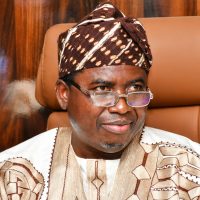
Atiku has indicated that if elected president, he would restore the fuel subsidy removed by President Bola Tinubu on May 29, 2023. His argument, essentially, is straightforward: if subsidy removal has generated enormous savings for government, as the administration maintains, why have Nigerians not experienced corresponding improvements in their living standards? He has also challenged the government to account for the resources supposedly saved from the policy.
Whatever one’s view of Atiku’s position, the political significance of the argument cannot be ignored. It is not merely an economic argument; it is also a campaign strategy. And the fact that it has compelled the Tinubu administration to defend its policies demonstrates its potency. By moving the debate from whether subsidy removal was necessary to whether the resulting fiscal space has been effectively utilised and whether Nigerians are actually better off Atiku has inadvertently highlighted a much larger issue, which is that the 2027 election campaign must be about issues. That is precisely what Nigerians should demand.
Beyond political rallies, ethnic mobilisation, religious sentiments, insults and personality clashes, voters deserve to know what each candidate intends to do differently. The important question should not be who can insult an opponent most effectively at a rally, but who has the clearest and most credible answers to Nigeria’s problems.
By the time Nigerians go to the polls in 2027, they will not merely be choosing a president, governors and legislators. They will be making a judgment on the direction of the country. The election should therefore be more than another cycle of the familiar Nigerian political ritual in which politicians spend more time attacking one another than explaining how they intend to govern. With the challenges confronting the country, clearly seen in economic hardship, insecurity, unemployment, weak institutions and declining national cohesion Nigeria cannot afford another election defined principally by personalities, ethnic calculations, religious sentiments, accusations and counter-accusations.
The 2027 election should, therefore be a contest of ideas, programmes, records and competence. Candidates seeking the votes of Nigerians should tell the electorate what they intend to do, how they intend to do it, how much their programmes will cost and where the money will come from. Anything less would amount to asking citizens to vote blindly.
The economy, insecurity, unemployment, public debt, governance and accountability are already emerging as central issues. They must remain at the heart of the campaign because these are not abstract political questions. They directly affect the lives of Nigerians. Whether all eligible voters will ultimately exercise their franchise or not, they have a right to know how those seeking their mandate intend to address the problems confronting the country. The economy must be at the centre of the 2027 campaign. For the ordinary Nigerian, politics begins at the market. It is about the price of food, transport fares, rent, school fees, electricity bills, healthcare costs and the availability of jobs.
Candidates will therefore have little to offer voters if they discuss the economy only in vague and abstract language.
Nigerians should know precisely what each candidate intends to do about inflation, food production, the naira, fuel prices, taxation, interest rates, public debt, wages, unemployment and purchasing power.
The debate should also go beyond whether the Tinubu administration’s economic reforms are good or bad. The ruling party should explain the results of its policies and provide evidence of their impact. The opposition parties, on their part, should tell Nigerians which policies they would retain, which they would reverse and what they would do differently. The era of simply saying that a policy is bad without explaining the alternative should end.
Other News
Security is another issue that should dominate the campaign. It cannot be treated as a collection of political slogans because insecurity is a daily reality for millions of Nigerians. Farmers cannot produce enough food when they fear attacks. Businesses cannot thrive where kidnapping and extortion are commonplace. Children cannot learn effectively when schools are unsafe. Communities cannot develop when residents live under constant fear.
Candidates should therefore present comprehensive security strategies. How will they confront terrorism and banditry? What will they do about kidnapping? How will rural communities, schools and highways be protected? How will intelligence gathering be improved? How will security agencies be better equipped, trained and supervised? How will governments address the economic and social conditions that facilitate criminality? And how will accountability be enforced within the security architecture? These are the questions Nigerians should be asking.
Education, healthcare and electricity also require serious attention. The 2027 election provides an opportunity to place these critical sectors at the centre of national debate. What is each candidate’s plan for public education? How will Nigerian universities and other tertiary institutions be adequately funded without making higher education inaccessible? How will the country address the continuing loss of doctors, nurses, lecturers, engineers and other professionals to other nations? How will healthcare become affordable and accessible to ordinary citizens?
There is also the perennial question of electricity. For decades, Nigerians have asked when the country will finally enjoy reliable power. Candidates should be required to provide specific answers. How many megawatts do they intend to generate? How will electricity be transmitted and distributed? What role will renewable energy play? How will investment in the sector be financed? What reforms are required to make the power market sustainable? The same standard should apply to roads, railways, water supply and other critical infrastructure.
An issue-based campaign does not mean ignoring the records of candidates. On the contrary, records should be central to the election. Any candidate who has previously held public office should be asked: What did you promise? What did you achieve? What did you fail to achieve? Why did you fail? How much was spent? What lessons did you learn? And what would you do differently if given another opportunity? Vandidates should not be allowed to present themselves as new solutions to old problems without accounting for their previous records in public office.
Nigeria needs a president who can govern all Nigerians, a governor who can govern all residents of a state and legislators who understand that their constitutional responsibility extends beyond their immediate ethnic, religious or political constituencies. Identity will always be part of Nigerian politics, but it should not be allowed to overwhelm competence, character and performance.
As the campaign progresses, political parties should be required to publish detailed and measurable manifestos. Manifestos should not be ceremonial documents unveiled during campaigns and forgotten once politicians assume office. They should constitute clear commitments against which governments can be judged. They should address the economy and cost of living; security; employment and youth development; education; healthcare; electricity; agriculture and food security; infrastructure; taxation; public debt; corruption and accountability; electoral reform; federalism and decentralisation; gender and social inclusion; and foreign policy.
More importantly, political parties should provide measurable targets and realistic timelines. Nigerians should be able to return to those documents after four years and determine what was achieved, what was not achieved and why
The 2027 election is too important to be reduced to slogans, rallies and political theatre. The economy is hurting. Insecurity remains a major concern. Young Nigerians are demanding opportunities. Public confidence in political institutions is under pressure. These realities require serious political conversation.
The ultimate test of Nigeria’s democracy should no longer be merely who wins an election. It should be whether those who win can deliver on the promises that brought them to power. The time has come to transform elections from contests of personalities into competitions over ideas, performance and the future of Nigeria.