Follow Us on Google
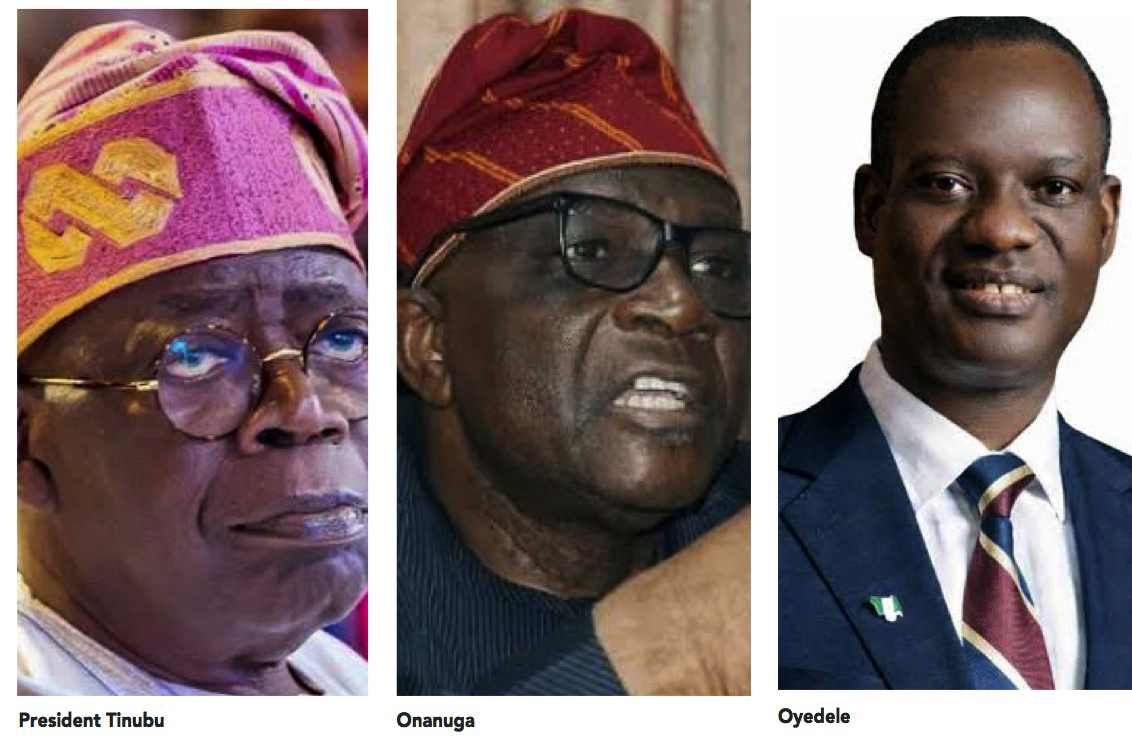
•President’s men struggle to push back onslaught
From Fred Itua, Abuja
Since the Independent National Electoral Commission (INEC) lifted its ban on political campaigning on August 19, 2026, former Vice President Atiku Abubakar has mounted a sustained offensive against President Bola Ahmed Tinubu. The offensive kicked off with an argument over fuel subsidy and has since widened into a broader indictment of the administration’s economic record. The pressure has visibly unsettled the ruling party. Ministers, presidential aides and party officials have taken to the airwaves in defence of the government in numbers that suggest genuine alarm.
The campaign culminated on August 27, in a hurriedly convened meeting between Tinubu and governors of the All Progressives Congress (APC) at the Presidential Villa, where the President announced plans to lower fares nationwide from October 1, 2026. Whatever else may be said of the exchange, it has forced Aso Villa onto a terrain it did not choose and onto a timetable not entirely its own.
The opening salvo
The offensive began in earnest on August 23, 2026, when Atiku’s Senior Special Assistant on Public Communication, Phrank Shaibu, accused the Tinubu administration of practising what he called selective economics. Citing the Nigerian National Petroleum Company’s own audited accounts, Shaibu noted that the corporation recorded about N4.84 trillion in energy security expenses and related shortfalls in 2023, a figure that rose to roughly N7.13 trillion in 2024, under a heading he argued was subsidy in substance, even if the government no longer used the word.
He further alleged that petroleum investors had been granted production tax credits worth up to $11.50 per barrel even as ordinary Nigerians were made to absorb the full weight of market-determined pump prices. Atiku himself later pressed the point personally, demanding publicly to know where the savings from subsidy removal, which Finance Minister Taiwo Oyedele has previously put at N15.8 trillion between June 2023 and December 2025, had actually gone.
The government’s initial response was dismissive. APC officials described the reintroduction claims as fake news and characterised recent interventions to stabilise pump prices as routine price management rather than a disguised subsidy. The posture did not hold for long. Three days later, on August 26, 2026, Atiku raised the stakes with a transitional subsidy plan, one his campaign was careful to distinguish from the discredited import subsidy regime of the past, structuring it instead as support applied only to locally refined petroleum products.
The rollout provoked a fresh wave of pushback from government-aligned voices questioning both its costing and its politics, but it also achieved something more damaging to the administration than any single statement; it kept the conversation running, day after day, on ground the President would rather have left behind.
Three explanations in one week
What turned a policy disagreement into a genuine embarrassment for the Presidency was not Atiku’s original claim but the confusion that followed it within his own camp. Within the space of roughly a week, Nigerians received three different accounts of what an Atiku government would actually do about subsidy. Atiku’s spokesman, Paul Ibe, said the former VP would restore subsidy temporarily before phasing it out. Hours later, Shaibu disowned that explanation as unauthorised, insisting Atiku had set no fixed timetable and would retain the subsidy only until domestic refining capacity, supply and competition had improved sufficiently to make market pricing tolerable. Atiku then intervened a third time, declaring on social media that his position had not changed and that he intended to restore what he termed a targeted subsidy, arguing that a nation as endowed as Nigeria owed its citizens that much.
The Presidency seized on the inconsistency with evident relish. Special Adviser to the President on Information and Strategy, Bayo Onanuga, issued a statement accusing Atiku of a third U-turn on petrol subsidy in a single week, arguing that three conflicting accounts from one campaign raised a legitimate question about whether serious economic policy was being proposed at all or whether Nigerians’ hardship was simply being used as a political instrument. Onanuga went further, disputing the notion that petrol prices alone were responsible for food inflation and pointed instead to insecurity, exchange rate volatility, logistics costs, storage losses, flooding and rising input costs as contributing factors the opposition, in his telling, had chosen to ignore. He challenged Atiku to state plainly what a targeted subsidy would cost the treasury and how, precisely, it would be financed, a challenge that as of this writing remains without a fully costed public answer.
It would be a mistake, however, to read the Presidency’s counterattack as evidence that Atiku’s underlying argument lacks force. Analysts who have watched the exchange unfold argue that the very volume and speed of the government’s response is itself a form of confirmation that the subsidy question has struck a genuine political nerve, rather than proof that the challenge itself lacks substance.
A meeting convened in haste
The clearest sign that the offensive had landed came on the evening of August 27, 2026, when Tinubu summoned APC governors to the Presidential Villa for a closed-door session that followed an earlier meeting of the National Economic Council. Emerging from that meeting, the President announced that state governments had agreed to take immediate steps to reduce intra-state transportation costs, leveraging cheaper compressed natural gas (CNG) and electric vehicles, with a joint federal and state implementation committee to be established at once.
Tinubu set October 1, 2026 as the date by which Nigerians should begin to feel the benefit, and disclosed that more than 120,000 vehicles had already been converted to CNG under the Presidential CNG Initiative, with a further 100,000 conversion kits currently being processed and 500 additional refuelling stations being rolled out nationwide.
The timing of the announcement, coming as it did in the same week as the Presidency’s public sparring with Atiku’s campaign, has been read by observers less as coincidence than as an acknowledgement, however unstated, that the opposition’s pressure campaign was working. A government confident that its economic argument was already winning the public mood would have little need to convene an emergency meeting of state governors to promise relief on a fixed calendar date barely five weeks away.
What the administration’s argument leaves out
For all the sound and fury of the exchange between the two camps, there is a case, distinct from either side’s talking points, that deserves setting out plainly, because it is this case, more than any single statement from Atiku or Shaibu, that explains why the subsidy question continues to find an audience among ordinary Nigerians. It concerns what has actually happened to the naira, and through the naira, to the cost of nearly everything a Nigerian family needs.
Before the subsidy removal and the unification of the exchange rate in May and June 2023, the naira traded at roughly N464.67 to the dollar on the official Investors and Exporters window, with the parallel market trading somewhat higher. Within weeks of the President’s announcement that subsidy was gone, the Central Bank of Nigeria (CBN) allowed the currency to float, and it fell first to around N755 to the dollar, then continued its slide over the following three years. As of late August 2026, the official rate hovers between roughly N1,350 and N1,400 to the dollar, meaning the naira has lost close to two thirds of its dollar value since the administration began.
Against the pound sterling, a currency in which many Nigerian families historically priced school fees, medical travel and diaspora remittances, the shift has been similarly stark, moving from under N1,000 to the pound in the period before the reforms to somewhere in the region of N1,900 to N2,000 to the pound today. For the ordinary family that once budgeted in relatively stable naira terms for children studying abroad, medical trips or imported goods, that depreciation alone has meant a near tripling of naira cost for the same dollar or pound denominated obligation.
Other News
Building a home, and the price of cement
Nowhere is the squeeze more visible than in construction. A 50 kilogramme bag of cement, which briefly traded as low as roughly N3,500 in October 2023 following a price cut by one major manufacturer, and which had generally sold for around N9,000 to N10,000 in the years before subsidy removal, was selling for between N13,000 and N15,000 in several parts of the country by July 2026, according to figures compiled by the Federal Competition and Consumer Protection Commission (FCCPC) as part of a formal investigation into the sector.
The investigation itself found that Nigerian cement sells for considerably more than comparable products in Kenya, Tanzania and even Togo, a country with no domestic limestone deposits of its own, undercutting the industry’s usual explanation that local production costs alone justify the price. Energy costs tied to fuel and diesel prices, and the cost of transporting cement by road from manufacturing plants in Kogi or Sokoto states to markets in Lagos or Port Harcourt, have been cited by industry figures as principal drivers of the increase.
The effect on the cost of building a family home has been correspondingly dramatic. Industry professionals and prospective homeowners alike describe projects that would have cost in the region of N40 million to complete before 2023 now requiring closer to double or, in some cases, considerably more than double that sum, depending on the scale and location of the build, once cement, steel, diesel powered haulage and imported fittings are all accounted for. The precision of any single figure will vary from project to project, but the direction and scale of the change, roughly a doubling or more within three years, is consistent across multiple independent accounts of the construction sector.
The new price of shelter
For Nigerians who rent rather than build, the past three years have brought a comparable shock. A widely reported case from the Lokogoma district of Abuja saw a tenant’s annual rent jump from N1 million to N2 million in a single renewal, described by the tenant as happening in one breath. The case is far from isolated. Reporting from across Lagos in late 2025 documented rent increases ranging from 50 to over 100 per cent within two years for ordinary tenants in areas such as Ikorodu, Igbogbo and Akute, while a one room apartment in Abuja’s Nyanya district nearly doubled, from N400,000 to N750,000.
In Abuja’s city centre, a four bedroom detached duplex that might once have commanded a more modest sum now rents for as much as N15 million annually, with newly built two bedroom apartments going for between N5 and N8 million depending on location. Media reports on Abuja’s rental market this year described rent increases of 40 to 60 per cent across various neighbourhoods, driven directly by the twin effects of subsidy removal and currency floatation on landlords’ costs and, in turn, on what they pass to tenants.
The World Bank’s April 2026 Nigeria Development Update offers the starkest single figure to emerge from this period. The poverty rate, it found, climbed to 63 per cent in 2025, meaning roughly 140 million Nigerians now live below the poverty line, up from 56 per cent in 2023, the year the reforms began. Inflation, which peaked at 34.8 per cent at the end of 2024, has eased since but remains elevated, recorded at 15.93 per cent in May 2026 by the National Bureau of Statistics, having ticked upward for three consecutive months even as the headline rate sits below the extremes of 2024.
Vehicles, and the retreat to tokunbo
The cost of vehicle ownership offers a further, tangible illustration of the currency effect. Cars imported into Nigeria are priced substantially in dollar terms, from freight and duty to the underlying purchase cost, and the naira’s collapse against the dollar has pushed the landed cost of many imported vehicles to roughly double or more what they cost before the float, depending on the vehicle class and shipping route.
Nigerians describing this shift often point to cars that could once be brought into the country for a price in the low millions of naira now requiring a figure closer to N7 million naira or more for the same or comparable model. The practical consequence, widely observed across major Nigerian cities, has been a further tilt toward the market for tokunbo, or previously used, vehicles, as new or lightly used imports move further out of reach for the ordinary middle class buyer who might once have aspired to a fresher import.
The price that started it all
None of these downstream effects would carry the same political weight were it not for the fact that they trace back to a single, highly visible reform. Petrol, which sold for between N190 and N210 per litre in the days immediately before Tinubu’s inauguration on May 29, 2023, rose to between N488 and N557 within days of his declaration that subsidy was gone. By late August 2026, motorists in Abuja and other cities were paying between N1,230 and N1,299 per litre at most stations, with NNPCL itself raising its price to N1,270 even as global crude prices fell, a sequence of increases that has continued even as the Dangote Refinery has periodically adjusted its own gantry price upward.
Set against the N190 to N210 baseline of May 2023, the current price represents an increase of well over five hundred per cent in naira terms within a little over three years, a figure that dwarfs the general inflation rate over the same period and helps explain why transport, and the cost it imposes on every other good that must move by road, remains the single most politically charged line item in the Nigerian household budget.
The other front…land borders
Atiku’s offensive has not been confined to subsidy alone. He has renewed, on the campaign trail, his longstanding call to reopen Nigeria’s land borders to facilitate cross-border trade and, in his telling, to create employment through expanded commerce with neighbouring countries. The argument is not new to his political repertoire, having featured in his 2023 campaign as well, but its revival now sits alongside the subsidy offensive as part of a broader case that the current administration’s trade and energy policies have together narrowed rather than widened ordinary Nigerians’ economic options.
Government-aligned voices have historically countered that indiscriminate border reopening risks flooding the market with imports, undermining local rice millers and fertiliser producers that have expanded since the 2019 closure, an argument the Presidency is likely to revive should Atiku press the point further as the campaign progresses.
What the government’s defenders say
None of this is to suggest the administration’s case is without foundation. Officials point out, correctly, that Nigeria’s subsidy regime for decades functioned as what one presidential aide described as a black hole of rent seeking, round tripping and corruption that starved health, education and infrastructure of vital capital, and that restoring it in any form risks undermining the still nascent growth of local refining capacity represented by the Dangote Refinery and NNPCL’s own facilities.
The government can also point to genuine fiscal gains, the N15.8 trillion in cited savings, a unified exchange rate that has removed a longstanding source of arbitrage and corruption, and a minimum wage raised from N30,000 to N70,000, as evidence that the reforms were not undertaken lightly or without corresponding benefit. Whether those gains have yet been felt widely enough, or distributed evenly enough, to offset the costs documented above remains the precise question at the centre of the 2027 contest.
An offensive that has not yet run its course
What the past two weeks demonstrate is that the subsidy question retains genuine political potency more than three years after the policy was announced, and that the Tinubu administration, for all its structural advantages of incumbency, campaign machinery and control of the overwhelming majority of Nigeria’s states, has not yet found a way to close down the argument. Atiku’s own camp has struggled visibly to speak with one voice on what it would actually do differently, a vulnerability the Presidency has exploited with real effect.
However, the underlying economic data, on currency, cement, rent, vehicles and the pump price itself, gives the former vice president’s broader case a foundation that will not be dislodged by pointing out inconsistencies in his prescription alone. Whether the government’s newly announced transport fare reductions, due to take effect on 1 October, arrive with enough scale and speed to blunt the argument before it hardens further into settled public opinion is likely to be one of the more consequential open questions of the campaign season now underway.