Follow Us on Google
• Makinde, Sowore, Adebayo, others decline to align •Opposition risks repeat of 2023 split
From Fred Itua, Abuja
The plan by Nigeria’s opposition parties to field a single candidate against President Bola Ahmed Tinubu in the 2027 presidential election appears to have collapsed, as leading contenders dig in on their individual ambitions and refuse to step down for one another.
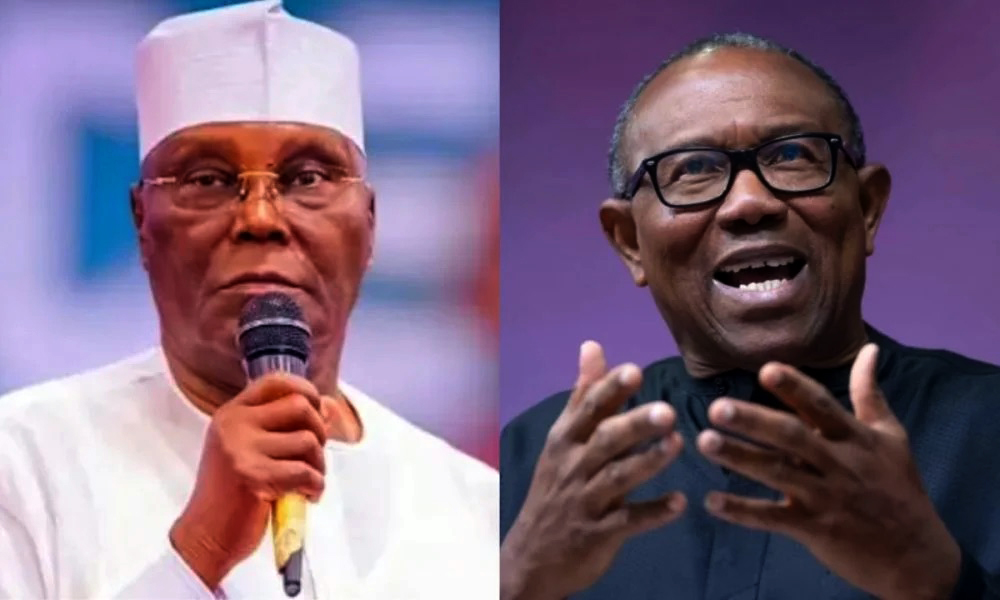
At the centre of the stalemate are former Vice President Atiku Abubakar and Peter Obi, whose inability to agree on who should lead a united opposition challenge has increasingly dimmed prospects of a consensus candidate.
Governor Seyi Makinde, Omoyele Sowore, Adewole Adebayo and other presidential candidates have also declined to collapse their ambitions into a single opposition platform, leaving President Tinubu facing a fragmented field similar to the one that confronted him in 2023.
The development has reinforced a widely held view within opposition circles that no single opposition candidate may be able to dislodge the incumbent without the major anti-APC blocs combining their electoral strengths.
That concern has become even more pronounced following the publication by the Independent National Electoral Commission (INEC), at the weekend, of its final list of presidential candidates for the election, with more than 12 candidates cleared to contest.
Rather than the smaller field advocates of opposition unity had canvassed, the final list confirms that the major opposition figures will, barring a late political rapprochement, confront Tinubu separately at the polls.
The situation is a far cry from the optimism that attended moves by opposition leaders earlier in the year to forge a broad coalition capable of presenting a single formidable challenger to the President.
Atiku and Obi had appeared together with other opposition heavyweights when the coalition initially coalesced around the African Democratic Congress (ADC), fuelling expectations that the major opposition forces could eventually agree on one presidential candidate.
But the alliance subsequently unravelled.
Obi left the ADC in May and later emerged as the presidential candidate of the Nigeria Democratic Congress (NDC), while Atiku remained in the ADC and secured its presidential ticket.
Makinde also pursued his presidential ambition on the platform of the Allied Peoples Movement (APM).
The gulf between the opposition leaders became even more apparent on August 31 when six opposition parties met at the Shehu Musa Yar’Adua Centre, Abuja, for a summit organised by the G-100, a coalition of politicians led by Mallam Salihu Lukman.
The summit proposed a Government of National Competence built around a single four-year transition term.
It also established a Central Leadership Committee, a Publicity and Communication Committee and a Legal Committee, while agreeing to constitute five working groups ahead of a second summit expected to advance negotiations on opposition cooperation.
But Atiku, Obi and Makinde were conspicuously absent.
Their absence raised immediate questions about the viability of a coalition whose success would ultimately depend on the willingness of the leading presidential contenders to sacrifice their individual ambitions.
Reno Omokri, former presidential aide, seized on the development, arguing that the personalities involved carried ambitions too large for compromise and predicting specifically that Obi would not step down for Atiku.
The All Progressives Congress (APC) also weighed in. Its Lagos State spokesman, Seye Oladejo, described the coalition as a congregation of serial presidential aspirants unwilling to subordinate individual ambition to collective purpose.
According to him, the arrangement lacked ideological glue and moral cohesion, while public demands for guaranteed tickets had replaced genuine consensus building.
Subsequent developments have appeared to reinforce those concerns.
Speaking on a television programme last week, Obi was asked directly whether he would accept the vice-presidential slot in an Atiku-led arrangement.
He rejected the proposition. Obi argued that he was already the presidential candidate of his party while Atiku represented another party, stressing that any alliance at this stage would have to be negotiated between the political parties rather than between two individuals.
He also made it clear that neither he nor Atiku appeared prepared to step aside because both men now had institutional and political structures behind their respective candidacies.
Other News
The position represented a significant shift from earlier in the year when the two men stood within the same broad opposition coalition.
The central question confronting the opposition has consequently remained unresolved: who steps down for whom?
Neither Atiku nor Obi has so far shown a willingness to surrender his ticket to the other.
Efforts among some of the smaller opposition parties have fared no better.
A separate coalition involving Accord, the African Action Congress (AAC) and the Social Democratic Party (SDP) has also failed to produce a single candidate.
Sowore has resisted political alliances built principally around removing Tinubu, arguing instead for a coalition centred on the people and fundamental political change.
Adebayo has similarly shown little inclination to surrender his presidential bid merely for the purpose of constructing a single anti-APC ticket.
The effort has been further complicated by Accord’s national leadership publicly declaring support for Tinubu, exposing divisions even among smaller parties over whether to challenge the president or align with him.
Former Cross River State governor and Peoples Redemption Party (PRP) presidential candidate, Donald Duke, has taken a different position.
Duke has repeatedly said he is prepared to step aside for any candidate the opposition genuinely agrees upon, warning that a divided opposition could hand Tinubu victory even without the President securing a majority of the popular vote.
But Duke lacks the national political structure and electoral strength of the leading contenders, limiting the impact of his willingness to sacrifice his ticket.
The fear of another divided opposition is rooted largely in the outcome of the 2023 presidential election.
Tinubu won with 8,794,726 votes, representing about 36.6 per cent of valid votes cast.
Atiku, who contested on the platform of the Peoples Democratic Party (PDP), polled 6,984,520 votes, while Obi, then Labour Party candidate, secured 6,101,533 votes.
Together, Atiku and Obi attracted more than 13 million votes. Although votes secured by different candidates cannot simply be added together on the assumption that they would automatically transfer to a consensus candidate, the figures have sustained the argument that opposition fragmentation considerably eased Tinubu’s path to the Presidency.
It was partly to avoid a repeat of that experience that the post-2023 opposition coalition was conceived.
But with the 2027 election approaching, the same fault lines have resurfaced.
The Presidency has dismissed the opposition manoeuvres. Special Adviser to the President on Information and Strategy, Bayo Onanuga, has argued that even a combined Atiku and Obi ticket would not defeat a Tinubu-Shettima ticket, insisting that the ruling party does not regard the coalition as an electoral threat.
For advocates of opposition unity, however, the problem is increasingly one of time.
INEC’s publication of the final list at the weekend means the major contenders are no longer merely aspirants bargaining for party tickets. They are presidential candidates with running mates, party structures and campaign organisations built around their ambitions.
Any last-minute coalition would therefore require considerably greater political sacrifices than were necessary when negotiations began.
With the opposition unable so far to resolve the Atiku-Obi leadership question, Makinde pursuing his own presidential bid and Sowore, Adebayo and others unwilling to fall behind either of the two leading opposition figures, the prospect of a single challenger to Tinubu is rapidly receding.
Unless there is a dramatic last-minute compromise, the opposition could enter the 2027 election divided along essentially the same lines that shaped the 2023 contest — with its leading candidates fighting not only Tinubu, but also one another.