Follow Us on Google
By Fred Itua, Abuja
In the sprawling, cacophonous markets of Onitsha, a trader who once stood for hours under a punishing sun to cast a ballot is performing a cold, mental audit. He is calculating whether the ink on his thumb is worth the sweat of his brow. In a parched farming community on the fringes of Katsina, a man who watched his ancestral harvest disappear into the hands of bandits asks a silent sky what any government, past, present, or prospective, has actually done for his kin. In a cramped Lagos tenement, a brilliant graduate sharing a room with four others wonders if the “Giant of Africa” has any intention of making space for his dreams, or if he is merely a ghost in the machinery of state.
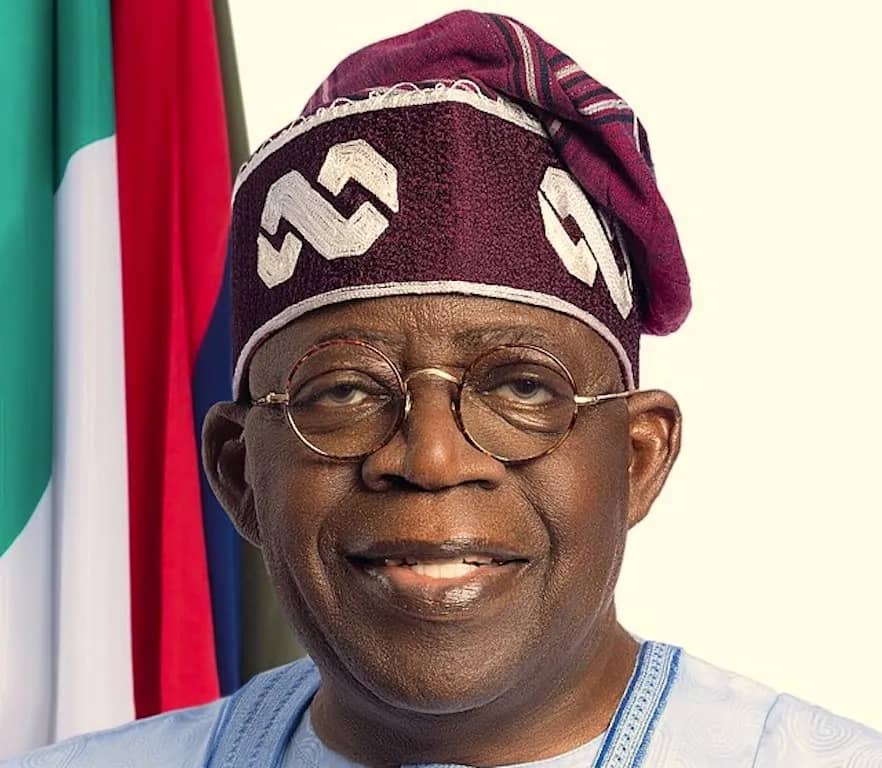
These are the primary stakeholders of 2027. They are not mere statistics; they are the jury. They are the fundamental reason why pundits believe that President Bola Ahmed Tinubu cannot afford to treat the next general election as a routine constitutional exercise.
For Tinubu, 2027 is not merely a campaign; it is a civilian reckoning. It is the moment the Nigerian electorate sits in ultimate judgment over a period of economic dislocation and decides whether the architect of that pain deserves the mandate to complete the edifice. No incumbent since the dawn of the Fourth Republic in 1999 has faced stakes this visceral, this high, or this unforgiving.
Tinubu’s inner circle understands this. The fractured opposition understands this. Increasingly, the President himself is signaling that he is acutely aware of the precariousness of his position. That realisation is already reshaping the corridors of power at Aso Rock.
The recent cabinet reshuffle, dismissed by some as a cosmetic exercise in political musical chairs, appears to be the opening salvo of a far more aggressive reorganidation. What lies ahead is not a change in personnel; it is the assembly of a War Cabinet.
The streets, where the 2027 election will be won or lost play a pivotal role. The streets, not in the mahogany-paneled rooms of Abuja, but on the dusty floors of local kiosks, is where the game will be played.
When President Tinubu declared the end of the fuel subsidy in his inaugural moments and subsequently unified the exchange rate, his economic vanguard described it as “bitter medicine for a terminal patient.” While the diagnosis of a hemorrhaging economy was arguably correct, the dosage has been nearly lethal for the average Nigerian.
Inflation has not just risen; it has predated upon the vulnerable, pushing millions into the abyss of absolute poverty. The Naira has been reduced to a shadow of its former self, shedding more than half its value against the dollar.
Food prices have climbed with a verticality that has forced even the middle class into a quiet, humiliating recalibration of their daily nutrition. A bag of rice, a bottle of vegetable oil, the quarterly burden of school fees; these are no longer policy abstractions. They are now seen as the daily mathematics of survival.
Tinubu’s political managers are currently crafting a narrative of “necessary sacrifice”, arguing that the foundation is being laid for a prosperous future. It is a coherent argument, but it is one that must land with a populace whose patience has been exhausted by almost three years of unrelenting hardship. To succeed, the messengers of this narrative must possess impeccable credibility, the evidence must be tangible, and the delivery must not reek of “election-season desperation.”
Tinubu ascended to the presidency in 2023 with a 37 percent plurality, a victory secured in a fractured field, not a sweeping national mandate. The political landscape since then has only grown more complex, and the map of his vulnerabilities is widening.
The South East remains the APC’s most elusive frontier. With Peter Obi likely to return to the ballot, potentially backed by a more formidable, structured coalition, the Igbo vote will be a battleground of high emotions. Tinubu’s objective here is not an outright win; that would be a statistical miracle. Instead, his “War Cabinet” is expected to focus on damage limitation.
Other News
The goal is to suppress the opposition’s margins in key states like Abia and Anambra just enough to tilt the national arithmetic. This requires elevating Igbo figures who possess genuine Gravitas, not mere “political contractors,” but individuals with the respect of the professional and business classes who can argue that an alliance with the centre is the only pathway to regional prosperity.
The North West is the traditional engine room of Nigerian elections, capable of generating the sheer volume of votes that can drown out dissent elsewhere. However, the region is bleeding. Banditry and mass displacement have hollowed out civic participation in Zamfara, Sokoto, and Kebbi. Then, there is the “Kano Problem.” Rabiu Kwankwaso’s influence remains a formidable barrier. The War Cabinet requires a “Kano Czar”, a figure capable of speaking the raw language of the Talakawa and peeling away loyalties from the Kwankwasiyya movement.
Rivers State, once the jewel in Tinubu’s 2023 crown thanks to Nyesom Wike, is currently a theater of political instability. While Wike remains a potent asset, evidenced by his role in Edo and Imo, his position is increasingly complicated by his ongoing feud with his successor and his tenuous relationship with the PDP’s remnants.
Managing Wike, while ensuring the APC does not lose its footing in Rivers State, will require the President to exercise the highest level of diplomatic dexterity.
In the Nigerian context, a War Cabinet is not merely an administrative body; it is a political fighting machine. The strategists at Aso Rock are moving toward a model where every minister serves a dual purpose: policy implementation and grassroots mobilization.
In a War Cabinet, there is no room for the ‘Invisible Technocrat.’ If a minister builds a road but cannot convince the local community to vote for the President because of it, they are a liability.
Ministers in high-impact sectors, Agriculture, Industry, and Social Investment, will be expected to transform into “Campaigners-in-Chief.” They are expected to leave the comfort of their air-conditioned offices in Abuja and descend into the markets and campuses. They are expected to be able to translate complex GDP growth figures into the language of the dinner table.
Simultaneously, the digital front is being fortified. The 2023 cycle proved that the APC could compete with the “Obidient” movement’s online fervor. For 2027, this digital machinery is being re-engineered to handle an opposition that will be more organised, better funded, and significantly more aggrieved.
Despite the sophistication of the planning, there is an unspoken truth that haunts the corridors of the Presidency: A War Cabinet is a force multiplier, not a creator of miracles. It can streamline logistics, it can neutralise internal party rivals, and it can deploy resources with surgical precision. It can manufacture momentum and dominate the airwaves. However, it cannot manufacture genuine public sentiment.
The ultimate variable in the 2027 equation is not the brilliance of the President’s strategists, but the lived experience of the Nigerian people. What Tinubu needs most, according to political stakeholders, is more than any political appointment or strategic deployment. It is for the average citizen to feel, however tentatively, that the trajectory of the nation has shifted.
They need to believe that the “bitter medicine” was not a poison, but a cure. They need to see a glimmer of light that is not an oncoming train. If, by the time the polls open in 2027, there is a collective sense that the sacrifice yielded a more stable, hopeful Nigeria, then the War Cabinet will easily coast to victory.
But if the hunger remains as sharp and the insecurity as pervasive as it is today, even the most formidable political machine in African history will find itself powerless against the silent, overwhelming wrath of a disillusioned voter. In the end, the “War Cabinet” can fight the battle, but only the people can grant the peace of a second term.