Follow Us on Google
The National Association of Seadogs (Pyrates Confraternity) has stated that Nigeria’s ambition to achieve a $1 trillion economy by 2023 would be a pipe dream if it neglects to address the literacy crisis in the country.
The NAS Cap’n, Dr Charles Meribole, in a statement entitled: Rewriting the Future: A National Emergency on Literacy, to mark 2026 International Literacy Day, pointed out that the theme for this year’s celebration, “Literacy for People, the Planet and Prosperity,” speaks directly to the future ‘’we want to build for Nigeria, and to the responsibility we bear to ensure that every Nigerian has the foundational skills required to learn, participate, work, innovate and live with dignity.’’
‘’ NAS/PC considers this year’s theme relevant to Nigeria in her quest to build a population capable of competing globally and accelerating prosperity. A literate population is better equipped with skills and knowledge to build a prosperous economy, protect its environment, and create a more inclusive society. A literate population has access to and power for innovative endeavours that reject ignorance, banish poverty, choose good governance, and change the trajectory of a nation’s development,” he added.
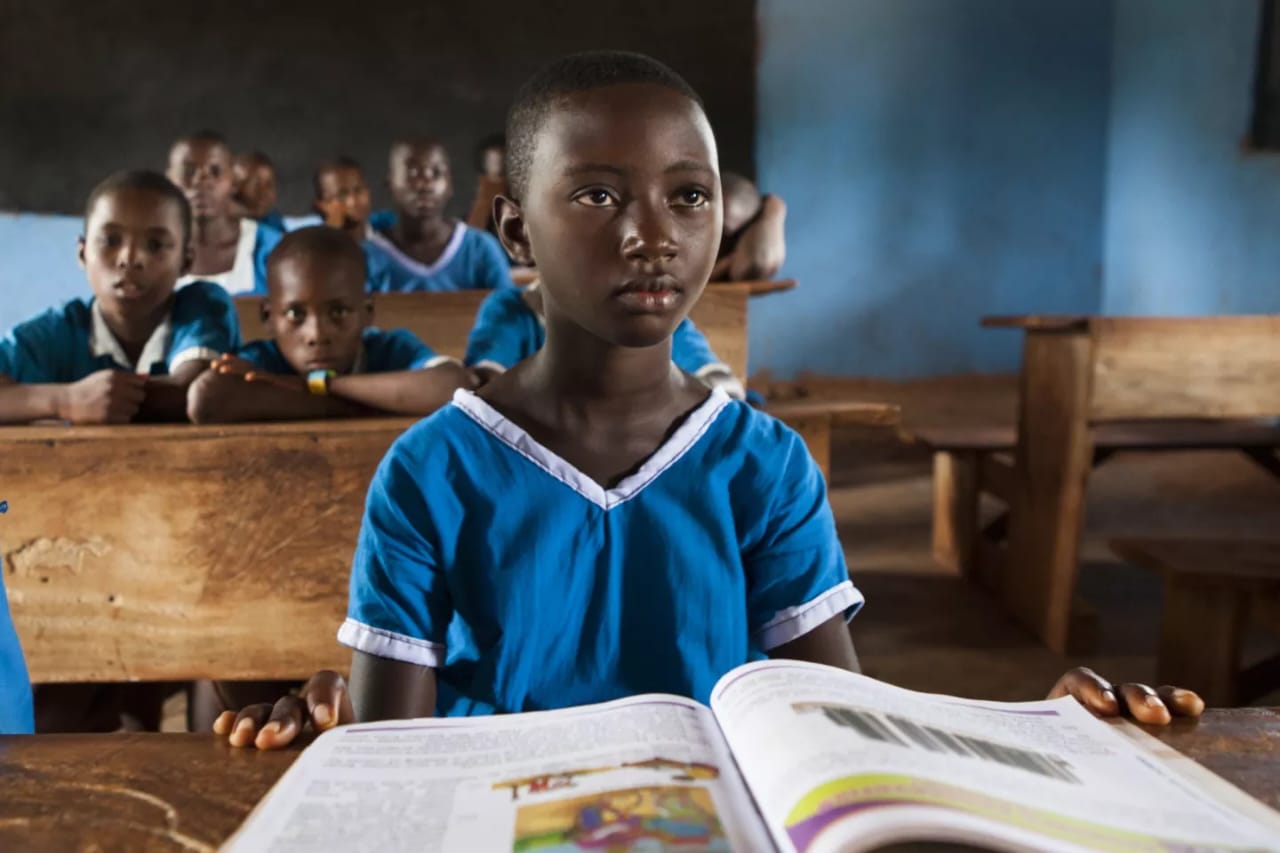
Meribole, while drawing attention to the 18.3 million out-of-school children in Nigeria and the 64 million adults who are illiterate, stressed that these categories of Nigerians are economically disadvantaged, susceptible to manipulation, and cannon fodder for violence.
He further established a nexus between illiteracy and insecurity raging in Nigeria, especially in Northern states, noting that if the Federal Government is desirous of having a prosperous nation, then it must be ready to tackle the illiteracy crisis afflicting Nigeria.
Other News
According to him, NAS/PC is of the view that literacy is a fundamental human right and a foundation for human development and a prerequisite for inclusive prosperity.
He added that Nigerian cannot credibly aspire to build a productive, innovative, and globally competitive Nigeria while millions of Nigerians cannot write and understand what they read.
Meribole acknowledged the Federal Government’s efforts to solve the literacy crisis through the HOPE for Quality Basic Education for All (HOPE-EDU) programme, unveiled by the Bola Ahmed Tinubu administration, stressing, however, that the implementation must move from pronouncements to make foundational literacy a national emergency.
He called for the safety of schools, especially in Northern Nigeria, to prevent mass abductions and the shutdown of schools; reform of the National Commission on Mass Literacy, Adult Education and Non- Formal Education with an expansion of its reach to rural communities; and education policies to be integrated with interventions addressing poverty, hunger, insecurity, displacement, social protection and gender inequality.
‘’Nigeria’s dream of a $1trillion economy by 2030 can only become a reality with a highly literate population capable of applying its knowledge and skills as a pathway to economic prosperity. Nigeria must therefore move from mere pronouncements on the literacy crisis to implementing concrete plans to tackle it head-on. We must move from just budgetary allocations to measurable outcomes that indicate progress. And we must move from accepting the literacy crisis as an emergency to confronting it as a national challenge that is surmountable and which we have the power and the responsibility to solve,’’ he stated