Follow Us on Google
By Merit Ibe
The Federal Government may be clinking glasses and celebrating various economic ‘gains’, recorded in 2025, especially inflation cooling, local manufacturers tell a different story.
For much of the year, they operated on life support, struggling to stay afloat amid persistent policy and cost pressures.
The policy environment was marked by macroeconomic reforms, fiscal tightening, regulatory changes, among others.
While government policies were designed to stabilise the economy, attract investment and improve competitiveness, their impact on manufacturers was largely mixed.
Some stakeholders believe that 2025 was a year of gradual economic improvement, but not broad relief, arguing that the economy showed signs of healing at the macro level, yet the benefits were uneven and slow to reach most Nigerians.
One of the most significant policy shifts that affected the sector in 2025 is the sustained reform of the foreign exchange (FX) market.
The liberalization is and unification of exchange rates aimed to improve transparency and attract foreign capital inflows.
However, the depreciation of the naira sharply increased the cost of imported raw materials and machinery, placing heavy pressure on manufacturers.
Many firms that relied on imported inputs struggled to manage rising production costs and shrinking margins.
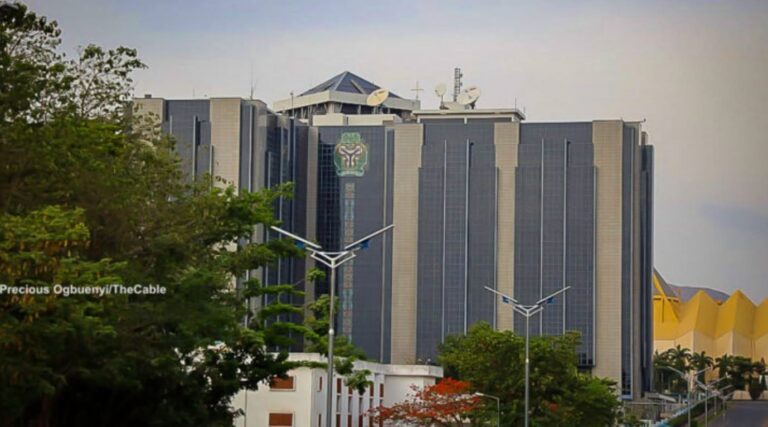
Monetary policy tightening by the Central Bank of Nigeria (CBN) also shaped manufacturing performance in 2025.
High interest rates introduced to curb inflation significantly raised borrowing costs for businesses.
This limited access to credit, slowed expansion plans, and reduced capacity utilization, especially among small and medium-scale manufacturers.
Power sector reforms, including electricity tariff adjustments, further affected manufacturers.
Although some areas experienced marginal improvements in power supply, higher tariffs increased overall production costs.
Manufacturers continued to depend heavily on self-generated power, compounding their operational expenses.
The removal of fuel subsidies also continued to influence manufacturing operations indirectly in 2025.
Higher fuel prices raised transportation and logistics costs, affecting both raw material sourcing and product distribution.
These rising costs were passed on to consumers, reducing purchasing power and dampening demand for locally produced goods.
Trade policies under the African Continental Free Trade Area (AfCFTA) presented both opportunities and challenges.
While AfCFTA opened access to a larger regional market, Nigerian manufacturers struggled to compete due to high production costs and weak infrastructure.
Import and customs policies also disrupted manufacturing supply chains.
Restrictions and high tariffs on certain imports, aimed at promoting local production, created delays and increased duties for manufacturers reliant on intermediate goods.
Fiscal policy adjustments, including tax administration reforms, increased scrutiny on manufacturers in 2025.
Many firms complained of multiple taxation at federal, state, and local government levels, which raised the cost of doing business.
Increases in excise duties on some products further jolted the sector, leading to job losses and calls for adjustment periods.
Government industrial policies promoting local content and import substitution remained central during the year.
While backward integration efforts showed promise in sectors such as agro-processing and cement, inconsistent implementation limited their effectiveness.
Free Trade Zone (FTZ) policies also sparked debate within the manufacturing community.
Local manufacturers outside FTZs complained of unfair competition, alleging that some operators diverted goods into the domestic market without paying appropriate duties.
Other News
Regulatory agencies such as SON, NAFDAC, and NESREA continued to influence manufacturing outcomes.
Although standards and environmental regulations are important, overlapping mandates and compliance costs posed challenges, particularly for smaller firms.
Rising inflation in 2025 led to increased pressure for higher wages, raising personnel costs for manufacturers.
At the same time, persistent skills gaps highlighted the need for stronger vocational and technical training aligned with industrial needs.
Infrastructure challenges, especially poor road networks and port congestion, continued to undermine manufacturing efficiency and competitiveness.
Environmental and sustainability policies gained more prominence, increasing pressure on manufacturers to adopt cleaner production methods. In his comments, Team Lead, Calabar and Gulf of Guinea Municipal and Trade Centre Limited By Guarantee, David Etim viewed that the fuel subsidy removal in 2023 triggered inflation that wiped out working capital for many firms, with effects lingering into 2025.
He emphasized that high lending rates of up to 37 per cent made bank loans unviable, forcing only well-structured companies to survive through equity financing.
According to him, the difficult economic conditions of 2023 spilled into 2024, though some improvements became noticeable in 2025.
“We are not where we should be, but we are also not where we used to be. There has been improvement,” he said, pointing to relative dollar stability, which at least gave import-dependent manufacturers access to foreign exchange, despite the cost being nearly four times higher than pre-2023 levels.
Etim explained that while access to dollars improved, affordability became a major challenge due to inflation. Many firms were forced to absorb rising costs, eroding their working capital. At the same time, high monetary policy and lending rates, introduced to curb inflation, made bank loans unattractive for businesses.
“With borrowing rates as high as 35 to 37 per cent, it became impossible for many businesses to remain profitable. When you add labour, infrastructure, operating and maintenance costs, there is no gain left.”
Etim added that only well-structured and organised companies survived, often by turning to the capital market to raise funds through equity issuance, as borrowing from banks was too expensive. Weaker businesses, he said, were forced to shut down.
He further urged the federal government to maintain policy consistency and strengthen security as key measures to support business growth and economic stability in 2026.
Etim stressed that businesses need at least five years of consistent economic stability to plan effectively. He noted that while one year of relative stability has been recorded by the present administration, four more years are required, extending beyond the 2026 campaign period and the 2027 general elections.
“For 2026, we expect consistency in government policy,” he said, adding that election-related spending is also likely to inject liquidity into the economy and support economic activities.”
On security, Etim described safety as the foundation of all economic progress, urging the government to adopt a zero-tolerance approach to crime, banditry, communal clashes and armed insurgency.
“Without security, nothing will work; industry, the central bank, or any government policy,” he said. “Criminals must know that committing crime means it is only a matter of time before they are caught.”
Imokhai Ehimigbai, member, Manufacturers Association of Nigeria Expert Group (MANEG) pointed that 2025, was a difficult year, but resilience of Nigerians and businesses grew the economy.
“Although it was very difficult at the beginning of the year, the resilience of Nigerians grew the economy. The GDP increased from 3 to 4.2, however, inflation is still very high. Especially in the area of food as all these do not translate to food for the common man.”
Ehimigbai advised reduction in taxes to better the business environment in the new year.
“The government should reduce taxes on manufactured goods, improve infrastructure among others so the business environment can be conducive.”
He cited the case of Dangote, whose cement is cheaper outside Nigeria because of reduced tax.
He also stressed the need for government to improve the security situation in Nigeria to boost local and foreign investments.
“Insecurity is also a very big challenge. Government has much to do to save the situation. The situation is degenerating by the day and affecting business in the country.”
For Dapo Omojola, a sales and marketing expert, Nigeria’s economy in 2025 performed better on paper than it felt on the street.
Omojola noted that the country recorded moderate economic growth, estimated at just under 4 percent, driven largely by services such as telecoms, trade, and financial services, rather than oil. Foreign reserves improved, exports outside oil increased, and the exchange rate became more predictable compared to previous years.
“These developments helped restore some confidence, especially among investors and larger businesses, and suggested that recent policy reforms were beginning to take effect.”
However, for many businesses and households, the analyst said the year was still very challenging, as inflation remained high, keeping the cost of food, energy, transportation, and raw materials elevated. He stressed that small and medium businesses were particularly strained by high interest rates, weak consumer purchasing power, and rising operating costs.
“While some sectors adapted by increasing prices, downsizing, or innovating, others struggled to stay afloat, and job creation remained limited.
“In simple terms, 2025 was a year of gradual economic improvement, but not broad relief. The economy showed signs of healing at the macro level, yet the benefits were uneven and slow to reach most Nigerians. For businesses, it was less a year of strong growth and more a year of survival, adjustment, and cautious optimism about what could follow if stability and reform efforts are sustained.”