Follow Us on Google

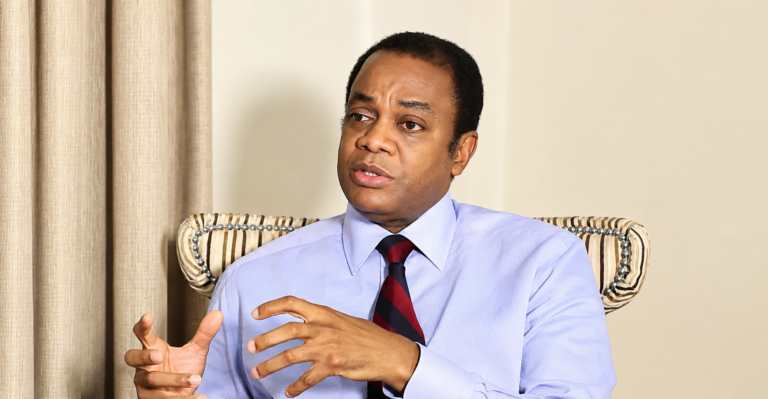
Dr Okopi Alex Momoh is an erstwhile President of Idoma National Forum, immediate past Executive Secretary of the Nigerian Society of Engineers and an accomplished lecturer who recently retired from the Kaduna Polytechnic. In this interview with SOLA OJO, he spoke on the type of the governor that Benue needs from next year. To him, the state needs a governor who can think straight, collaborate and turn the fortune of Benue people around through realistic economic plans using the available natural and human resources the state is endowed with.
What type of governor do you think Benue people deserve come 2023?
Yes, as the countdown to the 2023 general elections begins, Benue State indigenes must start a frantic search for a governor with a sustainable development mindset, regardless of the section of the State he or she comes from and the political party he or she belongs. By all development indices, Benue State which was created 46 years ago (1976) is comparatively one of the least developed states in the country despite its abundant natural and mineral resources. The state is tagged the “Food Basket of the Nation” because of its great agricultural endowments. But its agricultural productivity had been comparatively low because of lack of focus on development by successive administrations in the State.
What are the natural resources Benue is endowed with?
Agriculture is the mainstay of the economy of Benue State, engaging about 75 per cent of the working population of the state. The Zaki Ibiam International Yam Market is said to be the biggest market for a single product in Nigeria, yet there is no single serious yam flour processing plant in the state. The state has one of the longest stretches of river systems in the country with great potential for a viable fishing industry, dry season farming through irrigation and for an inland water highway.
Benue State has a wide range of mineral resources which include Baryte, Felspar, Wolframite, Kaolinite, Limestone, Gypsum, Anhydrite, Natural Gas, Salt, Lead, Zinc, Clay, Coal, Gemstones, and Magnetite. These resources remain vastly untapped. The limestone deposits in Mbatyav, Mbanyion and Igumale are in large industrial quantities. However, it is only the deposit in Mbanyion in Gboko that is being harnessed by Dangote Cement Company for cement production. This limestone deposit and the kaolinite in Otukpo are the only mineral deposits in Benue State that are being harnessed. Igumale cement factory has not been operational while there is a plan to build another cement factory in Mbatyav. The massive coal deposit in Owukpa is not being mined for power generation by the State.
But we read about companies and industries in Bene….
Private initiatives in commerce and industry, particularly by indigenes, is on a small scale and is limited to basic trades. Virtually all the industries established before are now moribund and establishment of new industries has been hampered due to absence of relevant infrastructure and capital funds for enterprise development. There is no tangible presence of Foreign Direct Investment in the state. To make it clearer, those industries you may have read about are moribund and they include Taraku Oil Mills, Taraku; Benue Brewery, Makurdi; Tomato Processing Company, Wannune; Fruit Juice Processing Factory, Katsina – Ala; Yuteco Fruit Juice Processing Factory, Gboko; Benkim Plastic Industry, Makurdi; Ber Agbum Fish Farm, Wishing; kyogen Cattle Ranch, Kwande; Benue Burnt Bricks, Otukpo; Benro Packaging Industry, Gboko; Benue Cement Factory, Igumale; Agro Millers, Makurdi and Benue Bottling Company, Makurdi.
What went wrong? Were these industries designed to fail ab initio?
No. The vision of the early leaders of the state for establishing these industries is highly commendable. The question is, why have successive administrations of the state not bothered about sustaining these industries for internal revenue generation and employment of people of the State? The performance of the state in Internally Generated Revenue (IGR) has been comparatively poor among other states of the federation, considering the enormous resources of the state and potential for revenue generation. It is estimated that the Civil Service employs only six per cent of the people while the Organized Private Sector has nine per cent employment capacity. A buoyant manufacturing sector can create massive employment for the people of the State. The projected 2021 population of Benue State is 5.74 million people. The population of Singapore is 5.5 million people. Singapore is an island nation with water as its major natural resource. The country which had a GDP per Capital of $320 in the 1960s now has a GDP per Capital of $72,000 and a GDP of $396 billion with extraordinary improvements in social welfare. It has created the attractiveness for regional or global headquarters of major corporations with globally competitive manufacturing clusters. Singapore is now a global financial and transportation centre. Comparatively, the factor endowment of Benue State is greater than the endowments of Singapore. The significant difference is leadership and the quality of the leaders coupled with the collective aspiration of the people. With good leadership, we can create a Singapore out of Benue State in Nigeria.
How can the Benue industrialisation process be restored?
The sustainable pathway to industrialisation of Benue State is the creation of more process industries for both agricultural production and harnessing of mineral resources. The moribund industries must be made to work. New cement factories must be built in areas where we have large deposits of limestone. The state should utilise Owukpa coal deposit for power generation to drive the industries. There must be deliberate effort to add value to our agricultural production and create employment for our people through process industries. The state must build on its large agricultural comparative advantage.
How then can you set a sustainable development agenda for the next government of Benue State?
The following 11 focus areas are required to kick start the sustainable development process: develop a state-wide ten-year Strategic Development Master Plan, identify appropriate technologies for harnessing the mineral resource endowments of the state and facilitate aggressive private participation in the development process, identify opportunities for establishment of innovation hubs and industrial parks, assess level of industrial activities and private investment in manufacturing in the state and indicate the constraints to performance, assess level of infrastructure provision and the enabling environment for investment in the state and invest more in appropriate infrastructure with increasing ease of doing business, liaise with the tertiary institutions in the state for development of appropriate technologies for harnessing the mineral resources and processing of agricultural produce of the state. Others are to engage both local and international potential investors through investment summits to invest in the resources of the State, establish Benue Economic Summit Group (BESG) to drive the economic development process, sstablish clusters of agricultural and mineral processing industries, establish/reactivate Farm Service Centres for agricultural mechanization in the local government areas as well as the need to establish/reactivate technical colleges and vocational training centres to produce needed skills for the emerging industrialization of the state.
In our search for a dynamic leader in Benue State, we must move out of the usual domain of ethnic bias. It should no longer be about our identity struggle for a Governor from Zone A, B or C but mainly about getting the right leader who understands that politics is for development and knows how to use people and other resources of development to create prosperity and better living conditions for our people.