Follow Us on Google

He is the current INEC chairman. All eyes will be on him. He will be the cynosure of all eyes in 2019, before, during and after the elections.
Ismail Omipidan
Among the prominent Nigerian politicians to watch out for in 2019, and who are likely to shape the events of 2019 are President Muhammadu Buhari, Vice President Yemi Osinbajo, the Peoples Democratic party (PDP) presidential candidate, Atiku Abubakar, his running mate, Peter Obi; Senate President, Bukola Saraki and Governor Nyesom Wike of Rivers State.
2019: Participate actively in electoral process for credible leaders, Wike tells Nigerians
Others are: APC National Leader, Asiwaju Bola Ahmed Tinubu, former Abia State governor, Orji Uzor Kalu; former president, Olusegun Obasanjo and INEC chairman, Prof. Mahmood Yakubu.

Buhari
He is the country’s incumbent president and APC’s presidential candidate for the February contest. His admirers and party faithful believe he has done well and so deserves to be re-elected. But other Nigerians and the leading opposition party, PDP, thinks otherwise. He has since flagged off his presidential campaign.
Before formally declaring his intention to seek a second term, he had in November 2017, in Abidjan, Cote d’Ivoire where he attended the fifth European Union-African Union (EU-AU) Summit, gave a hint that he would be seeking a re-election this year. Interestingly, he was accompanied on the trip by Tinubu, a man who was central to his emergence, first as the party’s presidential candidate in 2014, and later as the president in 2105. Governors Udom Emmanuel of Akwa Ibom, who is of the PDP and Mohammed Abubakar of Bauchi State, who is of the APC, were the only two governors on the entourage.
On the sideline of the visit, Buhari was billed to address a Nigerian delegation in the country. But he was said to have arrived late for the engagement. On arrival, these were his opening remarks: “First, I want to apologise for keeping you for too long sitting. This is because I insisted on the governors attending this meeting. This is why I came along with them so that when we are going to meet you, when you are going to meet the rest of Nigerians, if you tell them that their governors were in the company of the president, I think that will be another vote for me in the future. I’m very pleased that they were able to turn up.”
Buhari flagged off his campaign in Akwa Ibom State. In 2015, the battle was won and lost in the South-West and the North-West. Although, these two zones will still play prominent roles in influencing 2019 decision for APC, another zone that is likely to introduce a new mix into the whole game plan is the South-East. But while the South-West still looks good for the APC, the story in the North-West, Buhari’s zone, analysts say, may not be as smooth as it was in 2015
Osinbajo
He is the current vice president. He is also the running mate to Buhari. Although he has given a good account of himself as a loyal lieutenant, his influence in power is reportedly not as powerful as it appeared in the beginning. Things may not continue to be as chummy with his political godfather, Tinubu if the party wins the February election. Despite denials to the contrary, political observers say he may have his eyes fixed on 2023, just like Tinubu.
Atiku
Former Vice President, Atiku Abubakar had before his defection to the PDP left no one in doubt that he was going to run for the presidency. This fact was reinforced as early as 2015 shortly after the general election, all through 2016 and even in early 2017, by the Adamawa State Governor, Senator Jubrilla Bindow, when he publicly declared that Atiku was the state’s choice in 2019, at a time Atiku was still in the APC.
Atiku is from Adamawa State in the North-East. The zone has been agitating to be given a chance to govern the country after late Abubakar Tafawa Balewa, Nigeria’s former Prime Minister. Adamawa State is one of the states in the zone that has been under the control of the PDP since 1999, until 2015. But apart from 1999, when Atiku, then as the party’s governorship candidate won convincingly, intrigues and controversies have always dogged PDP’s victory, ever since. Ironically, most of those who have always positioned themselves to challenge the party in the state have al- ways been its former members, who became aggrieved and had to leave the party, for one reason or another. Like in all previous elections since after the 1999 poll, the 2019 election will be a straight fight between the PDP and the APC.
Incidentally, the APC’s candidate, who is the incumbent governor, also defected to the APC from the PDP. Feelers also have it that he may support Atiku, by helping to deliver the state to the PDP.
Atiku had left the party in the build up to the 2007 contest, ran in the election but lost to PDP’s candidate, the late Umaru Musa Yar’Adua. He returned ahead of 2011 election, contested the party’s primary as the North’s consensus candidate, but lost to former President Goodluck Jonathan. Again, in the build up to the 2015 contest, he defected to the APC, ran in the primary, but he came a distant third. However, he made it as a candidate this time against all odds. This 2019 contest will be the second time Atiku will be on the ballot as a presidential candidate.
Peter Obi
Obi is Atiku’s running mate. He is good no doubt. His outing at the vice presidential debate left those who earlier had doubts about his mettle convinced that he would be a good vice president if Atiku wins.
Obi has been reaching out to those who matter in the zone, ahead of the election.
Obi being on the ticket is a plus for Atiku and the PDP, especially outside the South-East zone, where some Nigerians believe that the former governor of Anambra State is credible. They look at Obi’s achievement as governor and believe that Atiku got it right in choice of vice presidential candidate.
Other News
If Saraki loses the battle that will be his end politically. But if he survives it, and PDP gets the majority in the Senate, he will be returned almost opposed as Senate President of the ninth Senate.
Ekweremadu
He is the current deputy president of the Senate. He is seen as the intellectual power house of the Senate. He has been in the Senate since 2003, and he is serving his third consecutive term as Deputy President of the Senate. The APC cannot forget in a hurry the political deft moves employed by him and his colleagues in the PDP that saw them installing a Senate president, where the party also floored the majority party to produce the number two man in the senate.
Historically speaking, he is not known to struggle for political office, but providence always has a way of thrusting on him leadership position. And he has always surmounted political landmines placed on his path. Not even Sullivan Chime, as a sitting governor in Enugu, could overcome Ekweremadu when he (Chime) attempted to stop his re-election in 2015.
He will be returning to the Senate, but unlike Saraki, no deal for him as far as the ninth Senate is concerned. But the Enugu-born lawmaker appears not to be losing any sleep over the matter. He became Deputy President of the Senate in 2015, at a time when many thought he was finished politically.
Wike
He is serving his first term as the governor of Rivers State. He is entitled to a second term, a thing he would get on a platter. He tried to push through his preferred presidential aspirant as candidate of the PDP, but he lost the battle. However, even at that, the presidential candidate of the party will ignore him at his peril because he remains a strong factor in the PDP.
Nobody will forget in a hurry the role Wike played in standing by the PDP during the troubled time. At a time when others stood on the fence, he did everything to save the party. He first hosted the PDP national convention in Port Harcourt, which was eventually called off but wherein the party reaffirmed the leadership of Alhaji Ahmed Makarfi as the interim national chairman of the party. He supported the PDP during the legal battle, which brought about peace eventually as the Supreme Court eventually sacked former Borno State governor, Ali Modu Sheriff as national chairman.
Tinubu
He is the National Leader of the APC. He has proven to be a political colossus in the South West. He is interested in the presidency but he said he won’t contest against Buhari. So he is waiting for 2023.
But his political dynasty in the South-West is under threat. At the moment, he has only Osun and Lagos states. However, the outgoing Oyo State governor, Abiola Ajimobi, defers to him occasionally.
If the APC loses Oyo and Ogun, his sphere of influence in the zone will further dwindle.
Like in 2007, in 2011, when it became obvious that to dislodge the then president, Goodluck Jonathan and the PDP from the centre, opposition must work together, Buhari’s CPC and Tinubu’s ACN, tried a last minute merger, but they blew the opportunity. Rather than work together, both parties worked at cross purposes, to the extent that PDP’s presidential candidate, Jonathan, floored ACN’s presidential candidate, Nuhu Ribadu, in most South-West states, including Lagos, with the exception of Osun State.
But in 2015, the whole story changed once Tinubu showed greater interest in the centre, and that culminated in the defeat of the PDP and Jonathan, thereby ending the PDP’s 16 years hold on Nigeria, making it a first win for the opposition, in the country’s entire political history. To make it possible, Tinubu ensured all the South-West sates, but one, were delivered to the APC.
Kalu
When American comedian, Groucho Marx, defined politics as “the art of looking for trouble, finding it everywhere, diagnosing it incorrectly and applying the wrong remedies,” he may not have had Nigeria in mind. But this definition aptly describes the situation in the country. Here the powers-that-be not only do anything they like but also use everything at their disposal to settle perceived scores, in the name of politics. And they do not remember whatever favour done to them. Perhaps, former Abia State Governor, Dr. Orji Uzor Kalu, would tell this story better, having been a victim of politics. First, he is in trouble for fighting for democracy, against the-that-be, who wanted to subvert democracy. Second, he was betrayed by a man he laboured, spent his time and resources, to put into office. And he is still paying a price for his audacity, 12 years after leaving office. The story of how Kalu became a multibillionaire, in his 30s, long before going into politics, is well known in Nigeria, just as the story of how one of the former leaders of Nigeria suddenly became billionaire only after leaving office, is well documented, both by Nigerian journalists and the country’s historians. Ironically, while Kalu, whose sources of wealth, were known before he became governor in 1999, is standing trial for alleged fraud of N2.9 billion, the said former leader, who is the architect of his travails, walks the streets of Nigeria, a free man. But in spite of his travails, he is still playing big in the country’s political space. Long before Buhari made up his mind to seek a re-election, Kalu had gone round the 36 states, explaining to the elite and the masses why Buhari should be given another chance. Kalu is at the forefront of ensuing that the South East support APC in the coming elections. He is also running for Abia North Senatorial zone on the platform of the APC.
Obasanjo
He is Nigeria’s former president. In the build up to the 2015 elections, he was one of Buhari’s major backers. He single-handedly demarketed former president, Goodluck Jonathan, in the international community. He contributed to undermining the fortunes of the PDP.
Today, like he did to Jonathan before the contest, he has asked Buhari not to run, just as he said he has forgiven the PDP for the mistakes of 2015. He has also gone ahead to endorse Atiku. Since the presidential contest will be a straight fight between Atiku and Buhari, Obasanjo’s support for Atiku is expected to make some reasonable impact, home and abroad.
So far, since 1999 to date, the only political battle Obasanjo has ever lost was his attempt to seek a third term, otherwise he has successfully prosecuted and won convincingly all political battles, especially presidential contest since 2007 after leaving office. Will 2019 be different? It seems only time will tell.
Yakubu
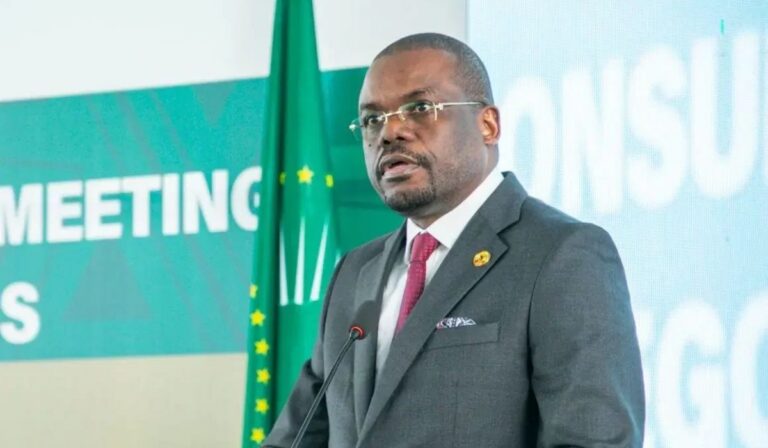
He is the current INEC chairman. All eyes will be on him. He will be the cynosure of all eyes in 2019, before, during and after the elections.
He has so far demonstrated reasonable capacity to be his own man. But for the controversies that trailed the ‘Osun 2 election’ (governorship), he perhaps would have gone into the February and March elections with his head up. This is so because there appears to be a consensus of opinion among most Nigerians that the gains recorded during the Osun State governorship election may have been eroded by the controversies that trailed the re-run governorship election.