Follow Us on Google


…Urges Obi to consider joining APC to actualise presidential ambition
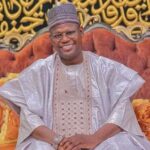
The Director-General of Raw Materials Research and Development Council (RMRDC), Nnanyelugo Ike-Muonso, has stated that Nigeria’s ambition of building a $1 trillion economy would depend substantially on the ability to process local resources, strengthen manufacturing and reduce dependence on imported industrial inputs.
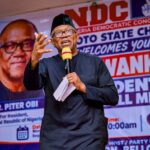
Ike-Muonso equally appealed to the presidential candidate of the Nigeria Democratic Congress (NDC), Peter Obi, to shelve his ambition for next year’s presidential election, and consider joining the All Progressives Congress (APC) to actualise his ambition of presiding over the country.
He further argued that the debate ahead of 2027 should extend beyond individual ambitions to include an assessment of the policies and programmes needed to diversify the economy, create jobs and strengthen domestic production.
The DG also claimed that Tinubu administration’s Renewed Hope Agenda had created a policy framework within which institutions such as the RMRDC could advance local raw-material development, industrialisation, import substitution and value addition.
The Council, according to him, was pursuing initiatives aimed at moving Nigeria away from the export of unprocessed commodities towards a production-based economy capable of creating jobs, attracting investment and strengthening domestic manufacturing.
Among its policy proposals is a legislative framework intended to require at least 30 per cent value addition to raw materials before export, a measure designed to encourage domestic processing and ensure that more of the economic benefits from Nigeria’s natural resources remain within the country.
Speaking at an interactive session with newsmen in Abuja, he expressed concerns that Obi participating in next year’s presidential election might divide the vote to guarantee a southern candidate winning the election and truncating the principle of power rotation between the North and South, which has shaped Nigeria’s political calculations since the return to democracy in 1999.
While urging Obi to consider joining APC, the RMRDC Chief Executive Officer argued that engagement within the ruling party could provide the needed opportunity to contribute to policy debates, understand its governance structures and participate in the development programmes implemented by ruling party-controlled states.
“Presidential ambition must be balanced with the larger interests of national unity, political stability and the need to sustain policies that can transform the economy.
“Nigeria has developed a political tradition of power rotation between the North and South, and respecting that understanding can help strengthen confidence among the country’s diverse political constituencies,” he said.
“Peter Obi has built a political following and brought issues of public expenditure, accountability and economic management into the national conversation. Those issues deserve sustained engagement. But political leadership also requires strategic decisions about when to contest, when to collaborate and how best to contribute to national development,” he said.
Speaking further, he said that: “The opportunity before Nigeria is to move beyond exporting raw commodities and build an economy in which our natural resources support local factories, generate employment and create wealth within our communities,” he said.
He said that the RMRDC is also promoting the identification and development of raw-material resources across the country’s 774 Local Government Areas (LGAs) to encourage investment in processing facilities and industrial clusters.
Its initiatives include strengthening access to raw-material information for manufacturers and investors, promoting research commercialisation and encouraging collaboration between universities, research institutions and private-sector operators.
The Council’s Research and Demonstration Plant Complex and other research-industry initiatives are intended to help translate scientific discoveries and indigenous technologies into commercially viable products.
Ike-Muonso said these interventions were particularly important for small and medium-scale enterprises, which require reliable access to local industrial inputs, appropriate technologies and investment opportunities to expand production.
He maintained that infrastructure development across the South-East could complement the Council’s industrialisation agenda by improving the movement of raw materials, finished products and agricultural produce.
Among the major federal road projects in the region are the Enugu–Onitsha and Enugu–Port Harcourt expressways, the Enugu–Abakaliki road and access roads connecting the Second Niger Bridge.
The projects are intended to improve connectivity between the South-East and neighbouring regions, reduce transportation difficulties and facilitate access to markets.
In Enugu State, projects highlighted during a Federal Government inspection in June 2026 included the Enugu International Specialist Hospital, the Abakpa Junction flyover interchange, the dualisation of the Enugu International Airport Road and the reconstruction of sections of major federal road corridors.
The state government also showcased its Smart Green Schools initiative and a tractor assembly plant as part of its broader development programme.
In Ebonyi State, projects inspected included sections of the Trans-Sahara Superhighway, the Ndi-Egbe Bridge linking Ebonyi with Cross River State, rural roads, educational facilities and housing initiatives.
In Abia State, the projects highlighted included the Ohafia–Umuahia Federal Road, sections of the Enugu–Port Harcourt Expressway and the state-funded Umuahia–Uzuakoli–Akara–Ohafia Road.
In Imo State, projects highlighted in July 2026 included the Okigwe–Owerri Road, the Owerri–Obowo–Umuahia Road and improvements to Sam Mbakwe International Cargo Airport, alongside interventions in education and healthcare.
The projects involve different funding and implementation arrangements, with responsibilities shared between federal and state governments. Their expected benefits include improved transportation, stronger commercial links and increased opportunities for investment.
Ike-Muonso said the ultimate test of governance was whether public policies translated into measurable improvements in people’s lives through employment, better public services, lower business costs and increased productive capacity.