Follow Us on Google
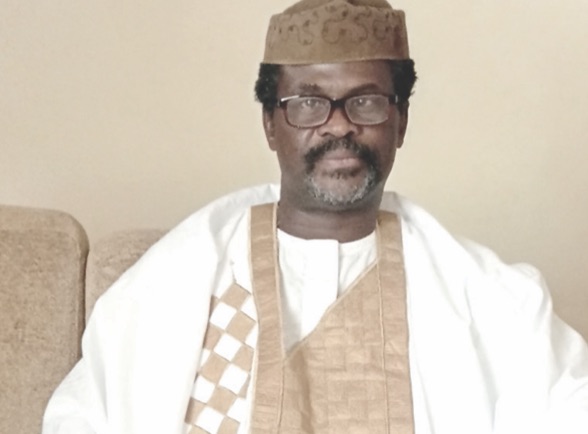
…Wants it replaced
From Idu Jude, Abuja
As the National Assembly tours the six geopolitical zones, consulting Nigerians on the amendment of the 1999 constitution, eminent Nigerians on the platform of The Patriots have condemned the move stating that a military decree cannot be amended in a democratic setting.
Secretary of the group, Mr. Oluwale Okunniyi in this interview, said the problem of Nigeria is the faulty constitution and should be replaced.
Excerpts:
For the record, what exactly are the intentions of The Patriots, is it proposing a brand-new constitution or a review of the 1999 constitution?
First, the intention is to facilitate National consultations and consensus on Nigeria’s constitutional questions. It is about trying to bring every stakeholder to the table in a dialogue where they can look at and agree on what governance system and structure Nigeria needs at this critical point; in bringing about unity, security, and stability for the country. Secondly, it is to engage and see whether there is a consensus on the need for a new constitution to replace the 1999 Constitution or to continue with the amendment of the Nigerian constitution, such that we tried to X-ray previous constitutional proposals and see the degree of consensus in getting a new constitution or amending the existing one.
However, at the end of the summit, it was clear that the views of Nigerian stakeholders and Summit delegates were in line with The Patriots’ position for a new democratic constitution for Nigeria largely due to the shortcomings or the flaws of the 1999 constitution, especially in the procedure of bringing it about.
The 1999 constitution is essentially flawed because it was not given by the people unto themselves. To the extent that the Nigerian people, stakeholders, and citizens cannot claim to own it as their own, as it was imposed or foisted by the military government under General Abdulsalami Abubakar, which was in a haste to leave government at that time. The summit realising pitfalls associated with the 1999 constitution therefore, resolved that the ongoing amendment of the 1999 constitution by the National Assembly should be jettisoned for a new democratic people’s constitution. The 1999 constitution is too warped and therefore not amendable. It is too wrongheaded to be recovered, that is, too illegitimate to be regarded as the constitution of the Nigerian people because the foundation of that constitution was faulty. No righteous amendment can thrive on the 1999 constitution. Therefore, what we need is a new all-inclusive process that can elicit the interests and support of Nigerians towards bringing about a new constitution that can be owned by the people and this is the essential purpose of convening the National Summit.
In other words, what the National Assembly is holding across the six geopolitical zones presently can be described as wrongheaded?
Not just that but also a waste of resources and time for the country. This is because there is no democratic country, where a military decree is called a constitution. The 1999 constitution is a product of a decree and not a product of the peoples’ proclamation at a constituent assembly, which has the power to give the country a constitution. For It is only an assembly of the representatives of Nigerians who have been elected to give the country a draft constitution that can do so after the endorsement by a direct referendum where citizens go and vote on the provisions of that constitution.
The military government, while promulgating the 1999 constitution essentially explored the power of the parliament, which the military assumed, when the military took over government on December 31,1983, when the Buhari/Idiagbon regime came in and suspended the constitution, giving themselves the power of the legislature to make and amend laws. However, a legislature is deemed to be an organ of government composed by agents of the citizens, who are sent by the people to represent them in law making and not constitution making, which is the prerogative of the citizens to make as no constitution is given by government, whether the executive, legislature or the judiciary, but by the people to determine what form of government they want.
A constitution is a document of political agreement of the people on how to govern themselves and how to elect their representatives, to bring about a Grund norm on how to govern themselves. So, any law made by the National Assembly that is contrary to the provisions of the constitution is null and void and of no effect.
Other News
It was alleged that this Summit was backed by the president, because he is from the southern part of this country, but Nigerians would like to hear from the horse’s mouth. Is this true?
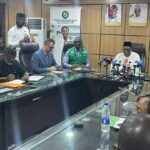
No! Government has no hand in hosting the National Summit. Well, it may interest them to watch out to see what we have been doing and to see what we shall come out with. So, the government has no hand in it, either in the funding or in whatever, Nuhu Ribadu, who was supposed to address us, was held up in Daura over Buhari’s death. So, you see, they paid more attention to the death than the constitutional summit, and that is enough evidence to tell everyone that the government was not involved in convening the summit.
So, like I said, the constitutional summit was self-sponsored by our leaders, and we have their names. However, government did not show opposition to the summit like in those days when we were having PRONACO and government went and put police at the entrance of the venue and said Prof. Wole Soyinka, Chief Enahoro, and other leaders couldn’t go in. We didn’t experience that this time. I think Nigeria has grown in terms of the protection of the rights of people to discuss. Although government did not attend the summit but they didn’t stop it. However, the majority of our stakeholders attended. But what we intend to do is that we cannot on our own implement the resolution. The summit has decided that the draft resolution be taken to the president, and the National Assembly, and that and the implementation committee will draft a legislative bill to the National Assembly so that if it passes through, we can enact a law that will enable the constitution of a constituent assembly chart the way forward for a new replacement of 1999 constitution.
It seems the tenure of a president from the south encourages agitation for a change of constitution, which others never gave their consent to. What is your take?
It is not a matter of consent; it is commonly the will of the people. There is nothing planned in this. It just came this time, just like it came during Jonathan, and the thoughts were not implemented, but I think Nigerians ‘ momentum periodically picks up, particularly against the insecurity across the country. Killings of 200 people, 500 people, and the sacking of a whole village, cattle rustling are symptoms of insecurity and instability. These calls for genuine concern of leaders of thought and eminent Nigerians to ensure that this place is secure and fair for all of us. It is not about Southern President; no, I don’t think so. It is just that the momentum grows periodically, and perhaps people see the Southern President as more liberal and progressive. But for us, who are the initiators of this summit, it wasn’t tied to the Southern President or whatever; it is the timing that is appropriate, and for us, when we monitor the momentum in the society and the agitation of the people, we decided to do this.
Any plans by The Patriots to repeat this across the six geopolitical zones?
Yes, the Chairman of the Patriots, Chief Emeka Anyaoku made that clear that there will be further engagements in the six geopolitical zones among the stakeholders concerning these resolutions, particularly the items about recommendations about specific issues so that we can further build national consensus, instead of just focusing only on making the government to accept it, again, we have also built consensus before we get to the National Summit. We built in certain crucial issues, such as the system of government, rotation of government leadership among the zones, resource control, fiscal federalism, structure of government, etc. For us, no state lacks natural resources. Our research and consumption have shown that no state is unviable or lacks resources economically across Nigeria. But our states have been made unviable and economically lean or unproductive because of the cap-in-hand feeding bottle federalism, where all resources go to the centre, and then the federating units and states receive allocation from Abuja. We are saying that if you make laws that allow the states, no matter how small, Ogun State, for example, to generate their resources, control their resources, and pay royalties to the centre, it will become highly viable. So even if you have more states in Nigeria, they can only operate differently given their history, geography, and culture, or whatever but won’t be unviable. Therefore, we have to restructure in such a way that the federal government will cease to receive the entire resources of the country. They will allow the federating units even the states to generate their resources, control them and the agreement in the federal constitution on the ratio of royalty to be paid to the Federal, that way, we will have a robust, and very productive state, and every person will now be in competition and not run to the federal government to collect allocation. So, nobody should be afraid that we are trying to destroy the country or disintegrate the country. Nobody should be afraid that the process that will bring a new government will create problems.
What are the economic implications of a Democratised constitution?
What it brings to the table is the ownership of the country, patriotism to the country. Before the Economy, we talk of the participation first because people know that they are part of the design of the constitution. The process of it is profound, like that of General Babangida, which was profound though maradonic, will elicit interests, patriotism in the country because through that process the citizens will be made to own the country, they call their own through that constitution because they are participating in how their country will be run.
With that 1999 constitution, the moment anyone gets there, they automatically become rich. You can’t run a government that way. It has become the common way to make money. That is an aberration, evil and that can bring a curse upon a nation. Therefore, we must change the system that enables corruption. We can say it because the constitution of Nigeria is the foundation of corruption. No one can exterminate corruption through EFCC, ICPC if the Nigerian constitution is still corrupt because that was what gave the leverage.
If I am the National Security Adviser, the first thing I would do is to push for a new constitution, but the fact remains that these people don’t have sense. I have doubts that all the people who are ministers know politics. If I were them, I could have pointed out fundamental issues that have become a clog in the wheel of progress. They are all rubber-stamped members because they lack political knowledge. Unlike the late Chief Awolowo, who trained his followers in politics. There is no reason why any government should employ technocrats alongside civil servants. No, such thing is duplication. Awo was a trained lawyer, but schooled himself in political ideology and political principles, and now knows how to run the country with periodic meetings and political debates where Awo debates Enahoro, and at that level, you get the best of ideas and knowledge at last. But this one is jeun Jeun (chop, chop), everybody who goes into politics wa’ jeun. And here they say they are technocrats. I bet you no one can successfully be a minister of health if they fail to understand the politics of the people.