Follow Us on Google
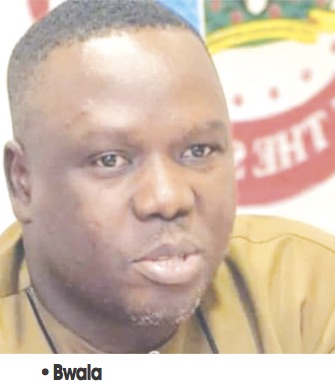
By Chukwudi Nweje
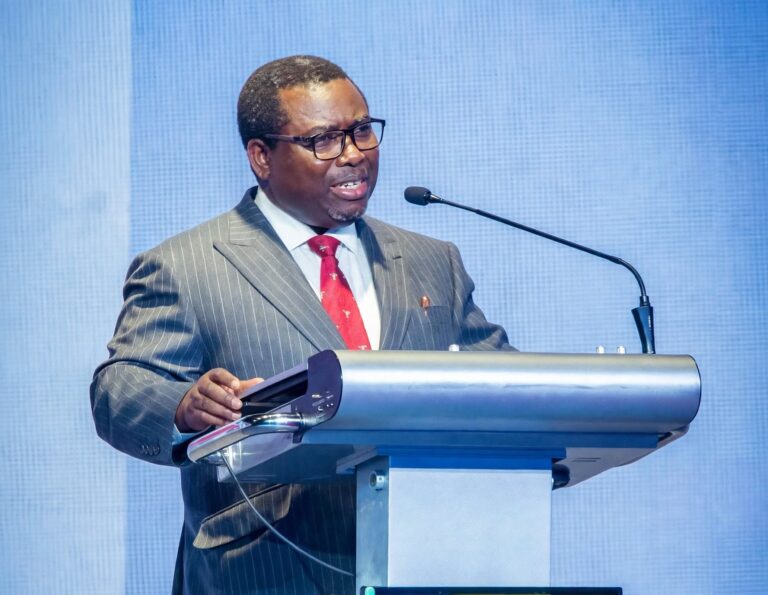
Daniel Bwala is the spokesperson for the presidential candidate of the Peoples Democratic Party (PDP), Atiku Abubakar and a constitutional lawyer. In this interview monitored on Arise Television, he speaks on the conflicting judgements on the outcome of the 2023 general election, among other issues.
What do you think about the rulings of the Court of Appeal on the Kano, Plateau and Zamfara states governorship elections?
Since 1999, when we returned to democracy, in all elections we have had one or two judgements questioned by public opinion because the judgements were considered inconsistent but there have been evolutionary developments in the judiciary. But in the 2023 elections, we have had the worst judgements of the courts. If you look at the election tribunals this year, you will notice that there were inconsistencies in one or two tribunal cases at the trial level but probably at the Supreme Court, one or two complaints.
But at the Court of Appeal, almost all of these conflicting judgements have so far been experienced. And for the records, the Court of Appeal is one court, so even if it were a judgement delivered in Maiduguri; it can be relied upon in Lagos by the same court because the court is one. And so surprisingly, you would think that the court should be aware of the various judgements it delivers and be consistent in its judgement, especially when the judgements are founded on the principles of law.
Facts can be different but the principle of law is constant and wherever you turn, the principle falls on a direction, the judgement has to be consistent and constant. But we have seen conflicting decisions of the Court of Appeal, especially where it affected the Peoples Democratic Party (PDP) and I will tell you why. There was a judgement by the Court of Appeal in Plateau State that removed the governor and the appellate court went into the merit of a pre-election matter and they said it also qualifies as the main election matter and they delivered a judgement.
In the same Court of Appeal in Ebonyi State, the case of pre-election matter was canvassed but the Court of Appeal said it was a pre-election matter and they would not handle it. In Benue State, a pre-election matter was raised regarding the governor and the court in Benue said, it is a pre-election matter and that they are guided by the judgement of the Supreme Court and they will stay constant in it. In all these places where judgements were delivered either in sustenance of pre-election matters at the tribunal or in rejection of pre-election cases in the tribunal, the beneficiaries have been the APC.
This is where the concern comes, but you see, section 287 of the 1999 Constitution makes it clear the position of judicial precedent and that the judgement of the Supreme Court is binding throughout the nation of Nigeria on all authorities and courts that are subordinate to it. In this 2023 election, the Supreme Court of Nigeria settled the issue of pre-election matters in the case by the Allied Peoples Movement (APM), All Progressives Congress (APC) and Labour Party, where pre-election matters were canvassed.
The Supreme Court made a strong pronouncement that anybody who is not a member of a political party or even if you are a member of a political party, where the case border on pre-election, it cannot be brought before the tribunal and anybody or party that brings it to court is a busybody. People have also referred to the case in Zamfara in 2019, where the Supreme Court sacked APC elected officers, saying why is the PDP crying.
They failed to realise that in 2019, apart from the fact that it was a decision based on the old order of both the amendment to the constitution and the electoral act, it was a case brought by a member of the APC. It was an intra-party matter. This year, the Supreme Court said you are a busybody to try to question the internal affairs of other parties. In fact, it even said even when the legality of what you are challenging is genuine, it falls short of the time required for the determination of the matter and that the matter is not an election tribunal matter.
If you look at section 34, the grounds for which election victory can be challenged are clear. You will see that there is no disobedience to the court judgement as a ground. There is even no issue, for example, in Plateau. When they say that there is no valid congress and that they didn’t even have a structure in the first place that would warrant them to sponsor a candidate, what is the structure of a party as recognised by the law, the constitution of the party and various decisions of the Supreme Court.
The National Working Committee (NWC) is the life, the soul and the spirit of a political party. As long as the NWC exists, even if there is no structure at all in a state, it cannot give rise to the decision or validation by the court that there is no conduct of congress. Even going into the merit, legality and otherwise of the matter as pre-election, tribunals have no business handling it as long as the Supreme Court concerned.
Can you make a correlation between what is happening at the Appeal Court and what Justice Dattijo Mohammed said in his valedictory speech?
The character of the dispute before the various courts differs. Somebody may challenge double nomination, somebody may challenge the falsification of documents, somebody may challenge the emergence of the candidate from an invalid congress, somebody may challenge the legality or otherwise of the member of that political party, all of them fall within pre-election matters as clearly stated in section 285, meaning that it is a dispute that arose before the declaration of the winner of the election.
Any dispute that arises in a political party whether during the congress or during the primaries, there is a time frame for the determination of that suit and there is a forum which the law says is the Federal High Court both in the constitution and the Electoral Act and not the election tribunal. The election tribunal, according to Justice Dattijo, is a different character and you do not equate proceedings at the election tribunal with the proceedings in a regular court.
For example, if you are out of time to file in a regular court, you can file a motion for an extension of time to do that and the other person files a counter affidavit challenging it, the court has always said that where there are two competing motions, the one that will survive the suit is the one they will consider. In an election tribunal, if time passes, even the Supreme Court says it cannot exercise the jurisdiction to determine the matter.
So, Justice Dattijo made it clear that the character of a pre-election case, no matter the level it arises, can never be entertained by an election tribunal or an appellate court that is determining the question that arose from the election tribunal. And that is why you find in Benue State, the justices of the Court of Appeal maintained the position that they lack jurisdiction to determine pre-election matters. In Ebonyi State, they maintained that they lack jurisdiction to determine pre-election matters.
Justice Niki Tobi and others have always in their judgement, classified any decision by a court lower than them that tends to run away from their decision as judicial rascality because this constitution says in section 287 that the judgement of the Supreme Court binds all courts in Nigeria that are subordinate to it. In this case, it is the judgement of the Supreme Court that says pre-election matters cannot be determined by the election tribunal.
Justice Dattijo Mohammed raised concerns about the judiciary but what is the way forward in all these election issues, and do you think that reform is the way forward?
When you talk about Justice Dattijo Mohammed, my mind went to the presiding Justice of the Supreme Court, who gave the lead judgement and he was talking about the reference. In the case of Justice Dattijo, who was retiring, what he did was to open up this country to the reality of the fact that the Supreme Court is as human as any other element and also susceptible to corruption and corrupt practices. These were his words about the way in which people were elevated to the Supreme Court, which are not consistent.
Anything that is not consistent with the law is corruption. So, for the people who say everybody should keep quiet when the Supreme Court gives judgement, he gave us a perspective that it is not all Uhuru. There is a problem in the judiciary and the system through which judges rise up to the Supreme Court from the recruitment, promotion and all of that. When we say that all eyes are on the judiciary, some people tend to think that we are blackmailing the judiciary. But when we say all eyes are on the judiciary, we are saying that our hope now lies on how they will interpret the issues.
This case of Plateau State, when it gets to the Supreme Court, will be a case of Supreme Court versus Court of Appeal. It has more to do with the sanctity of the Supreme Court itself because the Supreme Court has to determine whether that judgement it delivered in the presidential election case is to be carried out by subordinate courts in Nigeria because it made it clear that a decision by a final court is settled law and once a law is not determined by the final court, it is not a settled law. But once it is determined by the final court, it is cast in stone. So, the Supreme Court would have to determine whether the Court of Appeal is above it or that it is above the Court of Appeal.
With respect to reforms; in the Ninth Assembly, I served as the person in the office of the Deputy Senate President who handles constitutional amendment and I began the process. And I remember extensively the advice we gave and the Deputy Senate President was open to some of these reforms that we introduced. We produced a bill and the bill was sponsored at the National Assembly but as they began to go around Nigeria, some states knocked it down.
We provided pre-pre-election, that is to say the time limit for which congress matters should be determined and then brought forward to the primaries and the time limit in which the primaries should stop. And then you go to the election tribunal. Instead of pre-election and the election tribunal, we provided for pre-pre-election and pre-election and the election tribunal because we do not want a situation where somebody would win an election and a court will remove him for whatever reason.
So, whatever question that arose from the congress must be determined before the primary starts up to the highest court that has jurisdiction over it. Whatever happens at the primary election must be finished before the election and whatever happens in the election must be determined by the election tribunal. If the 10th Assembly goes back into those reform agenda, I will bring those ideas and it will help. With respect to the Electoral Act, what we did is that if you leave it at the level of the Electoral Act, what happened in 2023 will be applied, where the lawyers and parties went about saying that electronic transmission is merely a guideline because it was not in the constitution.
What we did was to put it in the ground norm, so that no court or individual can have jurisdiction to nullify it. If the National Assembly will bring this reform, it will be helpful. I’m a human being and I must express my concern on whether I believe this National Assembly will carry out the reforms or not. We will continue to suggest but whether they have the balls is what I cannot guarantee. This 10th National Assembly is worse than a rubber stamp because in the 9th Assembly that was tagged a rubber stamp, at least, they will deliberate and interrogate the bills but the executive will end up having its way.
This one, they don’t debate, interrogate and they don’t do anything. You heard from their member, not external people that there were bills brought and which were passed with speed. So, the reform agenda cannot be successful without removing the Independent National Electoral Commission (INEC) chairman. The reform agenda cannot be successful without changing INEC commissioners because the majority of INEC commissioners are members of a political party. All you need without doing extra work is to go back to the 9th Assembly and pick the reform proposals.
What is your take on the Kano governorship election ruling and the error in the Certified True Copy (CTC) of the judgement?
What happened in Kano is one fact I will tell you today. A stamped Certified True Copy of a document is conclusive proof in law that the document represents the character, the content and it is from the original. Usually, the reason why the court adopted a CTC rather than an original is because, in these days of technological advancement, somebody can produce an original from an original in such a manner that you may not be able to distinguish between the original from the original-original.
But the CTC means it has to be stamped by the issuing authority as conclusive proof. That judgement having been certified whether by the registrar or whatever by that court is a conclusive proof that the content in that judgement is true, final and it represents the character. What is the character of that document? It is the judgement of the court in Kano. You saw in that document where it says we hereby dismiss or uphold the appeal. In the eyes of the law, that is the judgement of the court because that write-up was certified by the court as true, original, representing its character and guaranteed that the content was actually what happened.
So, there is no way the Court of Appeal, in this case, will be able to walk back or withdraw from that. In fact, attempting to do anything to that document by that same court is attempting to re-litigate the matter because once the judgement has been delivered, the court cannot make corrections on the CTC. The correction that is often referred to as clerical error is corrections that were noticed and exposed by the court during the delivery of the judgement.
If for example, as a judge, I’m reading out the judgement and I identify a typographical error in the open court, I will say there is a typographical error, I will note it and when I finish, I have the right to correct the clerical errors. But where a judgement is read without any problem to the hearing of everybody, without prejudice to what the court said in that open court because the conclusive proof that the judgement has been delivered is the CTC of the judgement being given. When the judgement was being read for everybody in the open court, everybody didn’t have a copy.
So, they said what they said but the conclusive proof that the judgement was delivered is that the court would finally certify the judgement and hand it to the parties. If the court made a mistake and handed it to the parties, despite the mistake, that judgment becomes valid. In the same way the court said the mistake made by INEC by not signing the documents that guaranteed the victory of the governor. That the error cannot be accepted, you cannot approbate and reprobate.
In the same way, you rejected that because you felt that the error is inconsequential; that is the same that this judgement becomes final and represents the content. Without prejudice to what is read, when a judgement is read it is at that ending part where the court makes that final declaration and grant relief that is the character, soul and spirit of that judgement. So, in the eyes of the law, without prejudice to the clerical error as they claim, what was read and stamped is the decision of the court.
It will be interesting if they go to the Supreme Court. Let’s see what the Supreme Court will say regarding the age-long principles of law about certification and its effect, whether the court can deliver a judgement, certify it, issue it to parties and then change its mind and whether the legality or otherwise of a judgement is invalided by reason of certification. My humble take is that because of the decisions of the court regarding certified documents, it represent the character, it is the true nature and the conclusive proof of that document, it will be interesting to see what the Supreme Court has to say about that.
With the concerns raised over the rulings of the courts in the election matters, what can we do to cleanse the judiciary?
The judiciary is often referred to as the last hope of the common man because over the years in Nigeria and even during the military era, the judiciary stood for justice to a large extent. Judges delivered judgements that didn’t favour the military. In fact, some of them after delivering judgement came under persecution because they knew that based on the principles of democracy where you have separation of power, whatever dispute arose on any question or facts of law, it is the judicial branch of government that will finally interpret.
They also know that they stood as the last hope for everybody; last hope not just for the common man but even the false hope of the strong man. Over the years, we have seen that in land matters, criminal cases and in all other areas. If you look at the judgement of the court as a whole, they have been consistent. It is only in election petition tribunal that we have this kind of contradiction and conflicting decisions.
Now, as a lecturer, if I walk into the classroom, I find it difficult to tell the students what is the position of law regarding for example, pre-election matters, post-election matter, validly nominated candidate and disqualification because not the masses or the lawyers but the courts have given various judgements. In my view, there is a need for the judiciary to have a judge’s conference.