Follow Us on Google
•Manufacturers face looming supply disruption
By Adewale Sanyaolu
Nigeria’s drive to deepen domestic gas utilisation and reduce energy costs for industries is facing a major test as a dispute between NIPCO Gas Limited and its partner, Nigeria Gas Marketing Limited (NGML) and Shell Nigeria Gas (SNG) threatens the future of a $100 million gas infrastructure project in Oyo state.
The disagreement, hinged on gas distribution rights in Ibadan, has raised concerns among investors and industry stakeholders who fear that prolonged uncertainty could undermine confidence in Nigeria’s regulatory framework and weaken the Federal Government’s Decade of Gas Initiative.
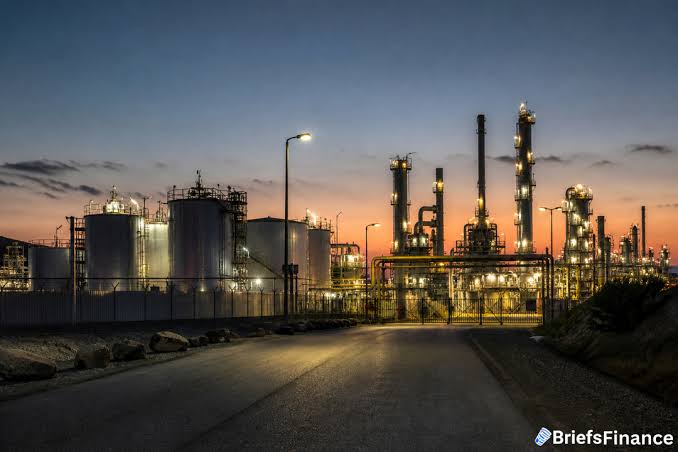
At stake is an 80-kilometre gas pipeline project from Ogere-Ibadan-Oluyole-Olorisaoko-Asejire-Ajoda designed to deliver affordable natural gas to industries in the Oluyole Industrial Estate, one of the largest industrial clusters in South-West Nigeria.
Industry operators warn that any further delay could jeopardise business operations, increase production costs and weaken the competitiveness of manufacturers already grappling with high energy expenses.
The project is expected to provide a cleaner and cheaper alternative to diesel and other conventional fuels, helping manufacturers reduce energy costs by more than 50 per cent while supporting the government’s broader industrialisation agenda.
The Oluyole Industrial Estate hosts more than 20 large-scale manufacturing companies as well as hundreds of small and medium enterprises operating in food and beverage production, pharmaceuticals, chemicals, steel fabrication, agro-processing, packaging and related sectors.
Industry observers say the successful completion of the pipeline could significantly boost industrial productivity in Oyo State and neighbouring markets, while helping Nigeria achieve its goal of increasing domestic gas consumption as part of the nation’s energy transition strategy.
In contention is a Gas Distribution Licence (GDL) awarded by the Nigerian Midstream and Downstream Petroleum Regulatory Authority (NMDPRA) to NIPCO Gas Limited and its joint venture partner, NGML, a subsidiary of NNPC Limited.
The licence, issued under Sections 148 to 152 of the Petroleum Industry Act (PIA) 2021, grants operators exclusive rights to establish, construct and operate gas distribution systems within designated Gas Distribution Zones (GDZs).
The licence formed the basis for the $100 million pipeline project connecting Sagamu Interchange to the Ibadan City Gate, with the objective of supplying piped natural gas to industries across the Ibadan industrial corridor.
When the first phase of the GDL regime was launched, the then Chief Executive Officer of NMDPRA, Farouk Ahmed, described the initiative as a critical component of Nigeria’s gas expansion programme.
Ahmed disclosed that more than 30 applications were received and subjected to rigorous due diligence before 10 licences were issued to qualified operators.
According to him, the licences covered a cumulative gas distribution capacity of approximately 1.5 billion standard cubic feet per day, over 1,200 kilometres of gas distribution pipeline networks and more than 500 customer stations nationwide.
He said the licensing regime was designed to stimulate domestic gas market development by supplying energy-intensive industries, industrial parks, special economic zones, captive power projects and compressed natural gas mobility schemes.
However, over one year after securing the licence and commencing pipeline construction, NIPCO has accused Shell Nigeria Gas of seeking to operate within the same licensed distribution area, a move it argues violates the exclusivity provisions contained in the Petroleum Industry Act and the Gas Distribution Licence framework.
Documents sighted by Daily Sun showed that the Oyo State Government has been actively involved in efforts to resolve the dispute.
In a letter dated November 28, 2025 and signed by the Commissioner for Energy and Mineral Resources, Professor Dahud Shangodoyin, the state government referenced a series of stakeholder meetings involving NIPCO Gas, NGML, Shell Nigeria Gas and government officials.
The meetings, reportedly convened following NMDPRA’s intervention, were held on August 7 and October 10, 2025 to explore possible resolutions to the emerging conflict over gas distribution rights in Ibadan.
According to the letter, NIPCO had informed the state government that it would provide a formal response to proposals submitted by the Oyo State Government and Shell Nigeria Gas following a board meeting scheduled for October 29, 2025.
The state government, however, expressed concern that several weeks after the meeting, no formal response had been received, prompting considerations to escalate the matter to the regulator.
Responding to the state’s correspondence, NIPCO Managing Director, Nagendra Verma, maintained that allowing another gas distribution company to operate within the licensed area would undermine the regulatory integrity of the Gas Distribution Licence regime established under the Petroleum Industry Act.
Verma argued that NIPCO and its partners had already committed substantial investments to the project and that any parallel operation by another distributor would contradict the exclusivity rights granted under the licence.
According to NIPCO, its legal advisers had made it clear during stakeholder engagements that the proposed arrangement involving Shell Nigeria Gas was incompatible with the exclusive rights granted to the NGML-NIPCO joint venture by NMDPRA.
The company nevertheless indicated its willingness to explore a partnership arrangement with the Oyo State Government, provided such collaboration did not involve another gas distribution company operating within its licensed territory.
NIPCO also cited a clarification reportedly obtained from NMDPRA on similar Gas Distribution Licence territories, which it said affirmed that only duly licensed distributors are authorised to expand, connect or commercially operate within designated licence areas, irrespective of whether other entities possess infrastructure elsewhere within the broader geographical region.
The company further noted that Shell Nigeria Gas currently has no existing gas distribution infrastructure within the Ibadan licence area.
NIPCO disclosed that letters seeking clarification on compliance with the Gas Distribution Licence framework and relevant provisions of the Petroleum Industry Act were sent to Shell Energy on November 28, 2025 and to the Chairman of Shell Nigeria on December 5, 2025.
According to the company, no response had been received from Shell, prompting considerations to escalate the matter to Shell’s global management structure.
Efforts by Daily Sun to obtain Shell’s position on the dispute were unsuccessful. An email sent to Shell’s Communications Manager, Gladys Afam-Anadu, on May 3, 2026, as well as a follow-up reminder sent on May 21, didn’t receive a response at the time of filing this report.
However, NMDPRA confirmed that a dispute exists between both companies.
In a WhatsApp response to Daily Sun inquiry, the Authority’s Director of Public Affairs, George Ene-Ita, acknowledged that the regulator had been involved in mediation efforts aimed at finding a mutually beneficial resolution.
“I am aware that there exists a dispute between both companies over the right to operate their licences in the Ibadan axis,” Ene-Ita said.
“Although the actual facts of the matter are not available to me at the moment, I am aware that the Authority has conducted a number of mediation meetings to try to resolve the issue in a way that would be favourable to all concerned, particularly Oyo State and its people.”
Beyond the commercial interests of the parties involved, industry observers say the outcome of the dispute could have far-reaching implications for Nigeria’s gas sector.
The Managing Director of Samkul Nigeria Limited, a company operating within the Oluyole Industrial Estate, Mr. Tunji Adebambi, said the controversy is viewed as an important test for the PIA and the newly introduced Gas Distribution Licence regime.
He argued that how the regulator resolves the matter will send a strong signal to existing and prospective investors about the sanctity of licences, regulatory certainty and the protection of investments in Nigeria’s gas infrastructure sector.
“For manufacturers in Ibadan awaiting access to cheaper gas supplies, the hope is that a speedy resolution will prevent further delays to a project regarded as critical to improving industrial competitiveness, reducing production costs and advancing the country’s gas-based industrialisation agenda,’’.