Follow Us on Google

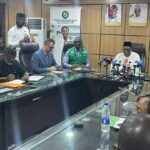
Former Super Eagles captain Joseph Yobo has been drawn into the Federal Government’s ongoing effort to overhaul football administration in Nigeria. Yobo met with National Sports Commission (NSC) Chairman Shehu Dikko on Tuesday as part of a widening round of stakeholder talks.
Yobo, who serves as Special Technical Assistant to President Bola Ahmed Tinubu on Professional Football Development, joined the consultations at a moment when the NSC is scrutinising the structures, policies and business models that underpin the sport nationwide. While the specifics of what was discussed were not disclosed, the meeting signals the government’s intent to pursue a broad, systemic reform rather than piecemeal fixes.

According to NSC sources, the talks focused on strengthening football’s institutional foundations, improving its long-term viability, and tapping into the game’s largely unrealised commercial value under the Renewed Hope Initiative for Nigerian Sports Economy (RHINSE).
Officials maintain that the problems facing Nigerian football run deeper than results on the pitch. Despite producing successive generations of top-tier talent and remaining one of the continent’s largest football markets, the country continues to grapple with persistent concerns over administration, infrastructure, talent pipelines, financing, league organisation and the commercial exploitation of football assets.
Other News
Yobo’s participation brings a distinct voice to the reform process. As Nigeria’s first player to reach a century of international caps, he captained the Super Eagles to Africa Cup of Nations glory in 2013 and brings firsthand knowledge of the national team setup. His current position also places him at a crossroads between government policy-making and the realities of the professional game.
The meeting with Dikko forms part of a broader NSC engagement drive involving former players, administrators and other football stakeholders whose expertise the commission hopes will inform a more sustainable system.
Still, observers note that the true test of the reform agenda lies not in consultation but in implementation — specifically, whether recommendations can be translated into lasting structural change that outlives individual officials and administrations.
The task ahead, the NSC insists, is not merely diagnosing what ails Nigerian football but building a framework capable of generating sustainable revenue, nurturing talent, reinforcing domestic leagues and restoring public trust in the game’s administration.
The commission says the ongoing consultations are aimed at actualising President Tinubu’s directive for a comprehensive reset of Nigerian football. As more stakeholders are pulled into the process, attention now turns to what concrete proposals the government will ultimately present — and whether they can deliver the fundamental transformation the sport has long been promised.