Follow Us on Google

He highlighted the risk factors which have proven to influence ocular health and contributed to a compendium of risks for chronic health conditions. “However, our duty as optometrists transcend mere ocular examinations: it is rooted in a preventive approach while addressing and managing incidental occurrences.
“A visually impaired populace will inevitably exhibit reduced productivity and increased dependency, as skills deteriorate when vision is compromised. As mothers, fathers, siblings, and kin, let us commence within our immediate community to raise awareness by engaging in public health education and promoting ocular health.”
Challenges of eye care services
NOA has repeatedly highlighted some of the major challenges it’s facing in delivering quality and affordable eye care services to Nigerians.
It said that at the centre of the challenges is the high import duty for ophthalmic equipments, thus asking the President, Bola Ahmed Tinubu, to extend the waivers granted to pharmaceutical products to eye care equipments and supplies, in order to make eye services available and affordable to the people.
The association reiterated the call for the inclusion of eye care services at the Primary Health Care (PHC) centres, in order to identify possible eye challenges among the children and proffer the necessary solutions at the early stage.
In addition to that, they appealed for the expansion of National Health Insurance Services (NHIS) to allow for the inclusion of more optometrists and optometric services to expand access to eye care services.
It also advocated the establishment of optometry departments in all federal and state tertiary institutions to enhance education, research and clinical practice in optometry.
What should be done
Considering the fact that the world is increasingly being infused into digital devices, and its inevitability, optometrists have asked users of digital device users to apply caution, and always follow the recommendations of the producers as regards eye interaction with the devices.
They suggested that users should always turn on the eye-friendly mode on the devices, use protective eye glasses, and in addition to that, take their eyes away from the device after some minutes.
Parents should also ensure that their children undergo regular eye examinations, at least, biennially, and also encourage good hygiene practices, a balanced diet rich in fruits, vegetables, and omega-3 fatty acids.
They should also limit digital screen time, promote outdoor play, and teach the children proper habits like good distance while reading which are all essential for maintaining healthy vision.
The doctors further advised against harmful traditional practices, and emphasized the importance of seeking professional help if a child exhibits signs of vision impairment.
Parents are also encouraged to instill healthy vision habits in their children that will endure a lifetime, and curb the stigma associated with wearing eyeglasses among children, as early intervention for vision issues is crucial for a child’s well-being.
While uncorrected vision impairment may impact education and social inclusion, simple solutions such as spectacles can make a world of difference.
Call to action
As part of the sensitization effort, the NOA announced that it will engage in periodic eye health seminars in schools to educate both teachers and students about ocular issues, and in addition to that, setup of “vision corridors” in select schools nationwide which will feature visual charts for conducting basic vision assessments, enabling early identification of potential vision problems for timely intervention and treatment.
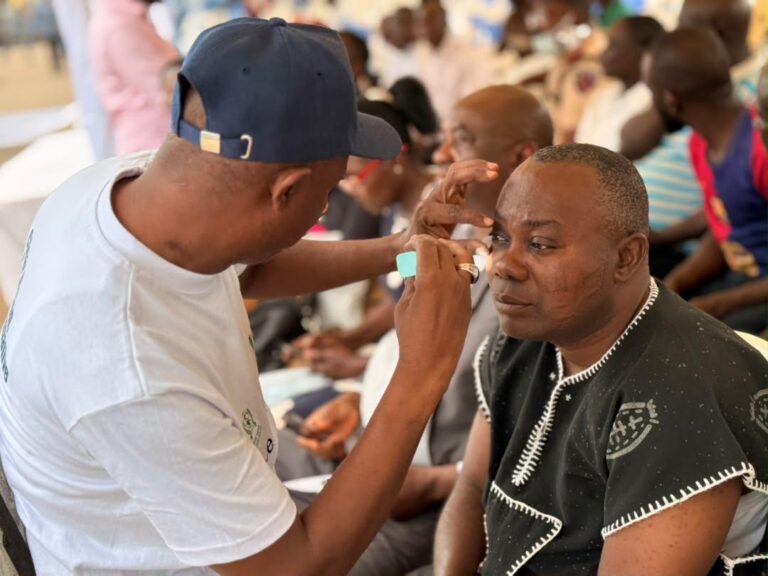
Furthermore, the association said it will offer complementary vision screenings for children and distribute free eyeglasses to those in need, as part of the event to mark the annual world sight day.
“The Nigerian Optometric Association approaches eye health with every energy, with every excitement, with every commitment, because we have highly committed to the vision of the children. And we didn’t just start here. We had already initiated the my sight, my right program, which was a program targeted at alleviating the suffering of children in terms of their visual health.
“My sight, my right has screened over 50,000 children across Nigeria, and what we do is to screen them, have a comprehensive eye check for children every second Friday of the month, and then we give them glasses and medications as needed.
In addition to that, we asked members of the association to periodically open their clinics, free of charge, to every child within the society to come into every optometry-based facility to have their eyes comprehensively examined and checked and receive the treatment that they require.
“So, the NOA is leaving no stone unturned to see that there is no child that is blind. Every avoidable blindness should be avoided, and every blindness should be thoroughly examined to ensure that that child can still make use of available or residual vision for functionality. We are also supporting all our state chapters in this programme.”